
About 450 new homes could replace a vacant movie theatre in Anaheim Hills amid concerns from neighboring residents that it would increase already lengthy evacuation times in a fire hazard zone.
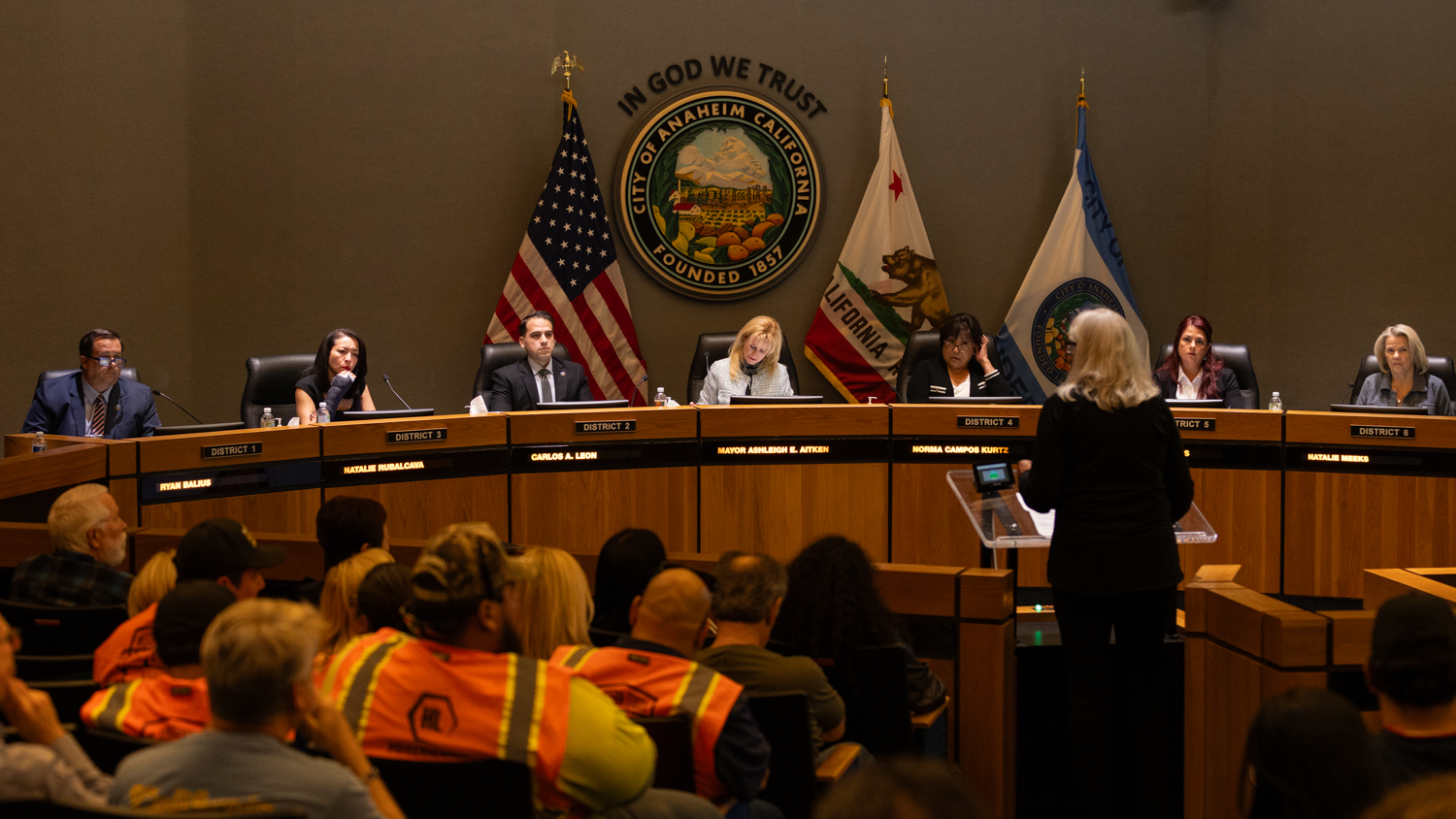
Anaheim City Council members are expected to consider the project in March after continuing the public hearing for the third time in three months last Tuesday.
Meanwhile, a host of nearby residents have continued to show up to city council meetings to speak against the proposed development.
They raised safety concerns that the development would increase evacuation times in a very high fire hazard severity zone – comparing the project to a proposal in nearby Deer Canyon that was denied by officials in 2024 for similar reasons.
Residents also said it would worsen traffic and called on officials to improve fire safety and evacuation infrastructure before approving high density housing projects in the area.
Chuck Hill, a 40-year resident in the hills, said he has been through fires in the area and remembers his wife and daughter being stuck in traffic during an evacuation.
“If you allow this to go through, I can’t imagine what’s going to happen the next time that we have a fire come up over that hillside,” he said at the Jan. 13 meeting.
“I’m going to stay around and try to protect my home, my property, just like everybody else, but it makes me really emotional. I raised three kids there.”
City officials have said the proposed development won’t too severely impact evacuation times.
“The City has reviewed the analysis and determined that the slight increase in evacuation time is not a significant impact,” reads a city staff report.
A Home in The Hills
The development, dubbed the Anaheim Hills Festival Project, would include a four-story apartment building with 447 units wrapped around a 954 space parking garage, swimming pools, a fitness center, a dog park and bluff park open to the public.
Developers of the project argued it would provide the city and its residents with many benefits by revitalizing the festival shopping center and bringing needed housing to Anaheim Hills.
“It attracts exciting new tenants. It expands housing options in (district 6), supports Anaheim city goals, entices regional spending, improves quality of life and provides community open space while maintaining local values,” said Sean McEachern, vice president of Development at Shea Properties, at the Jan. 13 meeting.
Developers also offered as part of a proposed development agreement to give $100,000 to Anaheim Fire and Rescue to fund wildfire mitigation efforts and another $100,000 to Anaheim police to help support evacuation training.
They would also install a camera and Emergency Vehicle Preemption system on Santa Ana Canyon Road at four intersections to help improve emergency response times in the area.
Forty-five apartments would be designated for moderate income families, but none are proposed for low income families.
The developer will also not have to pay a fee in lieu of building affordable housing because the application for the project was filed before the city officials approved their affordable housing mandate.
Orange County’s median income for a four-person household is $136,600 – that’s $1,250 above what’s considered low income, according to the California Department of Housing and Community Development.
A four-person household making less than $84,000 a year is considered very low income.
Building in a High Fire Hazard Zone
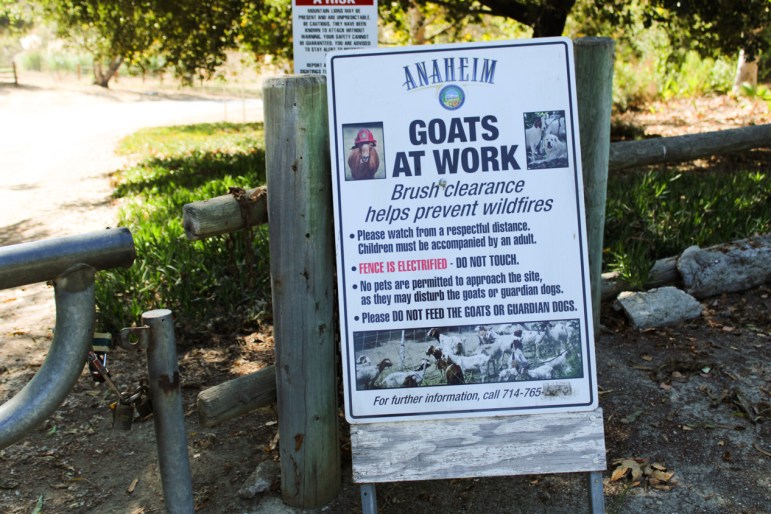
The proposal comes years after firefighters battled the Canyon Fire 2 in 2017 which forced thousands of people to evacuate their homes and burned over 9,000 acres.
Most of the proposed housing project at the festival shopping center sits in an area the California Department of Forestry and Fire Prevention has deemed a very high fire hazard severity zone.
It’s not the first project proposed in a wildfire hazard zone in Anaheim Hills in recent years.
In 2024, Anaheim officials denied a nearly 500-unit luxury apartment development in Deer Canyon after a host of residents raised concerns that it would have increased fire evacuation times in a wildfire hazard zone.
[Read: Anaheim Officials Deny Nearly 500 New Luxury Apartments in Wildfire Prone Hills]
Many residents compared the Anaheim Hills Festival project to the rejected Deer Canyon project proposed nearby and also recounted their own experiences evacuating fires to elected officials at the Jan. 13 meeting.
Anaheim Fire Marshal Lindsey Young said it is hard to compare the projects from the fire department’s perspective.
“With this being more of an infield project that does make a difference for us beyond that, though, I hesitate to more closely compare that, because, frankly, we really do evaluate each individual project upon the merits,” she said.
The evacuation travel time analysis completed by Dudek found that the proposed housing project would increase current evacuation times without the operational cinema in the area by 14 minutes in the most likely worst case wildfire scenario.
According to the analysis, the increase would bring the evacuation time in Deer Canyon Park above three hours in that scenario.
City staff said the impact to evacuations is insignificant.
“In addition, the Project would not impede on existing evacuation routes, and the developer is required to draft and implement a Construction Fire Prevention Plan and a Wildfire Evacuation and Awareness Plan prior to construction activities and eventual certificate of occupancy for the residential building,” reads the staff report.
Who Gets the Construction Contracts?
Officials previously kicked the debate in January in an effort to get the developers to ensure unionized labor installs the dry wall and proposed 950-spot parking garage.
Council members questioned the developer, Shea Properties, about whether they’d use a unionized work force on the project after Western States Regional Council of Carpenters members said the developer wouldn’t commit to using union labor.
McEachern said they are not a “bottom dollar developer” and said they offered an agreement to the carpenters union to do the dry wall as long as they $500,000 within the lowest qualified work bid.
“We do not decide based off of low bids. We look at qualifications, we look at safety records, we look at companies that we’ve worked with before that have executed projects on time and safely,” he said at the Jan. 13 council meeting.
“I certainly invite you guys to visit our projects that are under construction or that are built because they are definitely skilled workers and safety is our absolute number one priority when we build projects.”
 Council Member Natalie Rubalcava at the Anaheim City Council meeting on Jan. 13, 2026. Credit: ERIKA TAYLOR, Voice of OC
Councilwoman Natalie Rubalcava questioned if the developer was negotiating in good faith with the union.
“It’s not a good deal, in my opinion, for you to say that you have to be within $500,000 of the lowest bidder, because you could get anybody to bid a low bid,” she said at the Jan. 13 meeting.
“I think you should think really deeply as to whether or not you’re going to have an MOU that includes our skilled and trade (workers), especially because they’re not being unreasonable with the expectations.”
Rubalcava also called on the proposed development agreement to require unionized skilled labor on the dry wall and parking garage – a request the developer’s attorney said was prevented by federal law under a Supreme Court precedent.
Editor’s note: Ashleigh Aitken’s father, Wylie Aitken, chairs Voice of OC’s board of directors.
Hosam Elattar is a Voice of OC reporter. Contact him at helattar@voiceofoc.org or on Twitter @ElattarHosam.
Related