
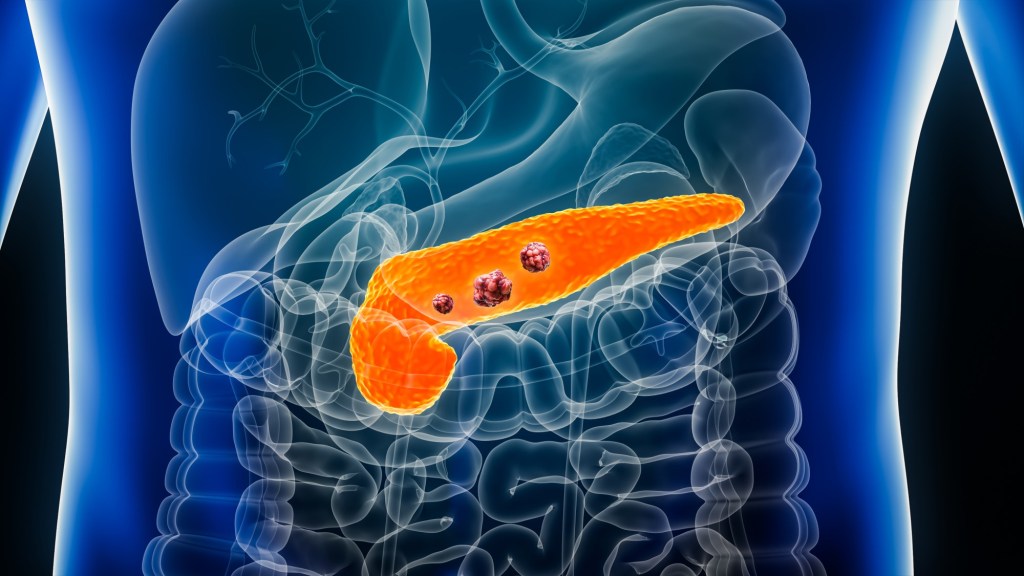
By using a common virus most people are infected with at some point in their lives, scientists at UC San Diego in La Jolla, joined by researchers at the La Jolla Institute for Immunology, report that in studies with mice, they were able to significantly delay tumor growth of pancreatic cancer, one of the deadliest and most difficult to treat forms of cancer.
The results, published in the Journal for ImmunoTherapy of Cancer, came from the researchers using the body’s immune response to cytomegalovirus, or CMV, a common but typically harmless virus. CMV researchers at the La Jolla Institute for Immunology determined they could “significantly delay pancreatic tumor growth and extend survival in mice.”
“We were thrilled to see such a strong response in our preclinical studies,” said the study’s co-senior author, Tatiana Hurtado de Mendoza, an assistant professor of surgical oncology at the UC San Diego School of Medicine. “By delivering small pieces of viral proteins — CMV peptides — to pancreatic tumors, we were able to redirect the virus-specific T cells against the cancer cells.
“Because our strategy relies only on previous immunity against CMV and not on the specific characteristics of an individual’s tumor, it has the potential to be an off-the-shelf solution that could be applicable to a large number of patients.”
Pancreatic cancer constitutes 3.3% of all cancer cases in the United States but 8.4% of cancer deaths. According to the researchers, the higher proportion of deaths is partly because pancreatic cancer is notoriously difficult to treat, with a five-year survival rate of just 12%. Treatments that have been effective on melanoma or lung cancer have mostly failed in pancreatic cancer.
“Some tumors have plenty of mutations, and all of those mutations make those tumors easy for the immune system to see and target,” said co-first author Remi Marrocco, a postdoctoral fellow at LJI. “Pancreatic cancer has fewer mutations and a lot of immunosuppressive cells that inhibit immune responses against the tumor. It’s a ‘cold’ tumor.”
By applying the CMV-derived peptides — small protein-like particles — directly into the bloodstream, immune cells known as memory T cells are activated, recognize the past infection and can kill tumor cells.
“There are more memory T cells that recognize CMV than probably recognize any other known virus or bacteria at this point,” said co-senior author Christopher Benedict, an associate professor at LJI. “These cells make up literally 10% or more of our memory T cells, which is a huge number.”
In test cases, the researchers found that mice with pancreatic tumors survived an average of 42 days, compared with 25 before the CMV treatment — a nearly 70% increase. The memory T cells also targeted the tumors specifically, causing little damage to other organs.
“This therapy represents a significant step forward in the fight against pancreatic cancer, and we’re hopeful that it could provide new treatment options for patients with limited alternatives,” said co-first author Jay Patel, a research assistant at UCSD. “CMV-specific T cells have the potential to become a powerful tool in the fight against cancer, and we’re only just beginning to unlock their possibilities.”
The team is exploring how this treatment could impact other cancers, such as triple-negative breast cancer. They are working with humanized mouse models using a patient’s tumor and blood to provide CMV immunity, according to a statement from UCSD.
“This approach has the potential to be tumor-agnostic, meaning it could be effective against a range of cancer types, including breast cancer, lung cancer and others,” Hurtado de Mendoza said. “We’re excited to explore its potential in humanized mouse models to bring it one step closer to clinical trials.” ♦