
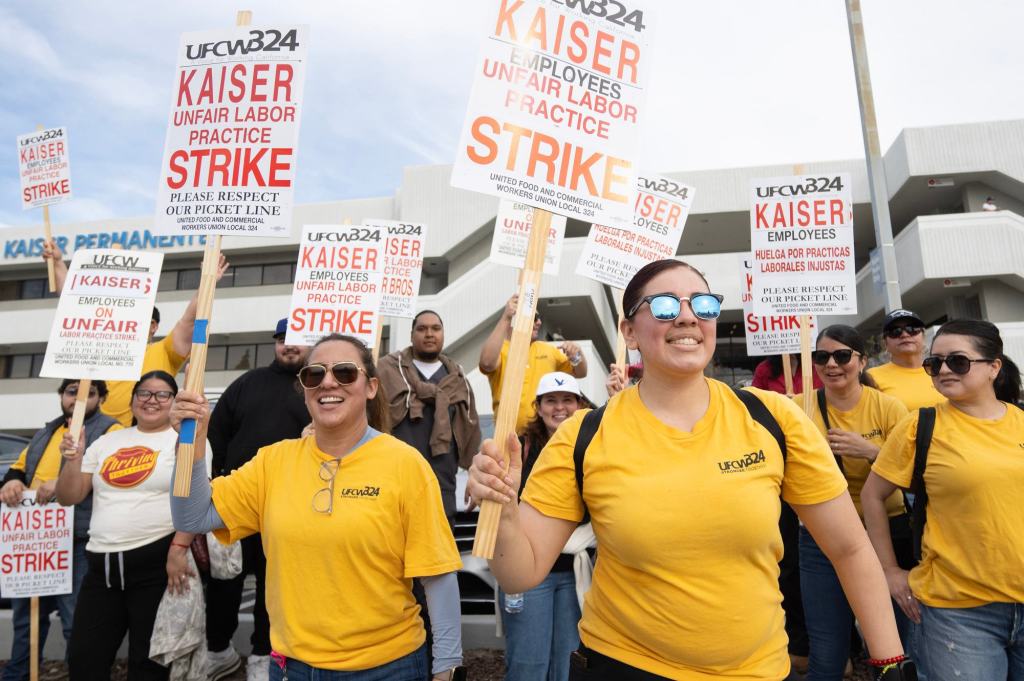
More than 3,000 pharmacy and lab workers with the United Food and Commercial Workers union in Southern California are ending their three-day strike against Kaiser Permanente on Thursday, Feb. 12.
Their return to work still leaves the bulk of the health care giant’s 31,000 registered nurses and health care workers on strike.
The UFCW locals in Southern California — which gave a 10-notice of their intent to strike on Jan. 29 — represent Kaiser’s pharmacy assistants and technicians, clinical lab scientists, medical lab technicians, and clinical and administrative workers at Southern California medical facilities.
The contract covering pharmacy employees expired Nov. 1, while the contract covering union clinical and medical laboratory specialists expired Feb. 1.
Also see: 3,000 pharmacy and lab workers will join Kaiser’s nurses strike
In statements issued Tuesday evening, the UFCW locals and Kaiser confirmed the pharmacy and lab workers would return to work 5 a.m. Thursday.
In an email to members, the unions said they would continue to push Kaiser to continue to negotiate a fair contract. Talks collapsed between the two sides in December.
In the past week, Kaiser reported that some of its pharmacies and labs were temporarily closed with longer wait times at certain locations due to the strike.
“We apologize for the disruption and frustration this may cause,” according to the Kaiser statement. “We are guiding members to open locations and available resources, and we appreciate their patience as we work to maintain access to care and move toward resolution.”
The United Nurses Association of California/Union of Health Care Professionals strike began Jan. 26 and is open-ended, keeping the 31,000 registered nurses and staff in California and Hawaii off their jobs until Kaiser and the union alliance reach a tentative contract agreement.
Kaiser and the UNAC/UHCP are negotiating to replace a five-year contract that expired Sept. 30. The union is striking for higher wages and benefits, and wants more employees hired to fill staffing shortages. It initially sought a 38% pay hike over four years and is now seeking a 25% raise. Kaiser has offered a 21.5% hike over four years.