
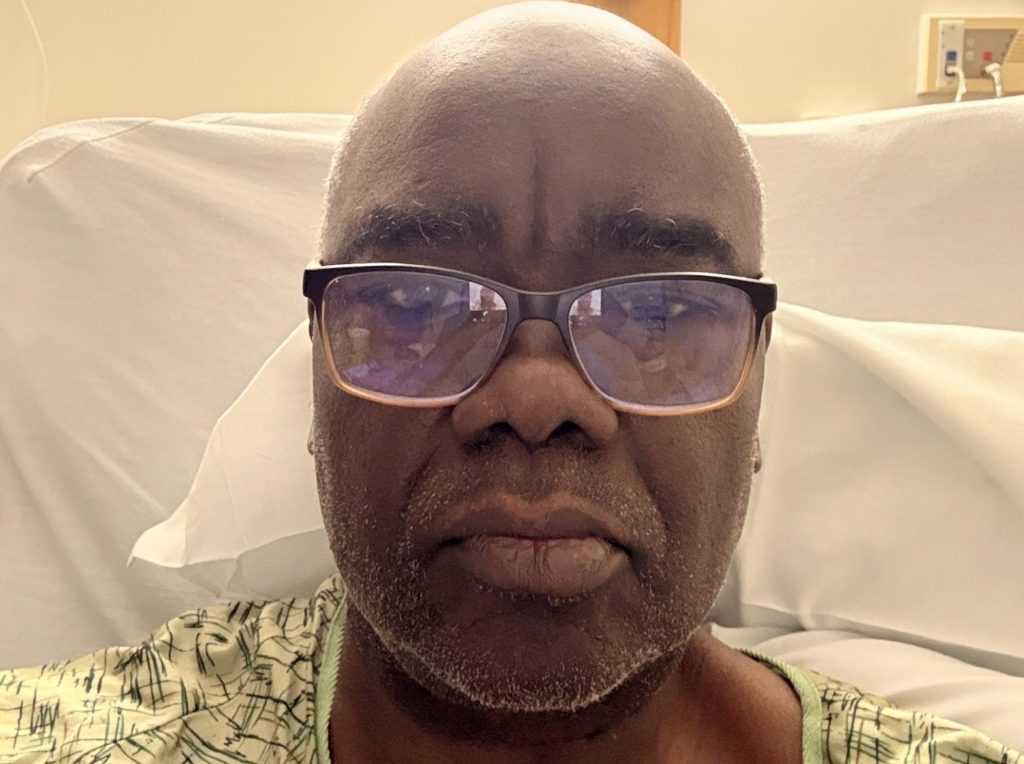
In September, my life changed forever.
I had been having trouble with emptying my bladder, and earlier that summer, I decided to visit my primary care physician to figure out what was happening.
A few weeks later, while visiting Las Vegas for a concert, I got my answer: It was prostate cancer.
February is Black History Month, but did you know it’s also National Cancer Prevention Month?
It’s a good time to remind people, especially the men in your life, to please go and get a PSA (prostate-specific antigen) test. It’s a simple blood test that detects a chemical in your blood that can indicate whether you have cancer.
Mine was especially high, and after taking the PSA test and having an MRI and a biopsy, it turned out I had prostate cancer. I was devastated but determined.
I knew I would beat this, but first I had to put my journalistic skills to the test and research the heck out of what I would be facing.
First, I had to remember from anatomy class what exactly the prostate did and how it would affect my body.
The normal prostate is about the size of a walnut and is essential to the male reproductive system. It lies between the bladder and the penis and produces the fluid that helps make up part of semen.
Prostate cancer is the most common cancer in men, according to the American Cancer Society.
I went to YouTube and watched videos of other men who had gone on this journey, and then I researched via the internet what lay ahead for me. It was eye-opening. There were not a lot of resources I could count on, and there was not a lot of information specific to men who looked like me.
Black men have one of the highest rates of prostate cancer. In fact, 1 in 6 will develop the disease in their lifetimes. And we also have twice the risk of dying from prostate cancer compared to White men. In California, more than 26,000 men of all races will be diagnosed this year. And 42,000 will die from prostate cancer.
In early September, I was in a surgeon’s office discussing my options, which were surgery or radiation. Both came with side effects, such as incontinence, infertility and erectile dysfunction.
I decided that a prostatectomy or prostate removal would be my best option for me and my lifestyle. I work a lot and mentor students, and I couldn’t afford to deal with the possible side effects of radiation.
My surgery did not go as planned. It was originally scheduled for Dec. 4, but because of massive scar tissue in my abdomen, the surgeon had no choice but to abort the procedure and reschedule it so that she could do a more invasive surgery.
After allowing those incisions to heal from the robotic surgery, I was rescheduled for Jan. 6.
That morning, I woke up anxious and afraid, but I knew my life would change, and it has.
Recovery has not been a picnic. My energy level is all over the place, and my wounds are slow to heal. But I’m glad I made this choice.
I’m also in therapy because my mental health has taken a beating. I’ve been working on my health for a while, having a gastric bypass, working out with a trainer, walking a lot, and I felt as though the rug had been pulled out from under me with this diagnosis.
Some days are better than others. I’m full of energy and ready to take on the world. Other days, I feel as though if I can just get out of bed, it’s a win. I’m working to form a support group for Black men here in San Diego because this journey is lonely and at times heartbreaking.
It’s hard to explain to others who haven’t walked the path of recovery. People get scared when they hear the “c” word. But for me, the “c” word is going to take on a new meaning, and that’s “champion.”
McCormick, a University Heights resident, is a longtime communications professional and now a cancer survivor.