
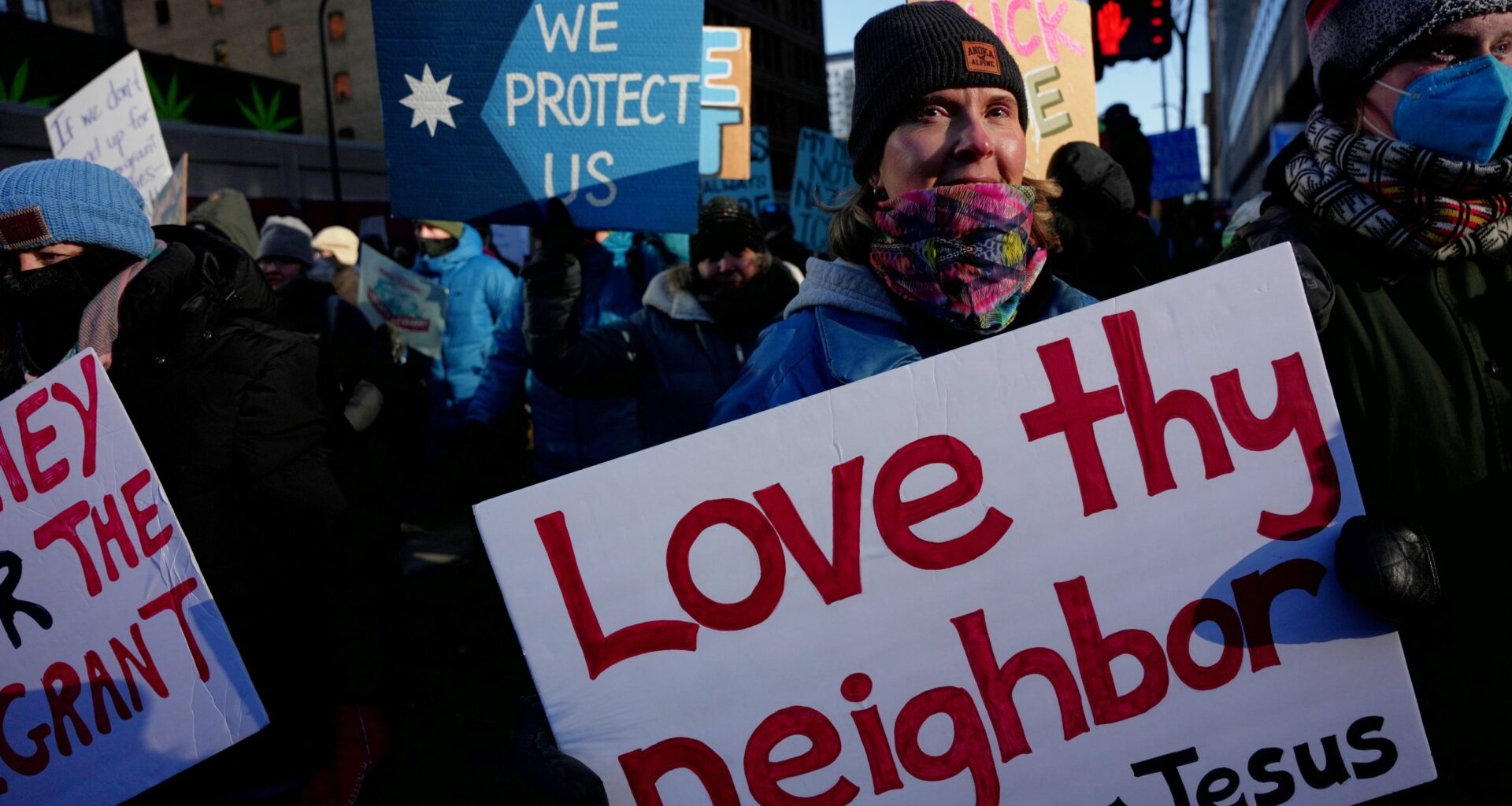
For months, Minneapolis has been experiencing an invasion of over 3,000 immigration agents, part of an operation the Trump Administration has called Operation Metro Surge. Thousands of Minnesotans have mobilized to support their neighbors as ICE agents have arrested young children, shot into homes, and killed two civilian ICE observers, tactics that Minneapolis mayor Jacob Frey Minnesota governor Tim Walz have denounced. According to White House Press Secretary Karoline Leavitt, over 4,000 people have been arrested since the operation began.
Rev. Laurel Liefert and Rev. Kevin Mann, both ministers at the First Unitarian Church of Oakland in downtown, joined a contingent of over 700 clergy who flew from around the country to the sub-zero temperatures of Minneapolis for a national day of solidarity and a general strike on Jan. 23.
On Tuesday, border czar Tom Homan announced that the deadly months-long operation was coming to an end.
The Oaklandside recently caught up with Liefert and Mann to talk about what they experienced there. They both spoke of the constant fear they felt in the air, the feeling of unity among everyone who participated in the protests, and how music played a pivotal role in their work.
This interview has been edited for clarity and length.
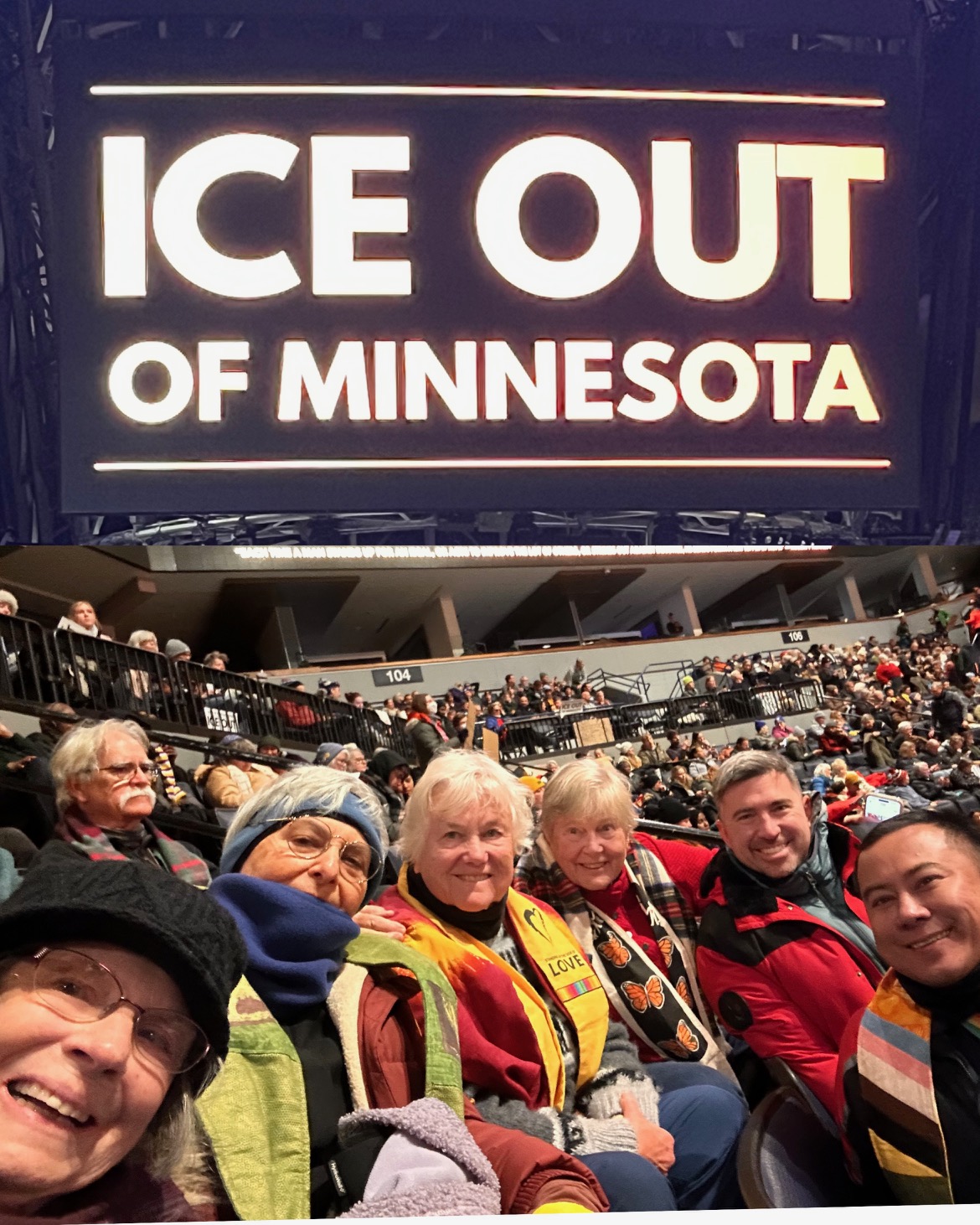 Rev. Laurel Liefert (in the “love” stole at center) and Rev. Kevin Mann (in the striped stole, far right), both ministers at the First Unitarian Church of Oakland in downtown, joined a contingent of over 700 clergy who flew into Minneapolis from around the country for a national day of solidarity and a general strike on Jan. 23. Credit: courtesy of Kevin Mann
Walk me through what was going through your head when you arrived at the airport in Minneapolis?
Liefert: Part of the organization started even before we got there. There was a webinar that Monday to help us get oriented. The work was going to start at 8 a.m. that Thursday, and they didn’t tell us the location ahead of time. There was a lot of security and the communication was impeccable.
We packed our warmest things, wore my hiking boots and thick socks, long underwear, hat, and tried to bring gloves. We ended up staying in a hotel with some other clergy. The Lyft driver who took us asked if we lived in Minneapolis and we told him we were there to respond to a call for clergy to come and to do faithful witness with the people who are here. And he almost started tearing up. He said, “I’m Somali.” And I asked him how he was doing. He just said, “I have no words for how we’re doing, how my family, how my community is doing.” And then the bookend is that when on Saturday we left, we took Lyft again to the airport, and it was a man of Chinese descent who was saying that his family was going to have to go back to China because they were too at risk.
Mann: We were told not to post anything on social media about where we would be on Thursday, and everybody had to agree. I appreciated the extra security. It made me feel safer.
Liefert: One of the things that really struck me about the webinar was that multiple times we were told to stop and to just breathe, self care, in order to have sustained resistance. This was not a one- or two-day action.
Mann: We didn’t know where we were supposed to be until that Thursday morning. It was very much like, watch your Signal messages and the address will appear.
That Friday morning, the local police department arrested dozens of clergy who were protesting at the Minneapolis-Saint Paul International Airport. Did you two attend that protest?
Mann: I had gone to all the training for it. There were green and red roles. Green meant you would not be arrested and red meant you were going to be arrested. I was going to go in a green role capacity, but after talking to my partner and a close queer person of color ministry and considering my own risk factors as a queer person of color, I ended up not going.
In the end, the organizers decided that only ministry from Minneapolis should attend that protest because the legal and logistics support would be easier to handle.
What did you end up doing instead, before joining the big march?
Mann: We ended up doing this powerful pilgrimage from George Floyd square to the Renee Good memorial in -20 degree weather. It’s one mile from where George Floyd was killed to where Renee Good was killed. What I appreciate about the people of Minneapolis is that when white supremacy kills someone, they do not forget; they create a public memorial. The bus stop at George Floyd Square has a giant fist on it. There’s a painted banner that reads “All power to the people.” The community has kept the memorial going. And they’re doing the same thing with Rene Good and the same thing with Alex Pretti’s memorial. They do not forget. That is something that took me aback, of how strong their networks are.
Leifert: Part of the call to go to Minneapolis was to “come and see with your own eyes what is going on so you can be a faithful witness.” One thing that was prevalent for me is a teaching by Zen Master Thich Nhat Hanh about how the next Buddha is going to be a sangha. In other words, it won’t be some charismatic leader. It will be the people. And that is what is happening, the people are rising against this fascism.
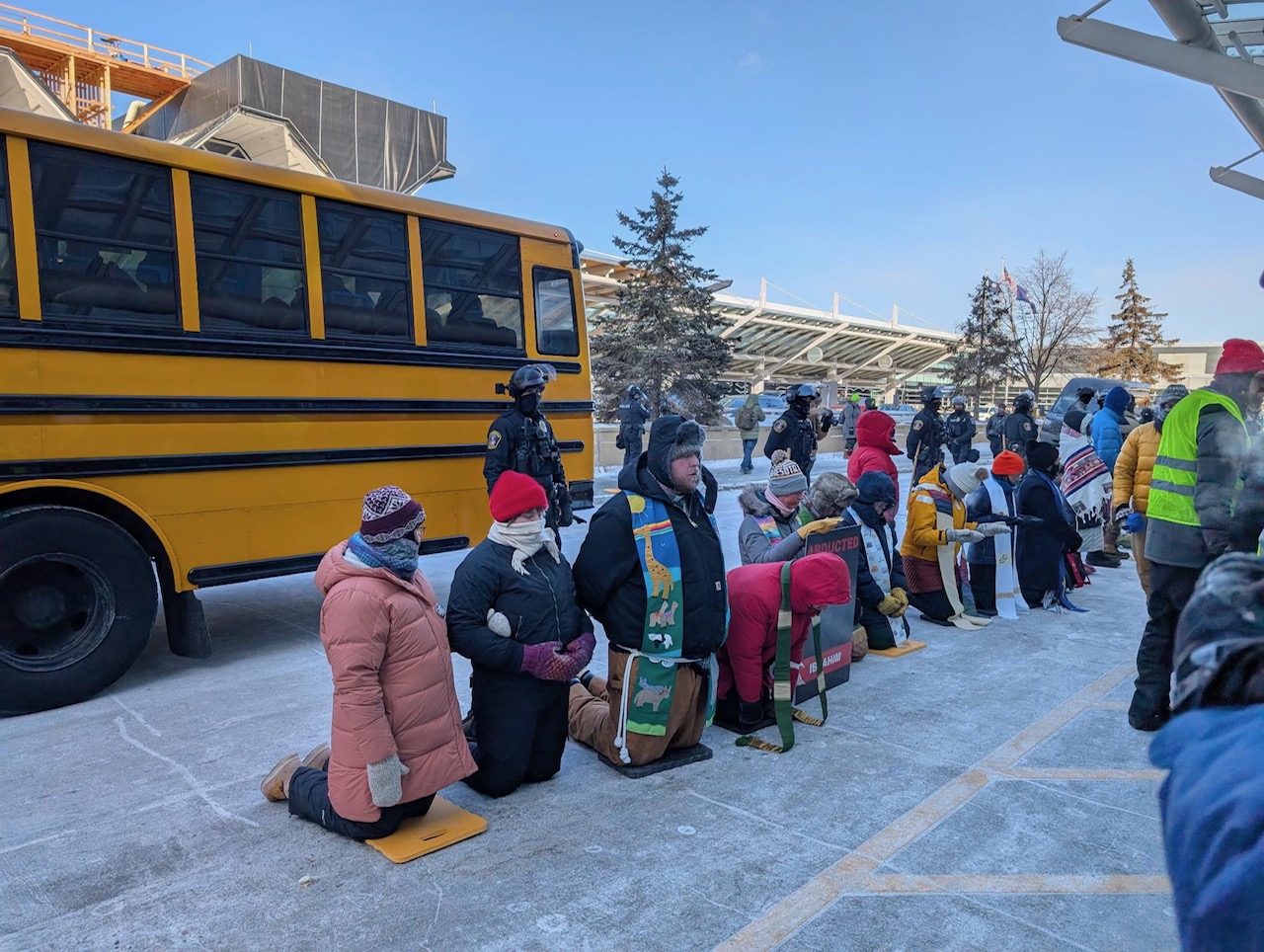 Around 100 clergy members and faith leaders were arrested protesting at the Minneapolis-St. Paul International Airport on Jan. 23, 2026. Credit: courtesy of Kevin Mann
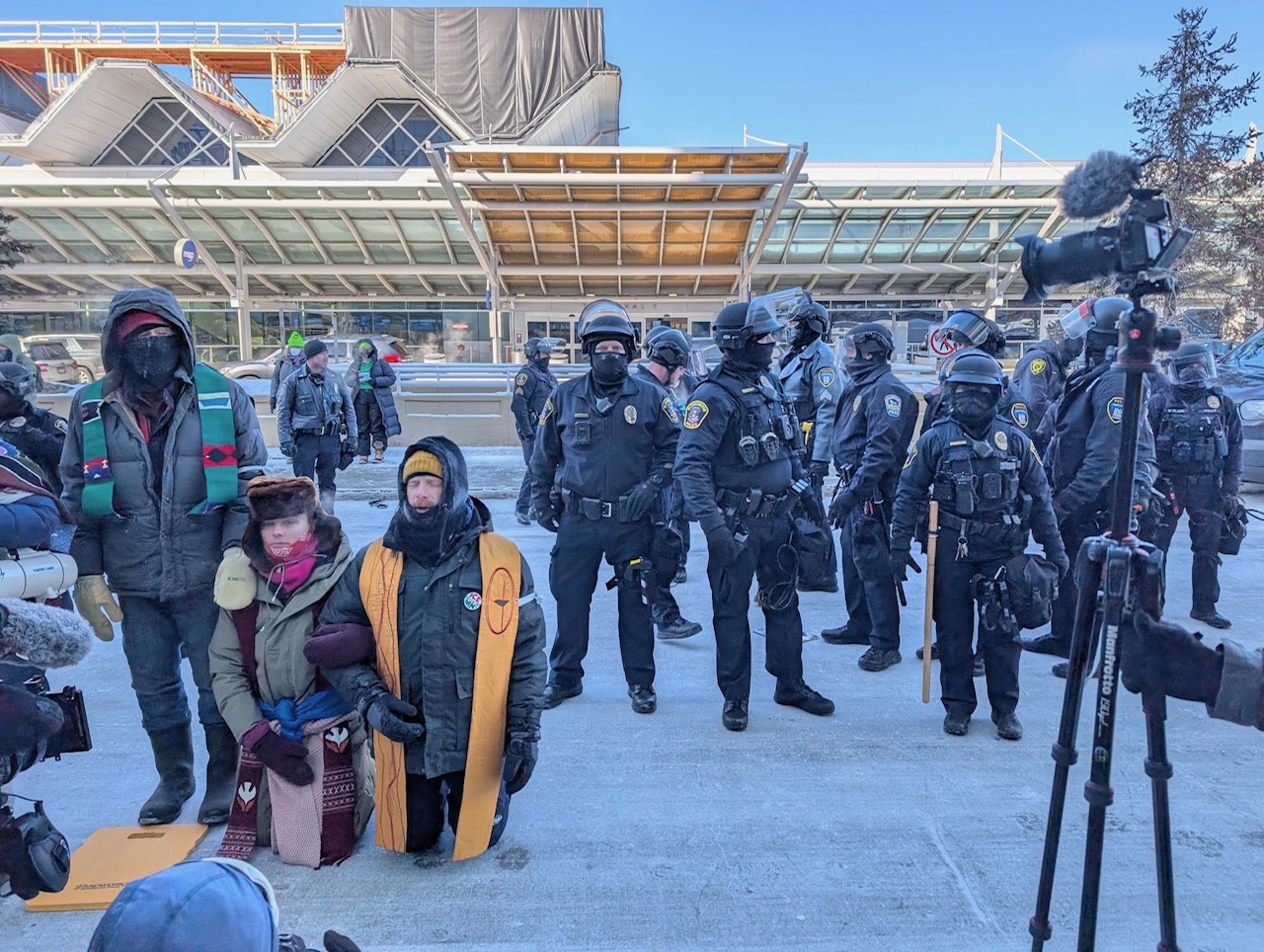 Local police officers arrive to make arrests at the airport. Credit: courtesy of Kevin Mann
Tell me about the march and the rally at the Target Center, what was that like, in such frigid temperatures?
Mann: The march started at the main public park in Minneapolis. There were so many people moving very slowly in very cold weather. Minneapolis has these skyways to connect the buildings, and it was incredible to see each skyway with hundreds of people cheering and being there. This was the kind of solidarity in -30 degrees. I was like, California, y’all better be out.
Leifert: Well, it started on Thursday when we met with 700 other clergy. We were all singing together, getting grounded. The clergy that had been there talked about how exhausted they were. On Friday, well over 100 of us walked into the center. There were ministers lined up with their stoles on the balcony. There were speakers; we were singing. Singing was a huge part of this. Kevin and I think that is part of the resistance.
When we went into the Target Center, I remember I had gloves on, and I didn’t have hand warmers, but I had to keep moving my fingers, even in gloves. I thought, “Oh, my God, I might get frostbite”. My partner couldn’t walk much so we stood at one of the skyways, and we kept seeing a river of people just flowing into the Target Center. And one of the things I loved is that when we first went in, there was a brass band that was playing the song “Peace Train.” “Abolish ICE” was the message.
Mann: I preached yesterday at Livermore about it. Half of my sermon were songs, because I came back singing. I came back on the plane singing. I walked around Lake Merritt this morning singing. It’s all protest songs out of Minneapolis.
Mann: Seeing 700 ministers singing changes your DNA. When you look at the Civil Rights movement, when you look at the Philippines’ fight for independence against dictatorship, it was music that keeps the people together and keeps them going. That was Minneapolis: their message was, “Just keep singing.”
Leifert: And when I came back the following Sunday and stood in the pulpit, I said, you know, I may look exactly the same as I did last week. I’m not. I came back changed by what I saw and what I experienced.
Were you both still in Minneapolis when word that Alex Pretti had been shot began spreading on the news and on social media?
Mann: We were both still there. We began getting text messages about what happened. We were told that official communications were coming. And there was the Believe Your Eyes campaign. It was something they asked all ministers to do. Basically to narrate line by line the video to have a public record of every angle.
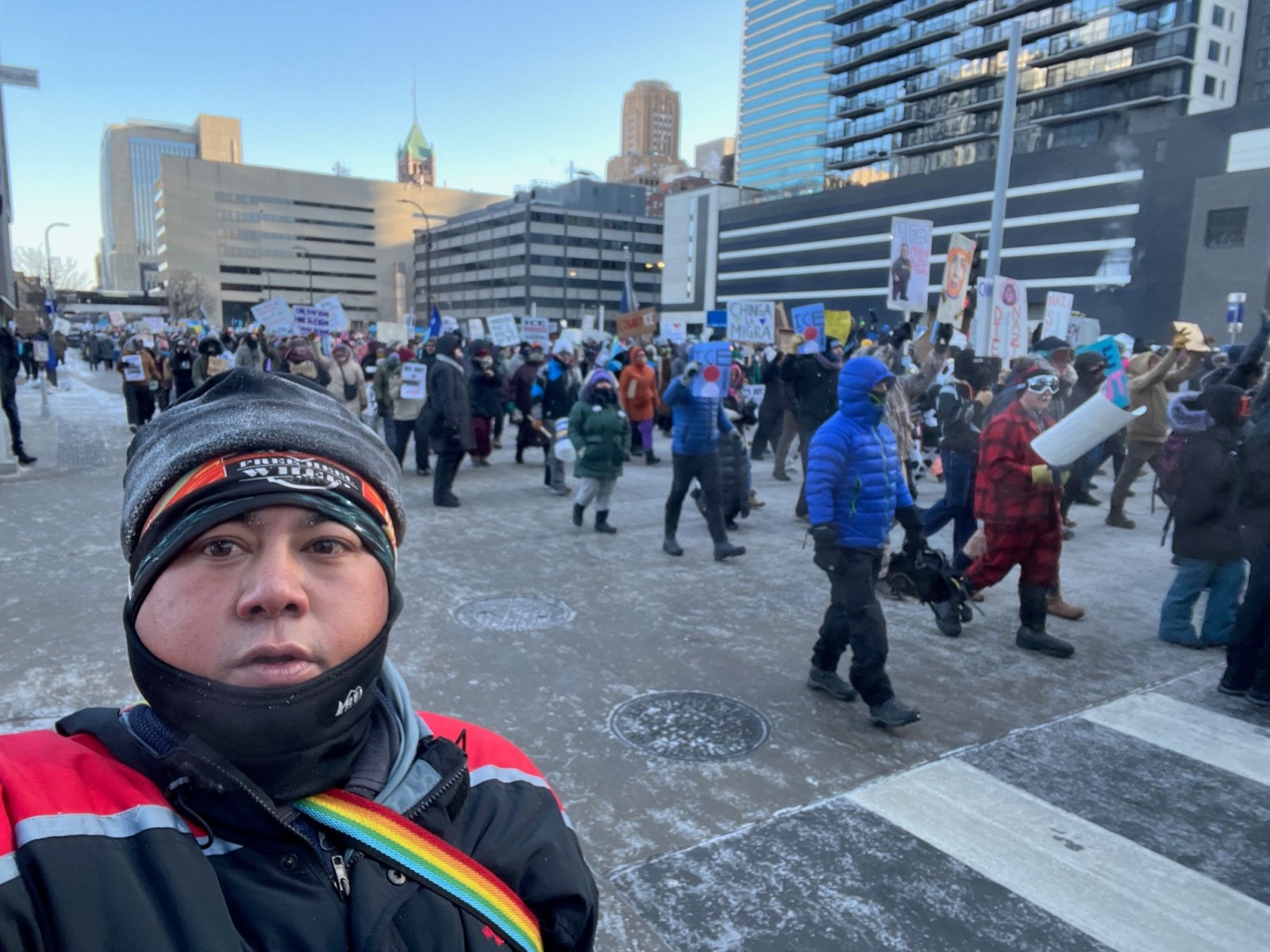 Mann marches through downtown Minneapolis with approximately 75,000 people in frigid temperatures on Jan. 23. Credit: courtesy of Kevin Mann
What was your takeaway from being there, for the rest of us who haven’t been in Minneapolis?
Mann: There’s talks of starting a singing protest group that could shut down Target, shut down Home Depot.
Leifert: There have been many more people, besides Renee Good and Alex Pretti, who have been killed and detained. Why did it take those killings for the whole community to react?
Now, we are back in our home sowing seeds from what we learned there. But, also it felt like danger was in the air right almost as soon as I stepped off the plane and was in the Lyft. And no matter where I went, it’s like the whole air was filled with danger.
Mann: It felt like retribution from the march, how they went and killed one of the people the next day. It’s a war zone out there. They told us that all of the local stores were out of gas masks. I ended up working with my partner’s best friend to get two and we brought them. We didn’t end up using it, but I ended up giving those two to my high school teacher and her husband.
Leifert: It’s the warning and the teaching. Kevin and I took the risk to go see with our own eyes, and to experience the bitter cold, to experience the danger in the air, and the vulnerable people who have been harmed and are continuing to be at risk. Now that we are in Oakland, what is it that we can learn from that lesson and activate neighborhoods the way that they have done in Minneapolis. Also, understand that everyone has a different role. And so to try to be respectful of what people feel that they are called to do.
Mann: The organizers are asking us to stand up, get the message out, and resist in the local ways that we can. How do we move from a symbolic protest to economic protest? It’s great that we can have a rally in front of City Hall, but let’s move that rally to the Home Depot and shut it down. Let’s move that rally to the Hilton, because they’re housing ICE agents, and shut it down.
“*” indicates required fields