
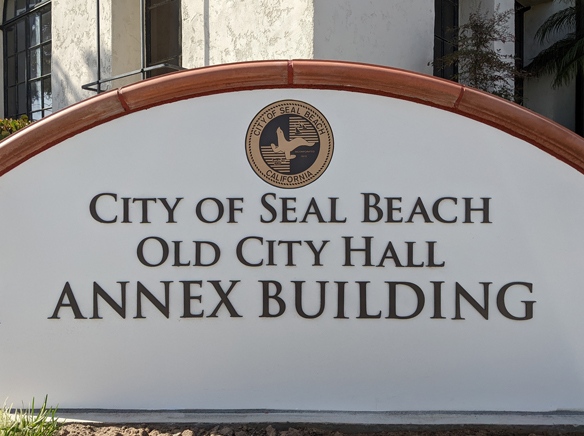
The City Council on Jan. 26 unanimously adopted a resolution formally finding the Seal Beach Zoning Code and Housing Element are consistent with state law. The finding was mandated by the state of California.
This was a Consent Calendar item. Consent items are voted on collectively, without discussion, unless a council member pulls one or more items for further discussion. This item was not pulled.
However, the city isn’t done with the Zoning Code just yet.
The Planning Commission on Feb. 2 deadlocked on whether or not to recommend updating the Zoning Code to be consistent with the Housing Element. The matter will go before the City Council at a future date. (For details, see “Planners: No recommendation on code update,” at sunnews.org.)
Background
The council on Oct. 27, 2025 certified the Final Environmental Impact Report, amended the Zoning Code, and adopted the updated Housing Element of the General Plan, according to the staff report by Interim Community Development Director Shaun Temple.
The council also overruled the Orange County Airport Land Use Commission’s finding that the Seal Beach Housing Element was inconsistent with the 2017 Joint Forces Training Base Los Alamitos Airport Environs Land Use Plan.
“Staff forwarded the adopted Housing Element to the State Department of Housing and Community Development (HCD) as required by State law,” Temple wrote.
On Dec. 24, 2025, according to Temple’s report, the HCD sent a letter to Seal Beach saying that HCD was withholding approval of the city document for two reasons: One, the city’s ordinances did not provide a process for non-discretionary review of developments with at least 20% of the units for lower income households. Two, since Seal Beach used developed sites to meet 50% or more of the state’s housing needs allocation, the council must make findings that the existing uses on the developed sites are not an impediment.
“Regarding Item #1, the adopted ordinances allow all residential developments by right whether the residential project consists of entirely market rate units or contains any number of affordable units. Therefore, the Zoning Code already provides a by right process for affordable housing projects. However, HCD found that the City must explicitly state that projects with 20 percent or more of the units affordable to lower-income households are allowed by right to ensure affordable housing projects will not be subject to discretionary review and will be allowed by right,” Temple wrote.
The resolution that the council approved specifically states that developments with at least 20% of the units for lower income households will be considered a development by right under state law, according to Temple’s report.
“Regarding Item #2: When approving a housing element, per state law, the City Council must include findings regarding non-vacant sites that are identified in the housing element as sites that could accommodate lower-income housing units. The findings, based on substantial evidence, must state that the existing uses on nonvacant sites are not an impediment to housing development. These findings are in the Housing Element as part of the narrative for each housing opportunity site. However, HCD has requested that the resolution adopting the Housing Element must incorporate the same finding,” Temple wrote.
