
Powerful white blood cells referred to as CD8 killer T cells enable the body to control infections and fight cancer. But when they become exhausted, they can become dysfunctional and ineffective.
Researchers from UC San Diego and the Salk Institute for Biological Studies in La Jolla have worked since 2019 with scientists at the University of North Carolina at Chapel Hill to flip genetic switches in T cells in a way that would restore their tumor-killing abilities while sustaining their ability to provide long-term immune protection. The results appear promising.
Their findings, published this month in the scientific journal Nature, indicate that key genetic factors determine whether a T cell fights disease or becomes ineffective and that turning off a pair of transcription factors allows formerly exhausted T cells to again kill tumors.
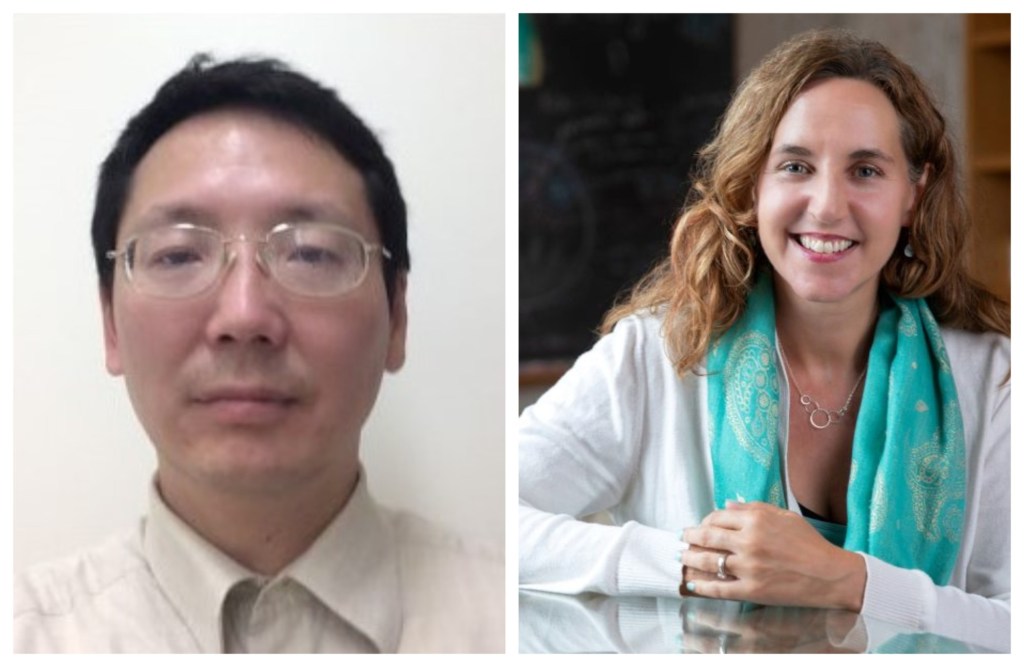
The research team behind the study includes corresponding authors Wei Wang, a professor in the Departments of Cellular and Molecular Medicine and Biochemistry and Molecular Biophysics at UC San Diego; Susan Kaech, a professor at the Salk Institute at the time of the study; and H. Kay Chung, an assistant professor at UNC Lineberger and previously a postdoctoral researcher in Kaech’s lab.
The multi-institution collaboration first formed as Kaech approached Wang to explore ways in which T cells can be spared from exhaustion.
One of the driving forces behind distinguishing cell states was the use of machine learning, Wang said.
“Manually, if you want to integrate different types of data, it’s more difficult,” Wang said. “But [artificial intelligence] or more general machine learning tools can really integrate different kinds of subtle differences. Then if you have multiple lines of subtle differences, then combining it together, they can tell ‘this is statistically significant.’”
Researchers used advanced lab, gene, mouse and computational approaches to evaluate CD8 T cell states ranging from protective to dysfunctional. Using a detailed genetic atlas of various CD8 T cell states, researchers were better equipped to see how an immune cell changed.
That was especially important as researchers parsed which T cells are protective and exhausted.
“The reason this was actually quite hard to do is because those two states — even though they’re different and one’s better and more protective than the other — they actually look really, really similar,” Kaech said. “So we had to go in and take a different approach to figure out what may make these cells so different.
“The idea would be that if we knew that, we could now start to think about new ways of designing T cells to take on one state but not another.”
With their findings, Kaech said she believes the researchers can design or program cells that are durable and effective against chronic infection.
“We’ve learned over the years that some types of T cells are more beneficial than others,” she said, “and what we would like to do is be able to harness that knowledge and be able to design T cells to be better than maybe they can be normally.” ♦