
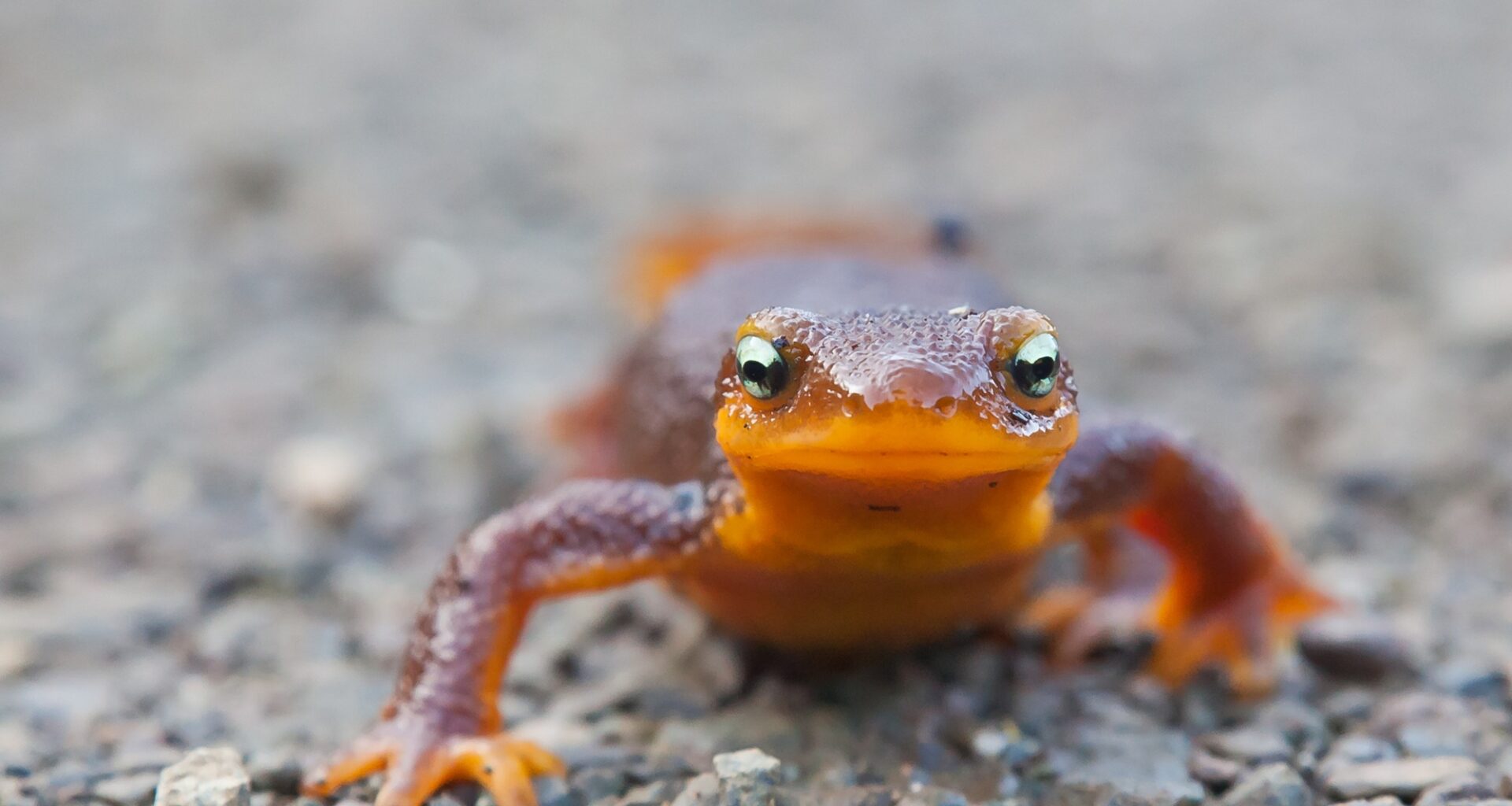
Peninsula: Mindego Hill, Russian Ridge
This 5-mile round-trip trail will reward you with immense summit views and the potential for newt viewing during the rainy season — plus, you may even get lucky to spot native raptors like red-tailed hawks, turkey vultures, Cooper’s hawks and golden eagles.
The trail, part of the Russian Ridge Open Space Preserve, starts off Alpine Road on the Peninsula, just west of Skyline Boulevard.
Following an old farm road, the trail is mostly exposed, so be sure to bring sun protection if you’re hiking after the rains. Watch for newts underfoot once you start climbing the Mindego Hill itself.
Know before you go: The Mindego Hill area can close due to high winds, so be sure to check the website before you head out. Parking is free at the preserve. Dogs are not allowed.
North Bay: Cataract Falls, Mount Tamalpais
At its absolute best on a rainy day, Cataract Falls is not just a flowing delight of a waterfall — it’s also a prime spot for newt-finding in the winter months.
The entire Mount Tamalpais State Park is lush and dense after heavy rains. And this trail winds hikers uphill through the cozy forest, on wooden bridges across creeks and alongside picturesque pools, where wildlife abounds.
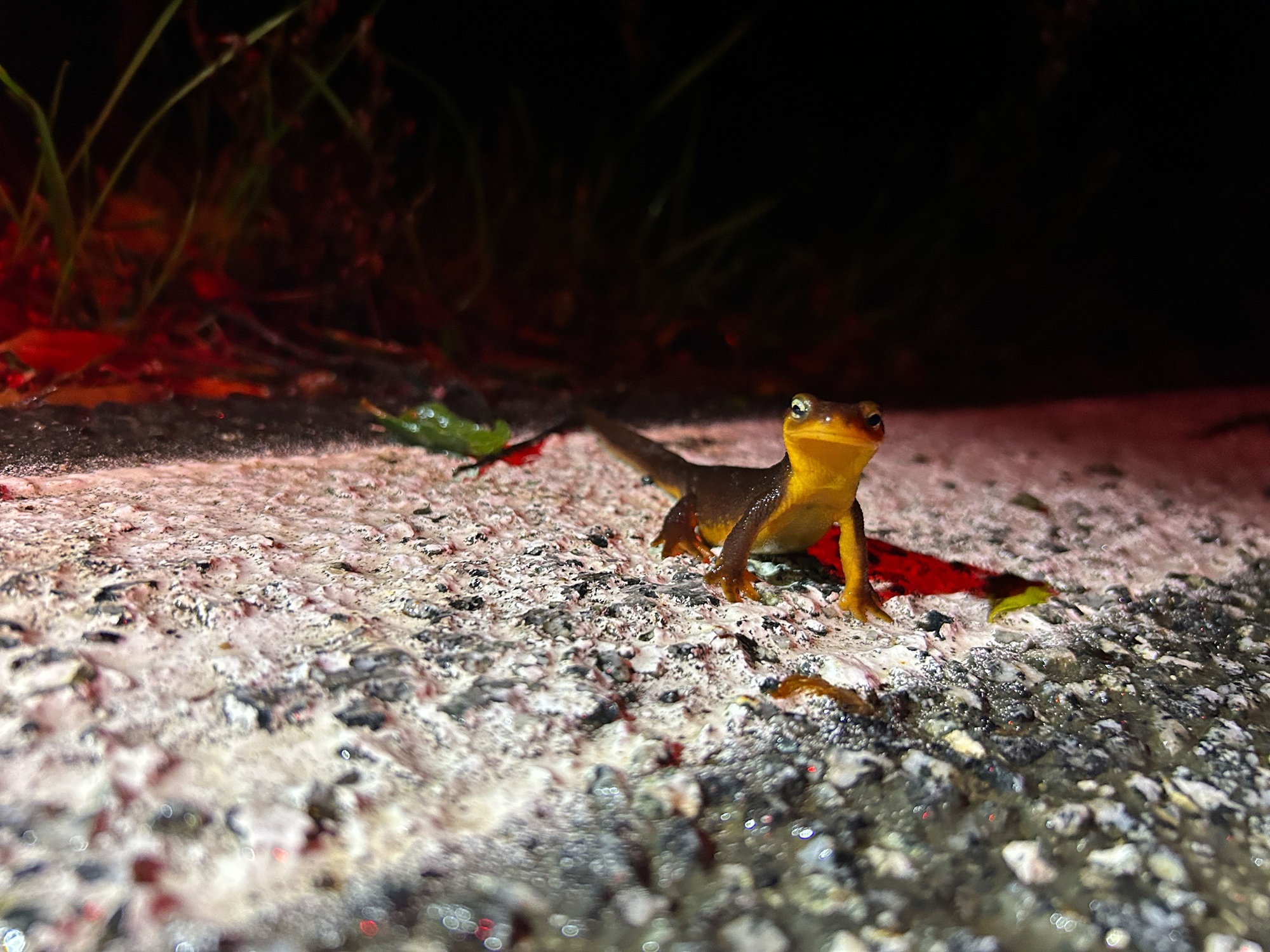 A California newt trying to cross Alma Bridge Road. (Courtesy of Annette Hertz)
While the cascade meanders down the entire hillside, there are two main falls along the trail, and even a picnic area to take a break — which you may need, given much of this hike is up steep staircases. Keep your eyes peeled for newts underfoot and in the various pools of water where they may be bathing.
Know before you go: Parking fills up quickly from the bottom of the trail, so if you’re heading out during a peak weekend time, try parking at the top of the hill and hiking down from Laurel Dell Road. Parking on either side of the falls is free, but be sure to face your car the correct way on the side of the road to avoid a ticket. Dogs are allowed but must be on leash.
How to lend a helping hand to Bay Area newts
In Marin County, the volunteer-run Chileno Valley Newt Brigade has operated for seven years to monitor a 1-mile stretch of Chileno Valley Road near Laguna Lake, where newts must make the dangerous crossing twice each breeding season.
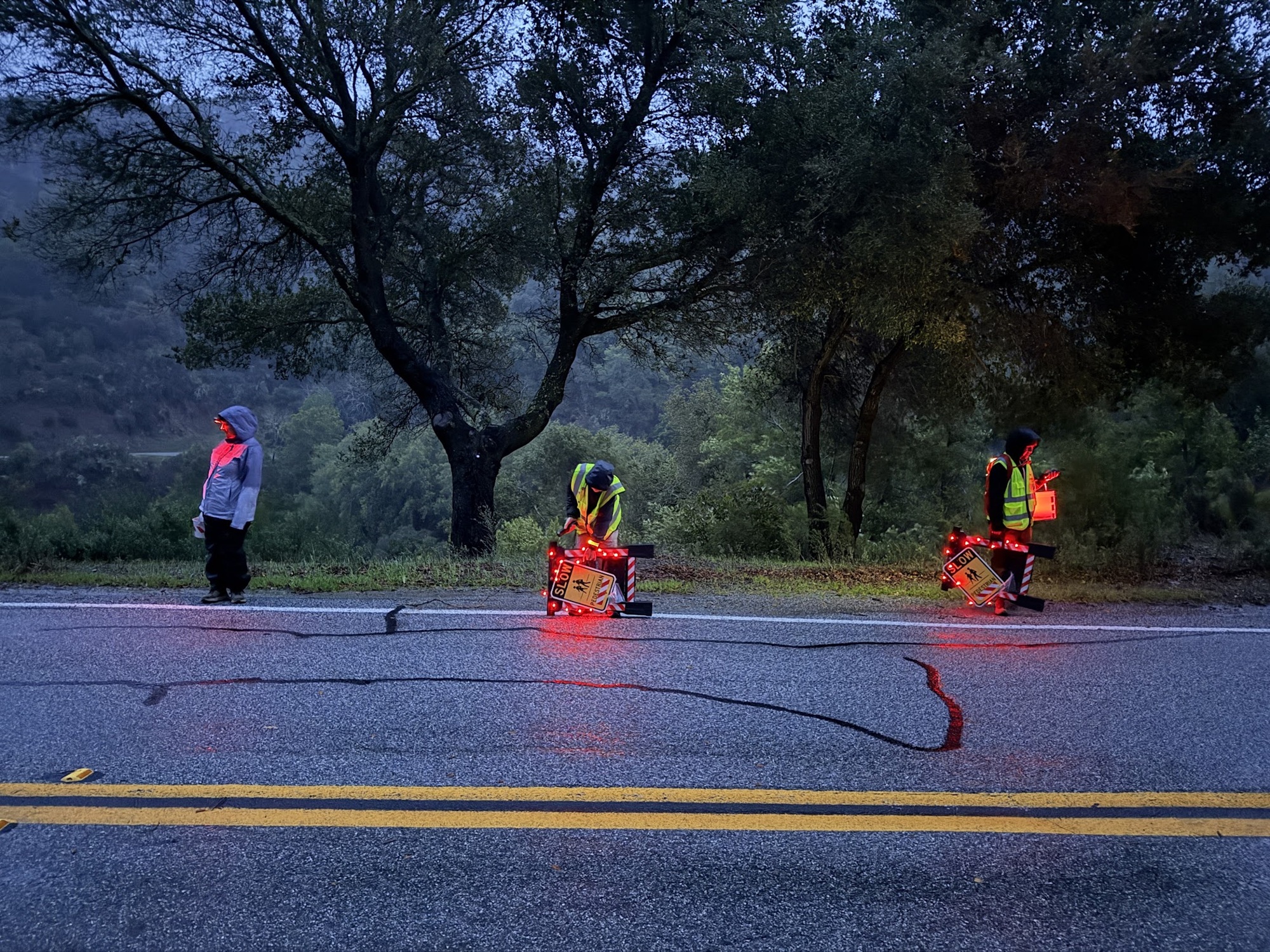 Volunteers from Newt Patrol on their way to the assisted migration area. (Courtesy of Merav Vonshak)
If you’re interested in volunteering with the Newt Brigade, you can sign up for training on their website. Shifts, which are scheduled during newt breeding season from October through mid-March, are around two hours long and you’ll be asked to commit to one shift per week.
Want to help out in a more casual way? The Midpeninsula Regional Open Space District advises reporting your newt sightings and observations to community science projects like iNaturalist, which many organizations like Midpen use to track migrating species.
Read more about volunteer efforts to save migrating newts.
KQED’s Sarah Mohamad contributed reporting to this story.