
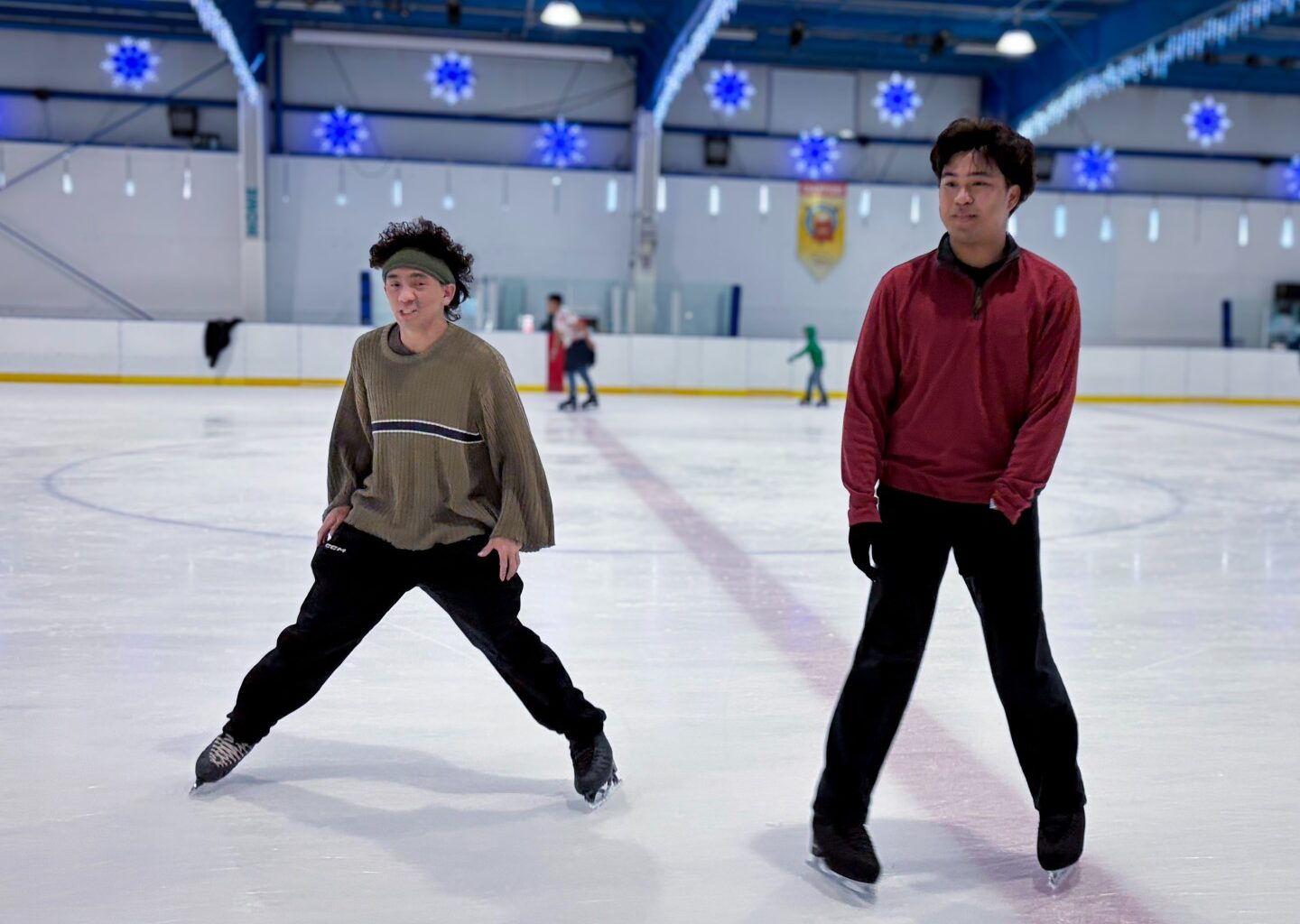
On television, Olympic figure skaters launch into triple axels, rotate midair and glide on the ice with blades just a quarter-inch wide; smiling as though gravity were optional.
The illusion draws new skaters to local rinks every four years. As the Milano Cortina Winter Games run Feb. 6–22, instructors at Skatetown Ice Arena in Roseville say they are already seeing renewed interest. Inspired beginners soon discover what seasoned skaters know: The sport is equal parts athleticism, persistence and learning how to fall.
Brandon Nguyen remembers watching the 2022 Beijing Winter Olympics and thinking: that looks cool. Maybe I could do that.
He and his friend Christian Galit went to Skatetown for a public session. They rented skates. They watched the figure skaters in the center of the rink spinning and jumping. They decided to give it a shot.
Four years later, they’re still skating.
“We didn’t expect to get very far,” Nguyen said. “But here we are today, years later, still sticking with the sport.”
Jennifer Jones is an instructor at Skatetown who has been skating for 42 years. She said the Olympic cycle reliably draws new interest.
“Anytime we get an Olympic Games, the bump at the local ice rinks is marketable. It’s really huge,” Jones said. “It’s hockey, it’s curling, it’s speed skating, it’s figure skating. All four of the ice sports really get a huge bump.”
Jones knows the feeling.
In 1984, she watched her hometown skater Rosalynn Sumners compete at the Sarajevo Olympics. She immediately signed up for lessons, convinced she would step onto the ice and start spinning.
“I took a colossal face splat,” Jones said, laughing. “But I was very determined to make it around the rink once, and wear white skates.”
That gap between what people see on television and the reality of skating is something instructors prepare for every Olympic cycle. The athletes competing in Italy make triple axels and death spirals look easy.
“The people that go onto the ice make it look effortless and it is so extremely difficult,” said Bethanne Katz, a skater at Skatetown who recently returned to the ice after a 15-year break. “I think people come out here and they’re like: ‘How hard can it be? I can do a jump.’ And yeah, it’s a bit different than how easy they make it look on TV.”
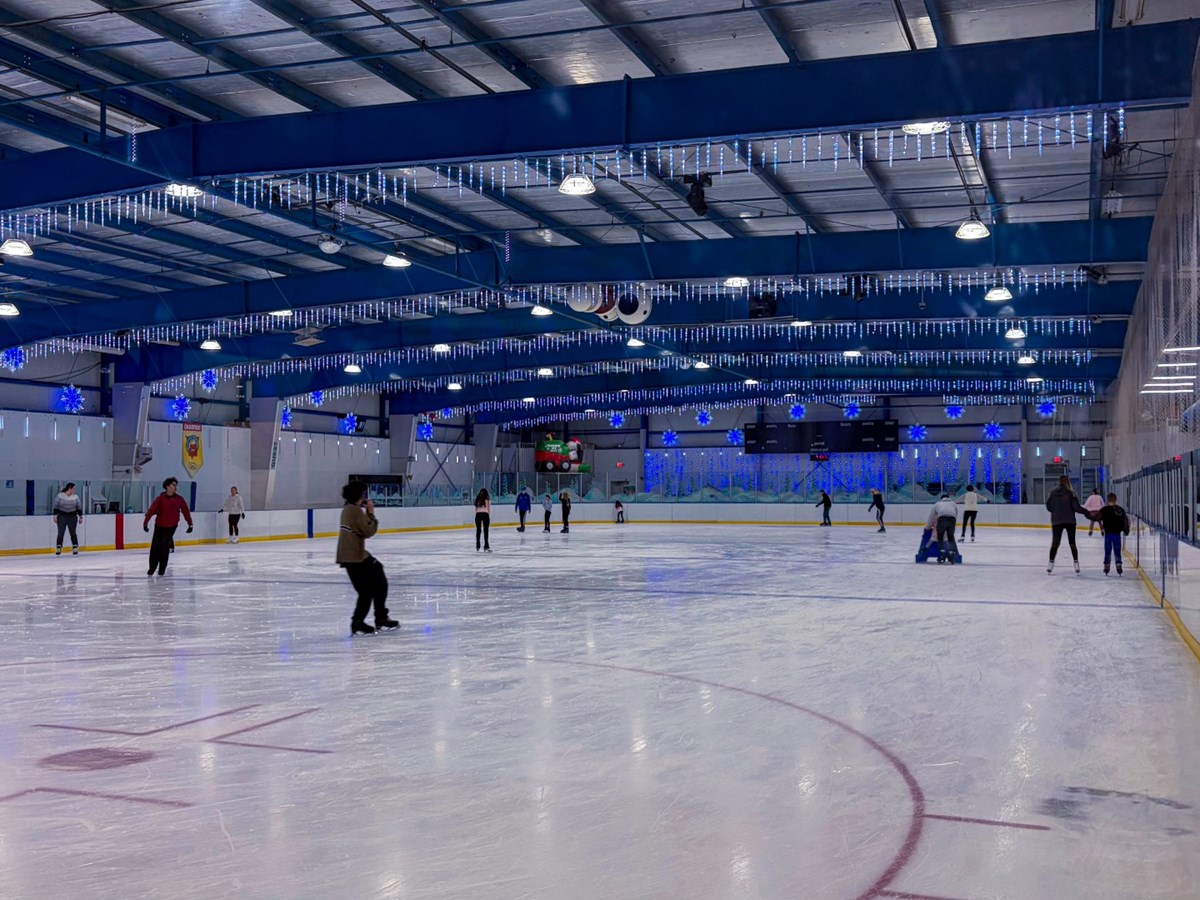 Interest in ice skating often rises during Winter Olympic years, drawing new skaters to local rinks. People skate during a public session at Skatetown Ice Arena in Roseville, Calif., on Feb. 13, 2026.
Nguyen learned that quickly. Watching stars like Yuzuru Hanyu made skating look simple, he said.
“You have to spend countless hours trying to perfect something, even if it’s just a little simple maneuver,” he said. “It takes countless falls, countless failures, in order to get something right. You’re not going to get something right on the first try.”
He pointed to a jump he had just landed.
“To do that jump right there, I think it took me about two months of just hours of practicing,” he said. “But now I can just do it on autopilot.”
Jones described skating as 10% athletic ability and 90% overriding your natural instinct not to injure yourself.
“You’re constantly throwing yourself up into the air and rotating and landing on a quarter inch of steel,” she said. “And if one little part of your body is off, down you go. Even the Olympians fall.”
Eighty-year-old Margaret Wade has been skating for about 30 years and has watched plenty of Olympic-inspired newcomers arrive at the rink.
“I think they have visions of possibly being easier than it really is,” Wade said. “And yeah, they find out it’s really hard.”
But that reality check doesn’t have to be discouraging. Jones, the Skatetown instructor, said the key is starting with fundamentals, including how to fall.
Figure skate blades are curved, not flat, which is why beginners wobble as they search for balance. Instructors first teach skaters to bend low, grab their knees and fall to the side rather than backward.
“We just don’t want you falling back and hitting your head,” Jones said. “Those injuries are preventable if you know how to fall properly.”
For parents considering lessons after watching the Games, Jones recommended starting with a public session. Hold their hand. Let them march along the wall like a penguin.
“You’ll see almost immediately if that child is just taking to it like a duck to water or if they’re like, no way, it’s not happening,” she said.
Nguyen and Galit are proof that adults can start, too. They enrolled in an introductory course, practiced using online videos and eventually hired a coach as the skills became more complex.
Galit, who skated as a child in the Philippines before a decade-long break due to an ankle injury, said the key is just showing up.
“If you want to try, just try it,” he said. “Don’t hold back.”
Nguyen agreed.
“You can start this sport at any age,” he said. “We started as adults. Not everyone has to start as a little kid to do it seriously.”
Katz said the community has been as meaningful as the physical challenge in her return to the sport. She credited Jones with building a welcoming adult skating program.
“Everybody says ‘hi’ and we have parties together,” Katz said. “It’s just a lot of fun.”
For anyone watching the Olympics and feeling that pull toward the ice, Katz offered simple advice: find the joy in the sport, and keep your expectations realistic.
Wade put it more bluntly.
“Try it out,” she said. “But be careful.”