
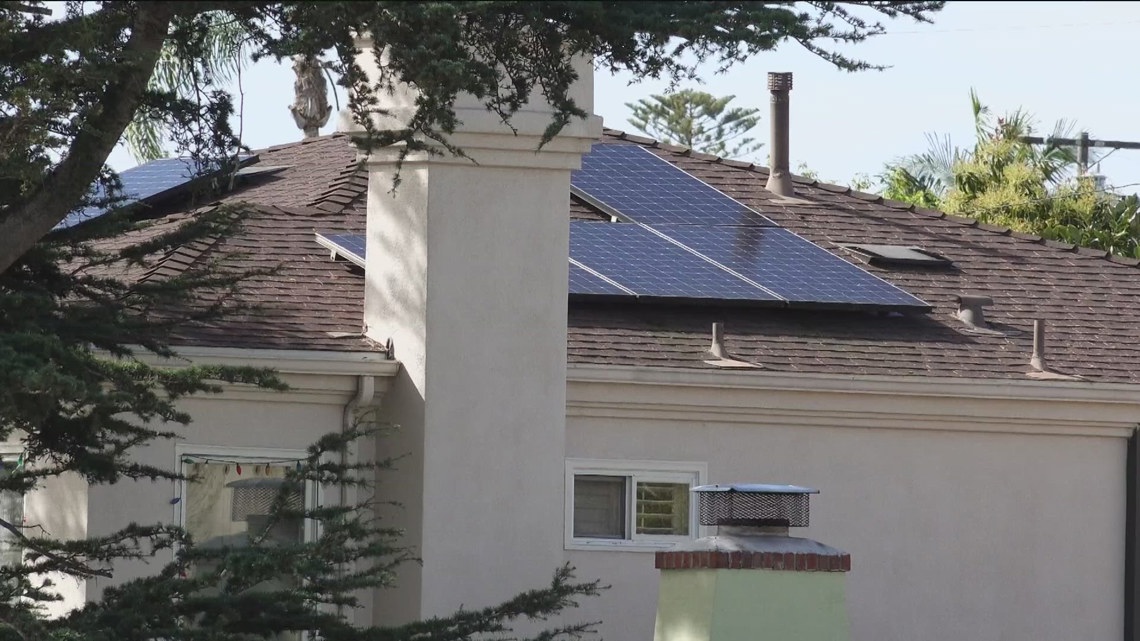
These systems are more affordable and can be mounted in smaller areas like balconies and patios so people living in apartments can use them to cut energy bills.
SAN DIEGO — San Diego ranks among the top U.S. cities for rooftop solar installations — but for millions of Californians who rent, or whose homes can’t support traditional panels, access to clean energy remains limited. State lawmakers say a new idea could change that: plug‑in solar, also known as balcony solar.
A Common Sight in Europe — Now Gaining Attention in California
In countries like Germany, plug‑in solar units are already widely used. These small systems, often mounted on balconies or patios, can help power appliances such as a refrigerator or small electronics during daylight hours. After dark, users switch back to the grid.
“You can set these out on a balcony, you can put them in a yard or a patio,” said Dave Rosenfeld with the Solar Rights Alliance. “All you really need is a little patch of sun.”
Rosenfeld says he’s encouraged that California leaders are looking to relax regulations so more residents — especially renters — can use these systems.
New Legislation Targets Cost Relief for Renters and Homeowners
State Senator Scott Wiener has introduced a bill that would allow San Diegans and others across the state to install small plug‑in solar systems without requiring approval from utility companies such as SDG&E.
“The cost of electricity throughout the state — Bay Area, San Diego, L.A. — is one of the drivers of the high cost of living in California,” Wiener said. “That is really putting pressure on a lot of people, including homeowners and renters, and we need to give people tools to get their costs down.”
Energy analysts estimate that a typical 400‑watt plug‑in system could save a user around $250 a year. At current prices, it would take roughly three years to break even.
But experts say increased demand could rapidly push prices down — exactly what happened in Germany.
“Over time, you will see the price start to align with Germany,” Rosenfeld said. “So that it’s more like $200–$300 to buy one panel, and then you can see this thing pay back in like a year or so.”
SDG&E Responds
In a statement, SDG&E said it plans to collaborate with lawmakers as the bill moves forward in Sacramento.
“Our priority is ensuring that any technology operating on or near the electric system meets strong safety standards that protect customers, lineworkers, and the public,” said SDG&E Spokesperson Anthony Wagner.
What’s Next?
Lawmakers hope to pass the bill later this year. If approved, residents might not have to wait long to take advantage of the technology.
“By mid next year, we hope that consumers can walk into a Target, a Home Depot, an IKEA, or their local hardware store, be able to buy one of these products, set it out on a balcony, a yard, or a patio, safely plug it in, and begin cutting their energy bill,” Rosenfeld said.