
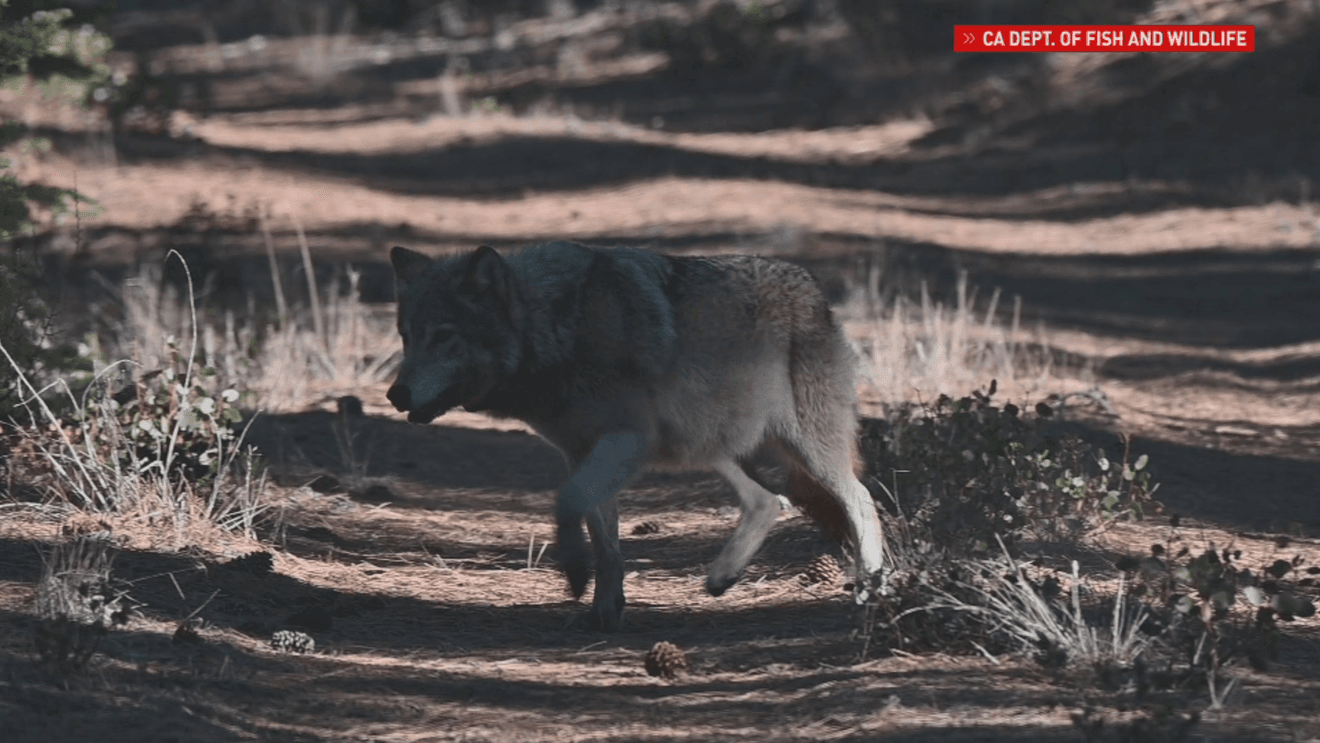
Wolves are becoming a growing concern for ranchers across California.
The issue is not new, but has intensified in recent months.
For ranchers like Kylee Truax, a seventh-generation rancher in Siskiyou County (just north of Redding), the threat is personal and immediate.
“I think they are beautiful, but they’re not friendly,” Truax said.
In less than 48 hours, Truax said two of her cows were ripped apart by wolves, on Feb. 16.
The wolves are a part of the Whaleback Pack, which have lived in Siskiyou County for a little over five years.
“You can do as much as you want, but the trouble with the Whaleback Pack is they’re not afraid of humans,” Truax said. “They’ve been so just accepted and everybody has to deal with them that they’re not even scared of you.”
Truax said sometimes the wolves kill just for fun rather than for necessity.
“We’ve tried to do everything you can,” Truax said. “As a rancher with livestock, any kind of livestock, you just cannot deal with wolves.”
In 2023, the Yowlumni pack was discovered in Tulare County and has been living there ever since.
In October 2025, the California Department of Fish and Wildlife killed four wolves, from the Beyem Seyo pack in Plumas County, that were relentlessly attacking livestock.
The agency took that step after multiple attempts to try to get the wolves to leave the area.
Truax also said the toll goes beyond the animals that are killed, affecting the rest of the herd.
“They got chased around all night on early morning and now they’re not gonna eat for a couple of days,” Truax said. “So they’re gonna lose weight, they’re stressed out, they’re just profit there because you’re losing weight, you’re losing weight, you’re losing everything.”
Truax said her family remains on constant alert.
“You have to be scared of them ’cause they’re not scared of you and they’ve made that very obvious,” Truax said.
Despite recent actions by the CDFW, Truax said she believes more help is needed for ranchers dealing with wolf conflicts.
“They don’t see the blood, they don’t see raising babies from when they’re born, the cute little babies on the ground to now where (the cow is) dead and it’s all ripped apart,” Truax said. “(The California Department of Fish and Wildlife) wanna understand and that’s not enough for us.”
Earlier this month, the CDFW successfully captured and collared five gray wolves in Northern California. The tracking allows ranchers to follow the location of the wolves online to help prevent future conflict.
To view the mapping and locator tool, click HERE.