
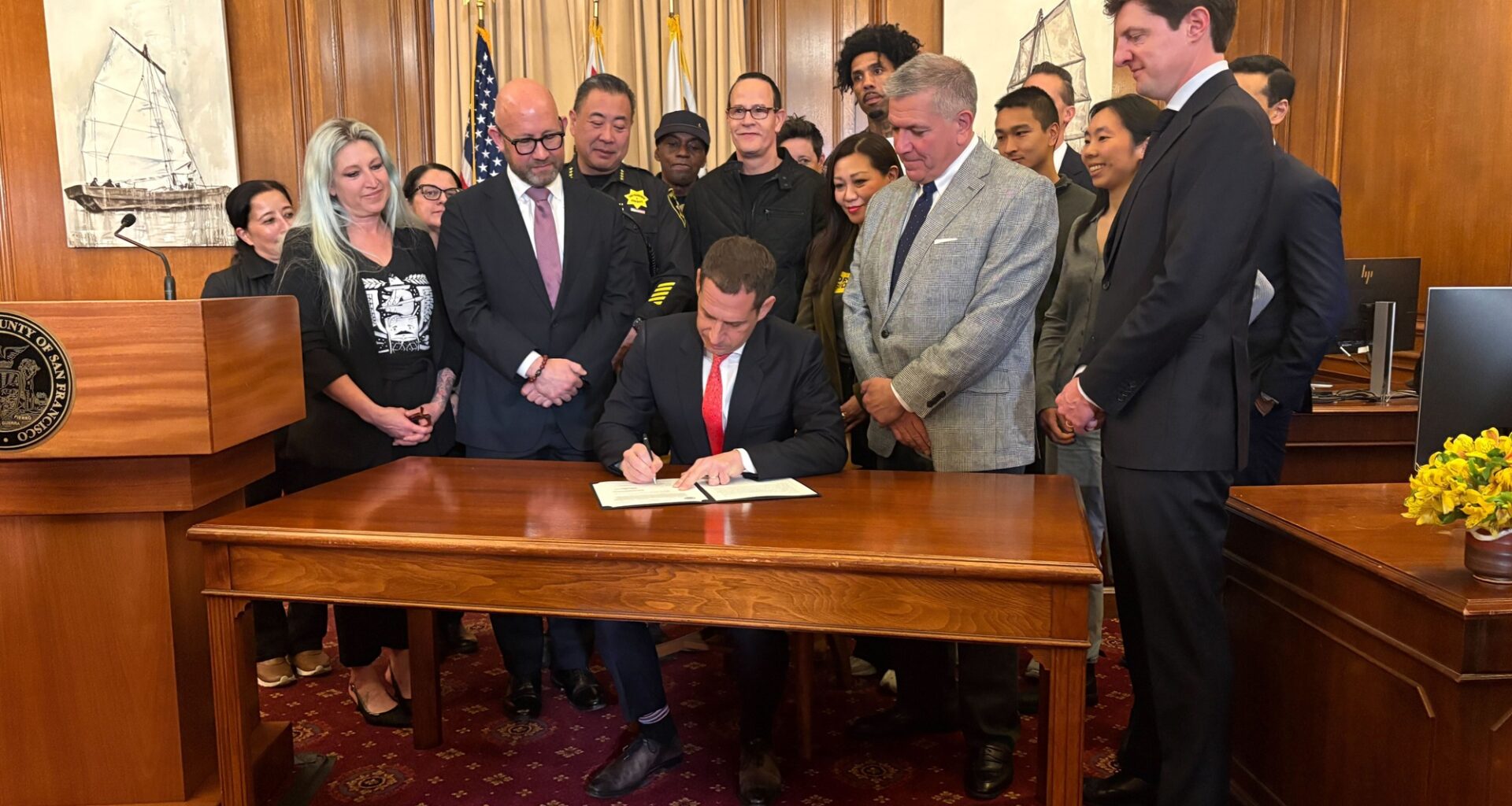
Sheriff Paul Miyamoto disputed the idea that the center is legally risky during the press conference.
“What we are doing is absolutely legal. We’re taking people off the street, taking them into custody for public intoxication,” Miyamoto said.
Supervisor Matt Dorsey, a self-identified recovering drug addict whose district includes SoMa, called the RESET Center “the single most important policy shift in San Francisco since the advent of the fentanyl crisis.”
“I know I’m not alone in the recovery community in believing that nothing San Francisco has done over the years to tolerate public drug use has helped anyone — not our neighborhoods, not our businesses, and, most of all, not anyone on the street struggling with a fentanyl addiction,” he said Tuesday. “I’m convinced [the RESET Center] will improve street conditions, diminish drug-driven lawlessness and save lives.”
But not everyone in City Hall is on board with the plan. Supervisors Jackie Fielder and Connie Chan voted against moving forward.
RESET is just the latest in a series of programs and initiatives Lurie’s administration has launched since taking office, with varying success, as part of his Breaking the Cycle initiative. Many of those have increased law enforcement’s role in responding to drug crises. The city has also consolidated its street response teams under one department, and completely cut off some street-level harm reduction programs.
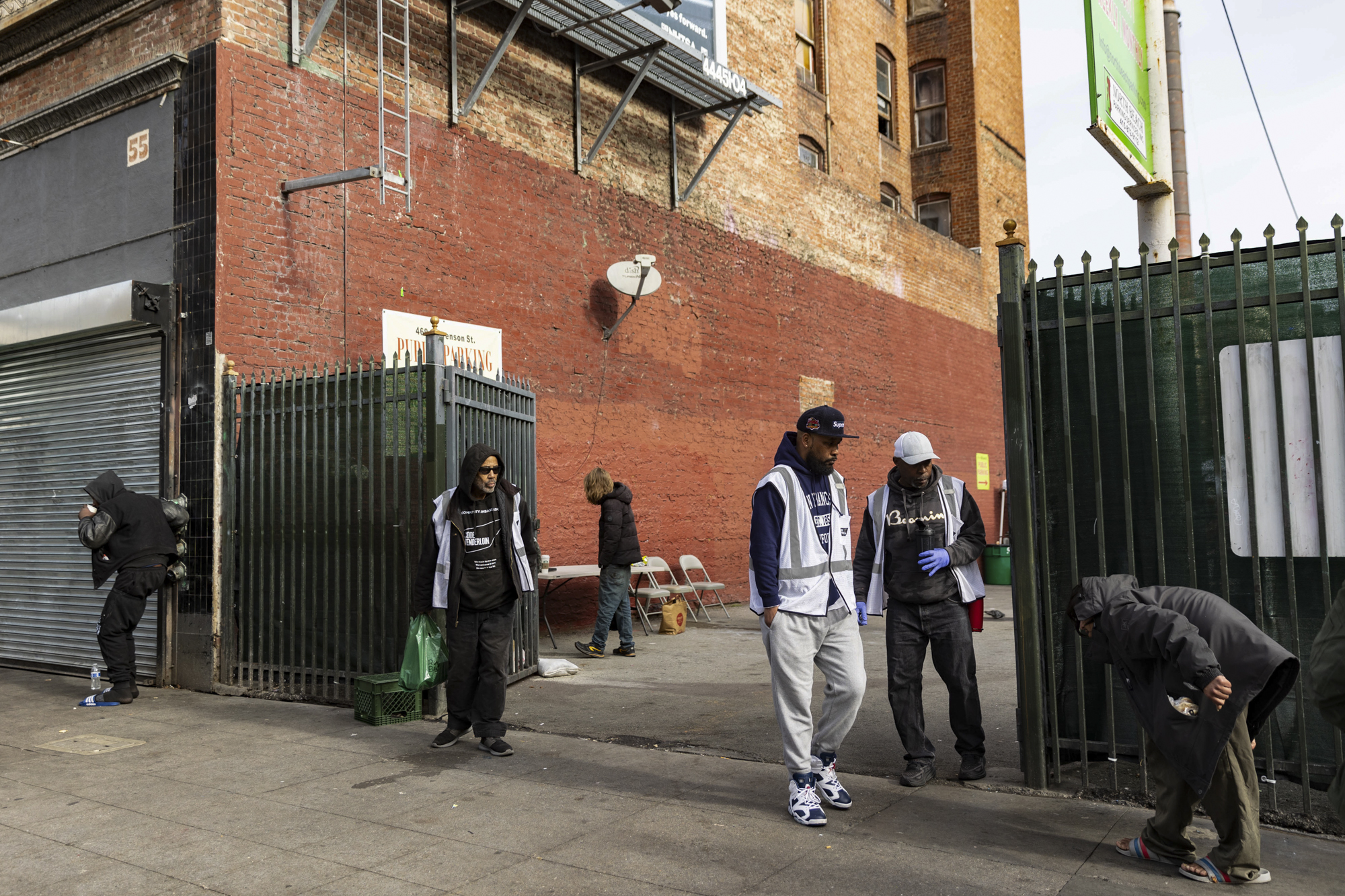 An outdoor triage center in a parking lot on Stevenson Street on Feb. 11, 2025. At the site, individuals who were arrested would get dropped off by police so they could either get treatment, take a bus out of town or go to jail. The center, operated as a 30-day pilot program, also offered resources and food to individuals. (Gina Castro/KQED)
A year ago, the mayor opened a triage center on Sixth Street, which is known as a hot spot for street-level drug challenges. However, the pilot program there ultimately wound down after little use from law enforcement as an additional drop-off site for arrestees, although some drop-in guests told KQED they enjoyed the site’s free coffee and chairs to rest.
Last spring, the city also opened a drop-in stabilization center in the Tenderloin at 822 Geary St. That facility is still operating and has shown greater success at connecting people struggling with addiction to immediate care.
“For too long, San Franciscans have been told that we must choose between clean, safe neighborhoods and compassion for those struggling on our streets,” Lurie said. “The RESET Center is a health-focused facility designed to care for publicly intoxicated individuals by moving them off the street and into a safe, controlled environment. It provides hope by giving individuals a chance to sober up and be connected to treatment.”