
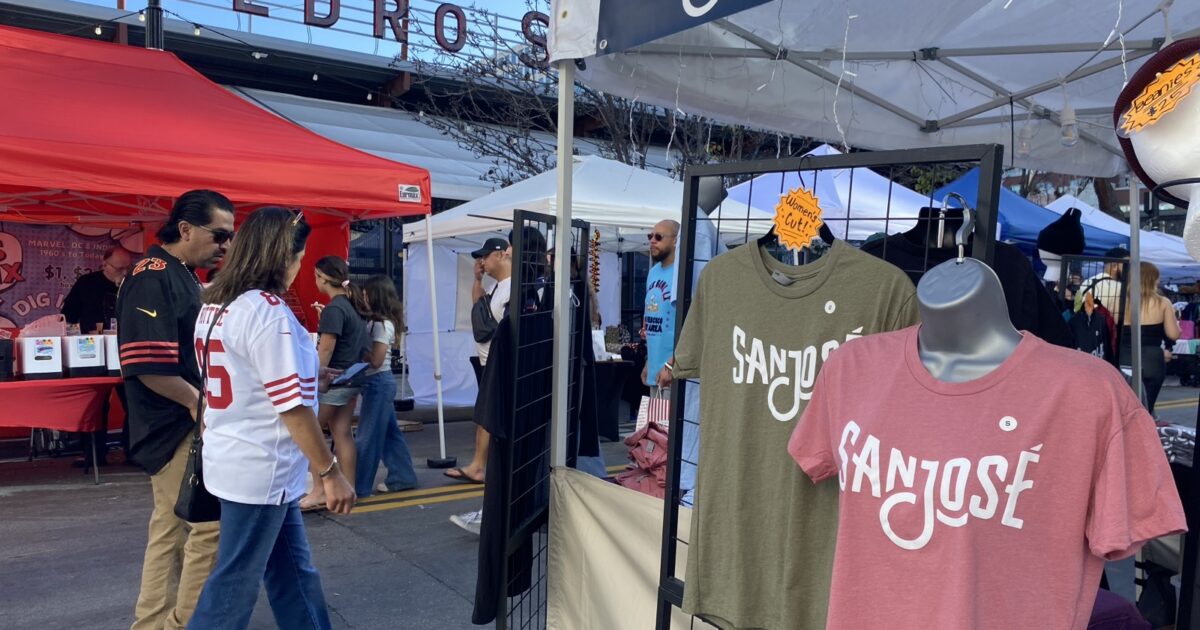
San Jose leaders say preliminary figures gauging the economic impact from Super Bowl 60 suggest a yearslong effort to prepare the city for the flood of new visitors has paid off. If they’re correct, it’s a sign the South Bay managed to secure a larger slice of the economic pie than when the Super Bowl came to the region in 2016.
Over the eight-day period that culminated in Super Bowl Sunday, San Jose drew in 459,200 visitors, driving record-setting retail and restaurant sales, as well as a surge in airport travel and hotel stays, according to Mayor Matt Mahan’s office.
“Super Bowl week showed what San Jose is capable of delivering — fun, memorable and accessible fan experiences for visitors and residents alike, especially for those who could not attend the game itself,” Mahan said in a statement. “Compared to 10 years ago, we’ve closed the gap significantly.”
Christine Lawson, CEO and president of Discover Santa Clara, the organization that leads marketing efforts for the city, said while it’s too early for hard economic numbers, hotel stays over Super Bowl weekend appear to be significantly above average. The game took place at Levi’s Stadium in Santa Clara.
“It felt strong,” Lawson told San José Spotlight. “It just felt like there were a lot more people in Santa Clara that were staying longer and really hanging out and enjoying what we have here.”
Leaders in both cities want to continue such momentum as they prepare to welcome yet more major sporting events this year. Next month, the SAP Center in San Jose will host NCAA March Madness, and beginning in June Levi’s Stadium will host a series of FIFA World Cup matches.
San Jose officials have said that over the course of all three major sporting events, the city expects to see more than 100 watch parties and about two dozen major events, including concerts and light shows.
San Jose has been laying the groundwork for all these festivities for more than a year. The preparations have included efforts to spruce up downtown with additional public art and improved signage. In addition, last year the city also hired former Olympic short track speed skater Tommy O’Hare as a sports and special events director to help oversee the planning work around the 2026 games.
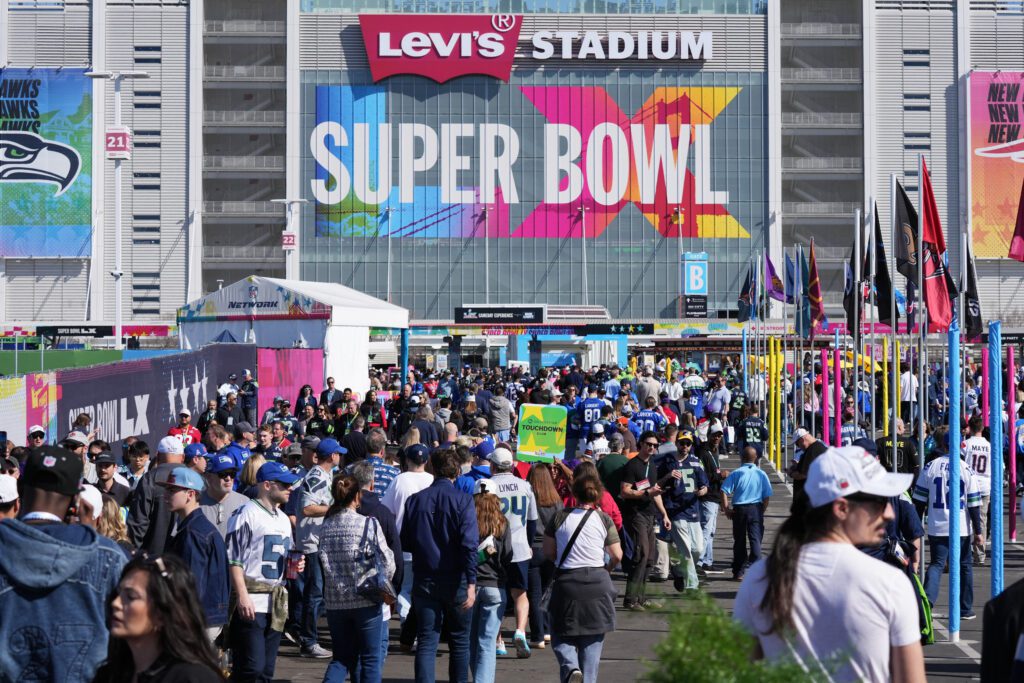 People arrive at Levi’s Stadium in Santa Clara before the NFL Super Bowl 60 football game between the New England Patriots and Seattle Seahawks on Sunday, Feb. 8, 2026. (AP Photo/Lynne Sladky)
The all out event-planning blitz has come partly in response to the lackluster economic impact that followed Super Bowl 50, held at Levi’s Stadium 10 years ago. One analysis found that while the Bay Area as a whole drew in $240 million from that game, San Jose secured only 12% of the economic pie and Santa Clara saw only 7%. In contrast, San Francisco took home 57%.
This time, San Jose officials said hotels reached significantly higher occupancy rates than they did a decade ago. Across Super Bowl week, local hotels drew in 45% more revenue than during Super Bowl 50, according to the city’s figures.
Meanwhile, San Pedro Superfest, a three-day block party spanning Friday through Sunday on Super Bowl weekend, attracted 48,000 visitors to San Pedro Square, according to city data.
“This was without question the busiest weekend San Pedro Square Market has ever experienced,” John Burroughs, the market’s operations manager, said in a statement. “Saturday alone shattered our previous single-day sales record by more than 30%.”
Ultimately, San Jose officials hope that by showcasing the best the city has to offer, the week of special events has helped raise the city’s profile, and will tempt game-day visitors to come back again.
Lorenzo Sarabia, a Seattle resident who rented an RV and drove 12 hours to make it to the downtown festivities on Super Bowl Sunday, said he was impressed by what he saw of San Jose.
“It’s awesome,” he told San José Spotlight. “Just the whole vibe, and all the construction going on and everything is cleaning up — it’s pretty clean over here and everybody is friendly.”
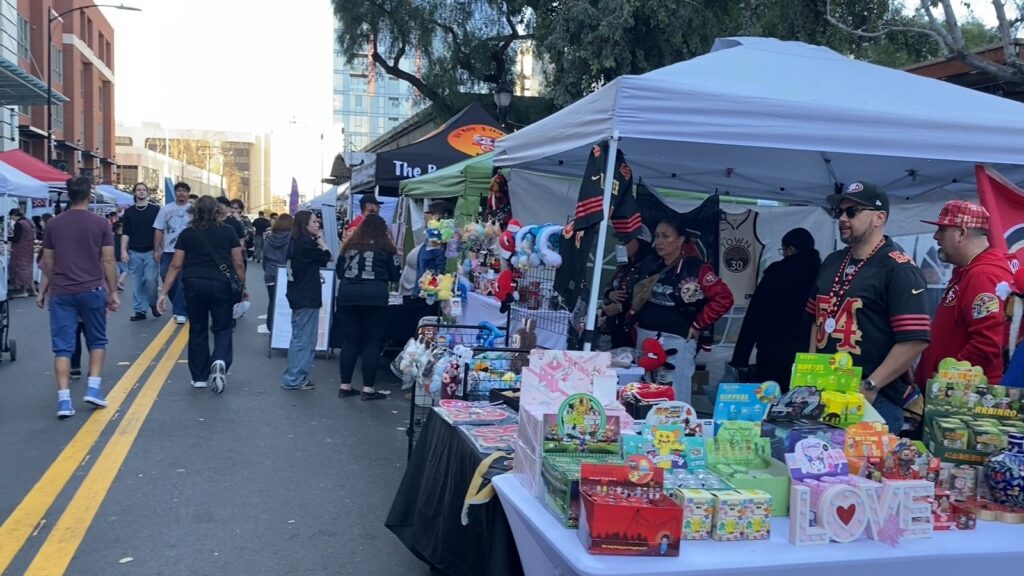 Vendors lined the streets around San Pedro Square in San Jose during a three-day block party called San Pedro Superfest that culminated on Super Bowl Sunday. Photo by Keith Menconi.
The Bay Area Host Committee — the region’s major sports event organizer led by executives of the San Francisco 49ers and other athletic teams — told San José Spotlight it is still compiling economic impact data and a full report will be available in the coming months.
It’s also not clear how much the local marketing and event efforts have cost local municipalities.
A spokesperson for the mayor’s office said such expenses are still being tabulated. A spokesperson for Santa Clara did not respond to a request for comment.
San Jose’s sponsored watch parties and concerts were funded in part through $5 million in donations from corporate, public and philanthropic organizations raised by the city and the San Jose Sports Authority, according to a report from Silicon Valley Business Journal.
In addition to economic gains, the games have also seen charitable dollars flowing into South Bay communities. The 49ers, through its foundation, joined with the Bay Area Host Committee Foundation and NFL Foundation to donate $3.7 million to the Santa Clara Unified School District. The money will be used to renovate Townsend Field at Buchser Middle School.
Throughout the Bay Area, the three organizations have donated $8.2 million in connection with the Super Bowl, according to a news release.
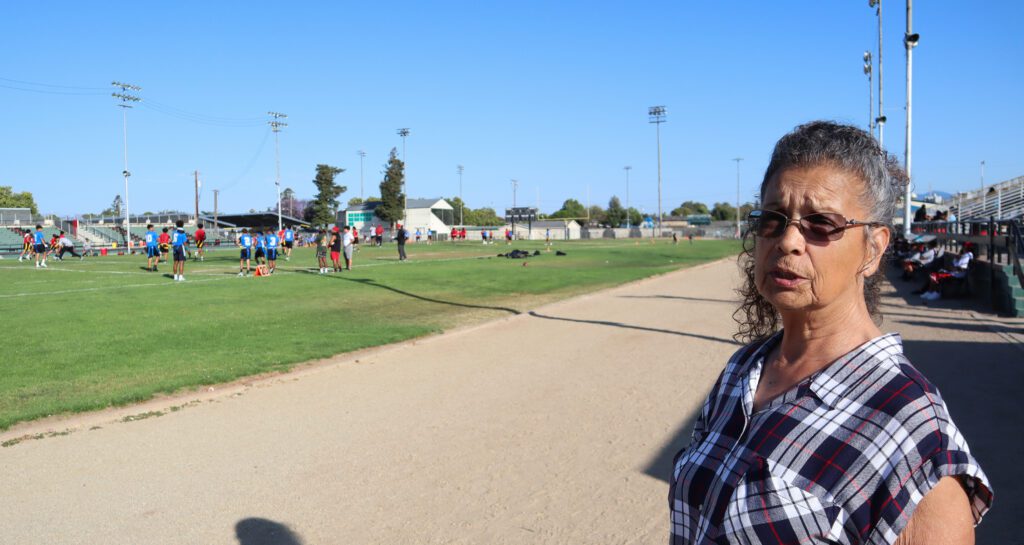 Linda Connelly, president of the Santa Clara Lions Youth Football & Cheer club, said she’s excited about the potential of a renovation of Townsend Field, where the club plays nearly year round. File photo.
But some local business observers remain skeptical that all the effort from local cities will pay off.
“We were promised a game changer,” Bob Staedler, a principal with real estate firm Silicon Valley Synergy, told San José Spotlight.
Despite San Jose’s efforts, the city appeared just once on a list of NFL-endorsed events announced by the Bay Area Host Committee, Staedler noted. Santa Clara didn’t make the list at all.
“San Francisco is raking up all the goodwill and all the media attention,” he said. “San Francisco had this wired from the beginning.” A spokesperson for the 49ers told San José Spotlight that the team’s own analysis of media trends found mentions of Santa Clara in the media spiked dramatically in the four months leading up to game day.
Even with all the effort San Jose has put into preparing for the 2026 games, O’Hare acknowledged the competition from San Francisco remains stiff.
“But we feel good about what we did,” he told San José Spotlight. “We feel like it was the right move for us in terms of getting the attention so that longer down the road, we can have more of these big sports events in San Jose and have less things happen in San Francisco.”
Contact Keith Menconi at [email protected] or @KeithMenconi on X.