
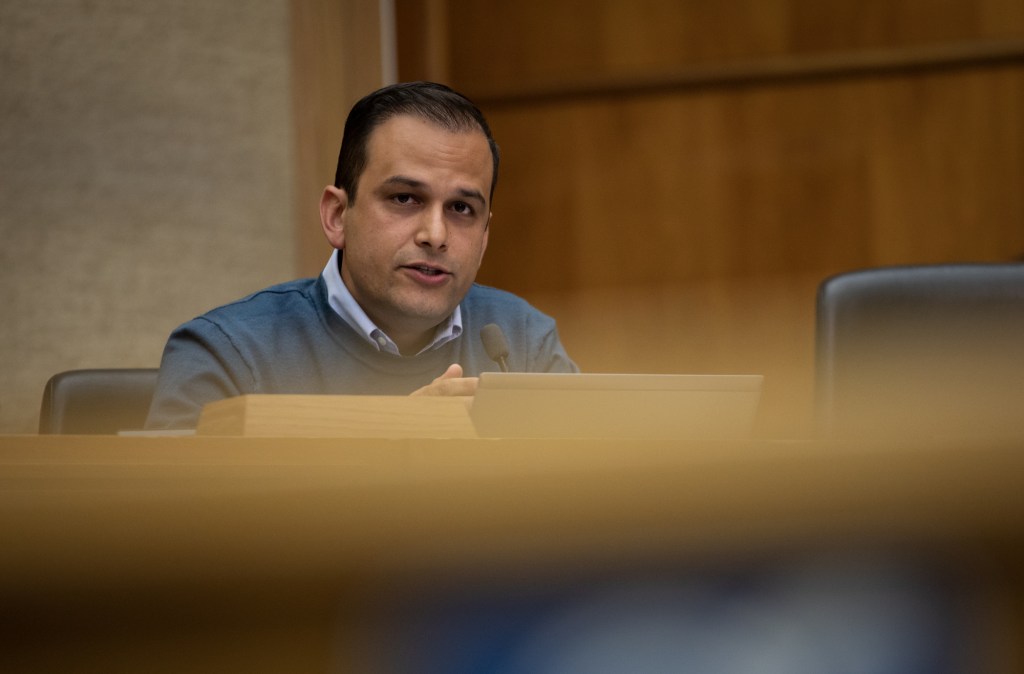
San Diego City Council members rejected Wednesday a proposal to make it harder to impose higher-than-expected fees on city residents, contending it would expand bureaucracy and shrink council power.
The proposal was prompted by how much higher the city’s new trash fees ended up being compared with what city officials estimated before voters approved a 2022 ballot measure allowing the fees.
To prevent that from happening again, the proposal would have required any ballot measure that could create a new fee — or raise an existing one — to undergo a comprehensive analysis long before voters weigh in.
The council’s Rules Committee praised the proposal, which was presented by Councilmember Raul Campillo, for its goal of boosting transparency and avoiding resident sticker shock.
But committee members said the proposal could make ballot measures more costly and delay their placement on the ballot.
Councilmember Vivian Moreno said it would also reduce the power of the council, which now has total authority to determine what kind of analysis is appropriate before a measure is placed on the ballot.
“Transparency in government is something I have always strived for. However, today’s discussion — in my opinion — is not about transparency,” Moreno said. “This item on the surface appears reasonable, but in practice it creates additional hurdles — and more hurdles are not what our government needs.”
Moreno said it wouldn’t make sense for the council to approve a policy that ties its own hands.
“This policy limits the council’s ability to govern,” she said. “It restricts our legislative authority, and that is not something I’m willing to support.”
Council President Joe LaCava, another committee member, stressed that the council could still vote to require a full cost analysis before any ballot measure without implementing a policy requiring it.
“It’s still on the table,” he told Campillo.
LaCava noted that Campillo’s proposed policy could also have been amended by a future council, stressing that only a ballot measure requiring financial studies would tie the council’s hands.
Campillo said he was frustrated by the focus on potential delays for ballot measures.
“Shouldn’t we be extremely thorough, to know how policies are going to impact people?” he said. “I don’t think speed is more important than diligence.”
Committee members also rejected a separate proposal from Campillo to revamp how people can protest fee increases, such as sewer and water rate hikes.
His proposal would have created new requirements for the protest notices now sent to sewer and water customers before rate hikes, which are approved by the City Council rather than created by ballot measures.
Committee members said San Diego already goes beyond state law when noticing residents of such hikes. LaCava also noted that the council often reduces proposed increases before approving them.