
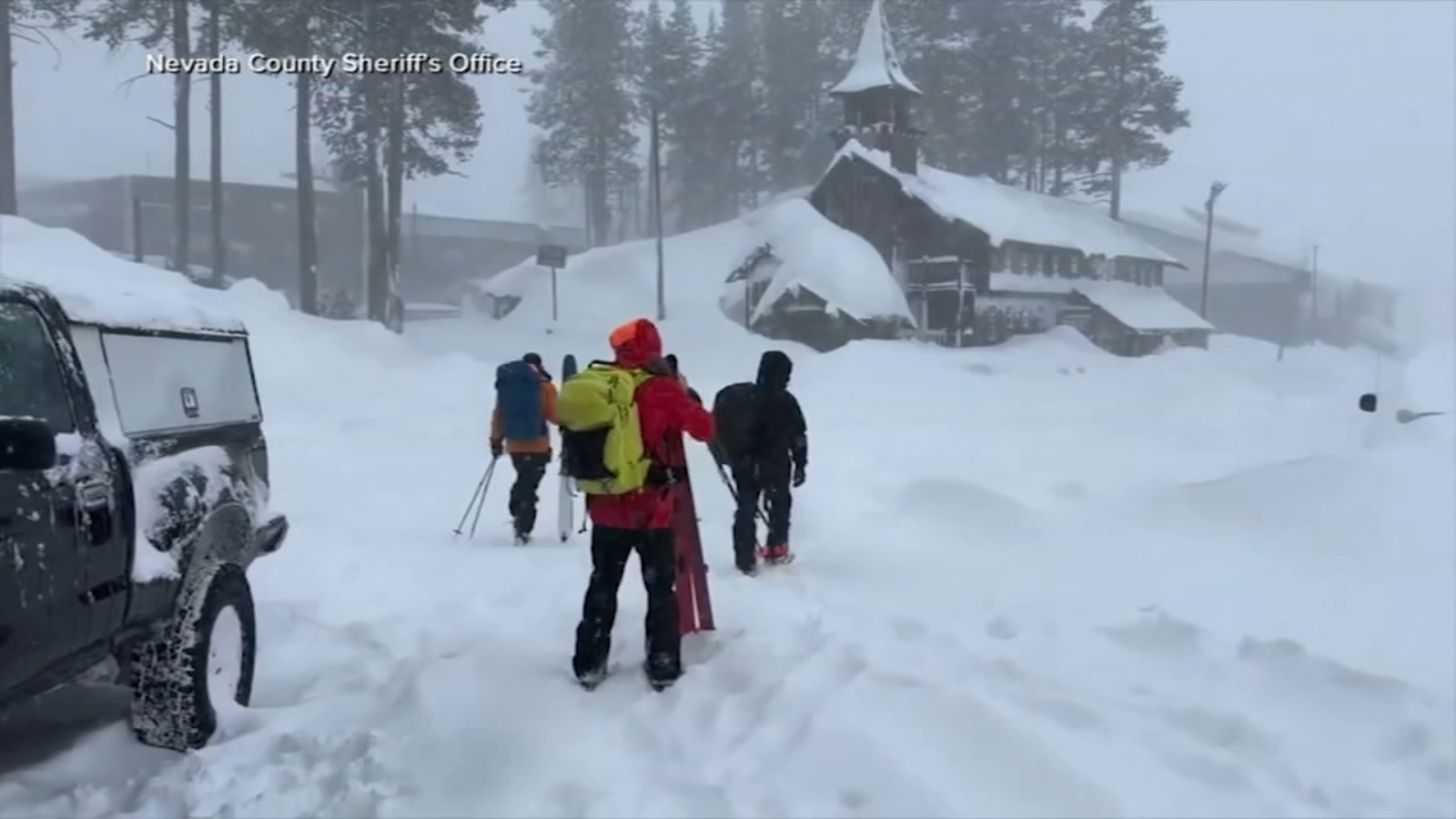
SAN FRANCISCO (KGO) — The group of 15 backcountry skiers, including four guides, was on a three-day trek organized by Blackbird Mountain Guides to Castle Peak during the deadliest avalanche in the U.S. in more than four decades near Lake Tahoe this week.
Backcountry skiing is unpatrolled and is usually outside of ski resorts and unmarked.
Because of this, special equipment and training is important if you’re going backcountry skiing.
Experts recommend safety tips including telling someone where you’re going, taking a map of the area and using equipment especially for the backcountry.
DemoSport in San Rafael has been busy this ski week with many planning to hit the slopes in the Tahoe area.
MORE: 8 backcountry skiers found dead, 1 still missing after avalanche near Donner Pass, authorities say
“We’ve been quite busy all season and ski week culminates the season where we have so many kids, families and people just chomping to get out into the backcountry and to their resorts,” said Steve Merrifield, owner of DemoSport, which sells snow gear. “Plus, a lot of snow fall has finally happened after a relatively slow start in the West.”
But Merrifield notes less people might go backcountry skiing until this system passes because of news of the avalanche.
He recommends some items to stay safe if you go backcountry skiing, like ski skins for uphill climbing, a probe and shovel to look for victims in the snow and an avalanche beacon with radio signal.
Richard Bothwell, the director of Outdoor Adventure Club in Truckee, agrees a beacon, probe and shovel are important. He also adds other items to the list.
“You also need to have a first-aid kit,” he said. “You should have a way to overnight shelter- either a tarp, for instance, a rescue sled if you need to move someone once they’re injured, head lamps, warm layers. It’s not just the avalanche equipment we need to be really well-prepared for the back country.”
MORE: Bay Area man dies from skiing accident at Northstar; 2nd death at resort in a week
Outdoor Aventure Club offers classes on backcountry skiing as well as Avalanche rescue and prevention classes.
“The avalanche advisory each day will tell us where unstable snow is,” Bothwell said. “And then it’s up to us to decide where we’re going to go and where we’re not going to go so I would start with reading the advisory.”
Bothwell also says it’s important to go with a good team where your concerns are heard.
Even with proper preparation, Merrifield acknowledges Mother Nature can sometimes take over.
Merrifield says a full ski outfit can cost $1,000 with backcountry add-ons doubling that cost.

If you’re on the ABC7 News app, click here to watch live
Copyright © 2026 KGO-TV. All Rights Reserved.