
The Supreme Court decision Friday to strike down President Donald Trump’s tariffs sent shockwaves throughout San Diego’s business community.
Local companies that struggled with rising costs for imported goods cautiously celebrated but, like much of the nation, wondered if and how they will get a refund — and what comes next.
The ruling could have broader implications for the region’s economy, as the costs for many goods had increased in the past year. While businesses may be looking for thousands of dollars in refunds, consumers should not expect any direct reimbursement from goods they purchased that were subject to the tariffs.
“I’m in shock. I was not expecting this,” said Mauricio Diaz, vice president of San Diego customs broker JD Group Logistics. “All of our importer clients are trying to figure what the next step is and how they will be able to get refunds.”
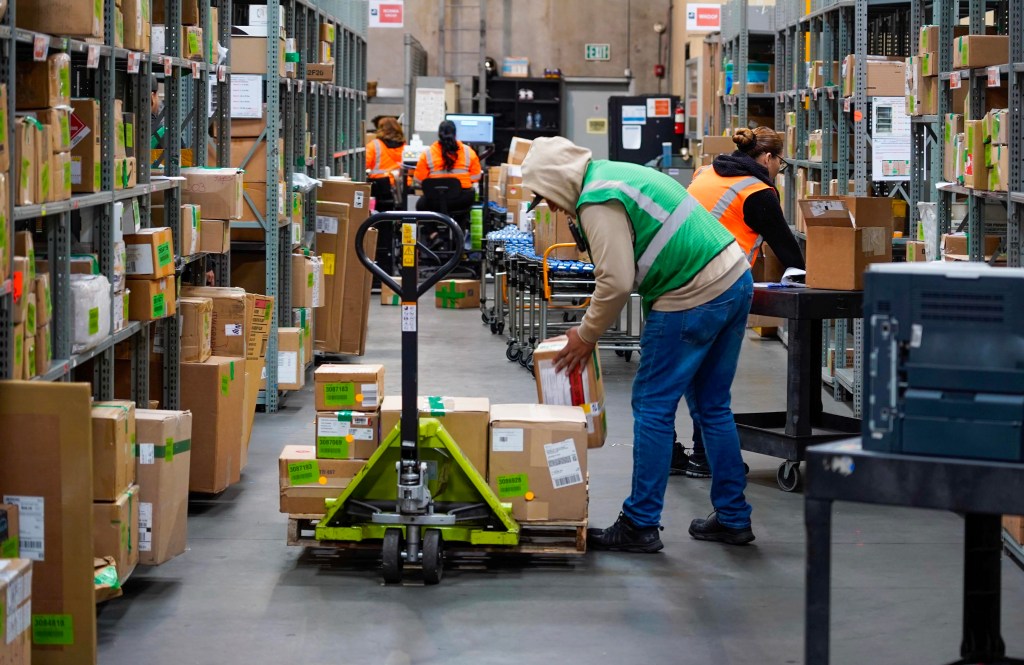
JD Group is one of dozens of Otay Mesa customs brokers that facilitate the trade between Mexico and the United States. Their businesses were upended when the first tariffs were announced one year ago. Diaz said his business suffered under the tariffs, leaving parts of their 220,000-square-feet facility empty for much of the year, which is usually stacked to the roof with exhaust pipe clamps, electronic door handles, Internet modems and thousands of items assembled in Mexico.
In Carmel Valley, Jim Lantry, the owner of Seabreeze Craft Chocolates, said he was pleased with the ruling.
Tariffs on cacao-exporting nations hit his business with higher costs and uncertainty. Shipments from China cost more and imports from Venezuela halted.
“Most of the tariffs that we paid, we paid through increased prices,” Lantry said. “Whether we bought it from Amazon or we bought it from Costco … We didn’t pay the tariff directly, but we did pay it.”
Confusion is likely to remain for some time because the Supreme Court did not provide guidance on if companies should be given refunds or how that would happen. Additionally, President Trump vowed after the ruling to find new ways to implement tariffs. The president said during a press conference after the ruling that he would sign an order to impose a 10% global tariff under Section 122 of the 1974 Trade Act.
What’s this mean for consumers?
Everyday San Diegans likely saw prices rise for many items, although the impact of tariffs on consumers was hotly debated by the Trump administration.
San Diego County’s inflation rate was either the first or second highest in the nation for most of 2025. The rate fell recently to 2.6%, its lowest level since November 2024, largely because of declining gasoline prices.
Alan Gin, economist at the University of San Diego, said many goods were likely affected by tariffs. He pointed to household furnishings, which were up 6.4% annually. Ikea, with a store in Mission Valley, said in October it would be increasing prices as it adapted to tariffs.
Gin said consumers may benefit in the long term but not in the same way as businesses. He said many companies could have “a windfall” if they do get some sort of refund. But San Diegans shouldn’t expect a check for the extra they paid for a bed frame back in June.
He said the long-term benefit to consumers may be declining prices. San Diegans have felt the rise in prices throughout the pandemic and while inflation has slowed, prices are still higher than they were several years ago. If prices actually decline, he said that could benefit many in the region struggling to get by.
Richard Trent, the executive director of Main Street Alliance, a small business advocacy group, said many of the tariffs were passed onto consumers.
“This was a raw deal,” he said. “They were forced to absorb higher costs or pass them on to customers. That is not economic strength. That is a squeeze on Main Street.”
Its survey found that 81.5% of small businesses raised prices to offset tariff costs, 31.5% anticipated layoffs and almost 42% delayed expansion due to tariffs. Only a smaller percentage of businesses surveyed, around 15%, could shift production to the U.S.
Trade groups react
Local business groups celebrated the ruling on Friday, even as uncertainty remained.
Chris Cate, CEO of the San Diego Regional Chamber of Commerce, said the ruling was a long-overdue step toward restoring stability in trade policy.
“In the Cali-Baja region, these supply chains are not just data in a chart,” he said. “They are a proven economic engine that supports jobs, drives innovation and fuels growth on both sides of the border.”
Roughly 2,500 businesses in Otay Mesa are tied to cross-border imports and exports, including warehouses, customs brokers, trucking companies, logistics providers, food processors and e-commerce.
Alejandra Mier y Teran, executive director of the Otay Mesa Chamber of Commerce, said even if refunds aren’t issued, it will still be a relief to businesses if they no longer need to pay tariffs.
“There will be relief immediately,” Mier y Teran said.
She said Trump’s latest move to institute a 10% global tariff would only add to the headaches businesses are already facing.
“What the community wants is certainty,” she said, “and for our cross-border region to remain competitive.”