
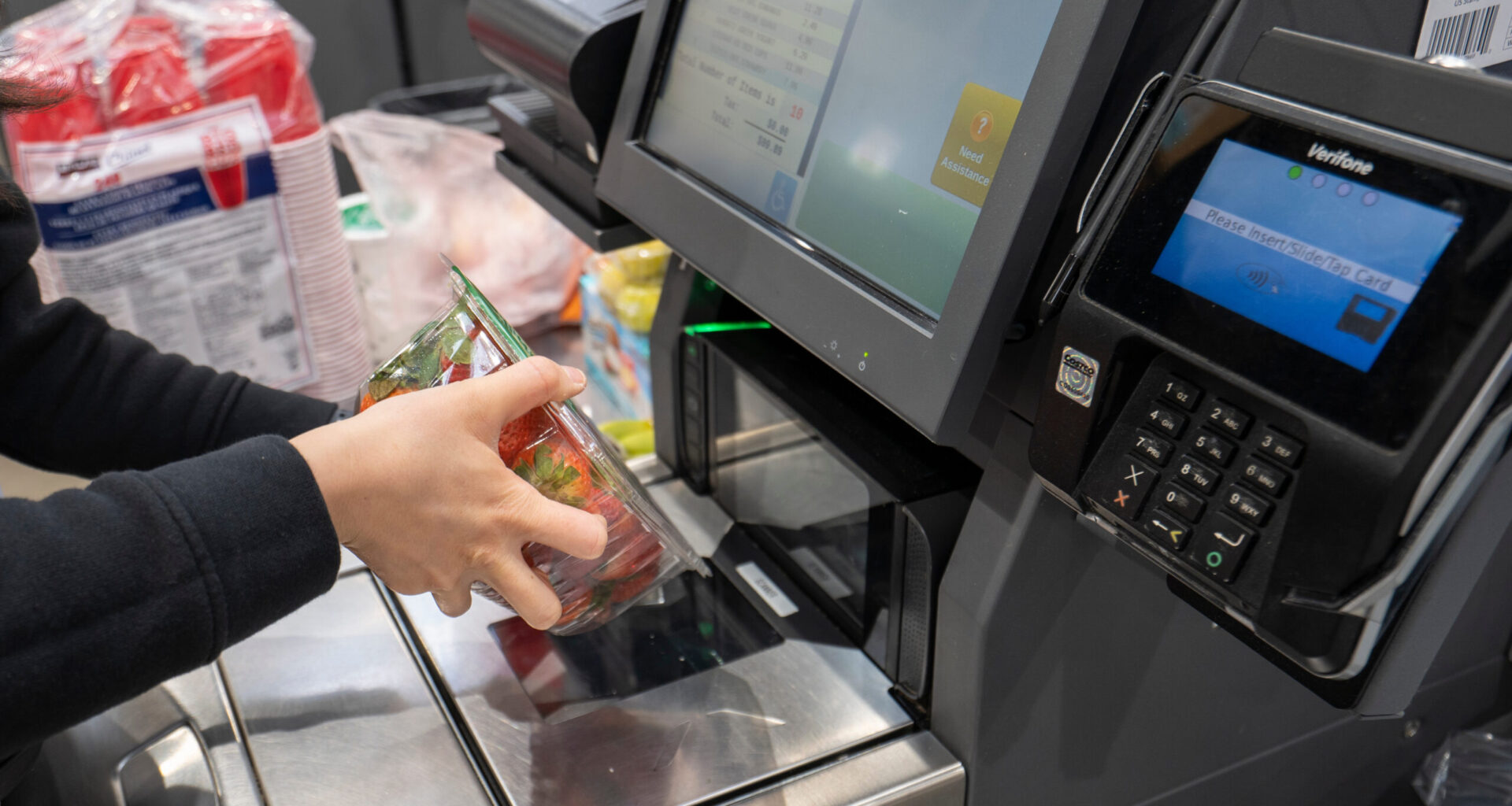
Another Southern California city is now requiring staffed self-checkout lanes to prevent retail theft
The Costa Mesa City Council adopted a new ordinance this past week that requires at least one employee to monitor self-checkout lanes to help prevent theft and protect grocery clerk jobs.
They adopted this ordinance just months after Long Beach had approved one similar to this past June.
The proposal was backed by the United Food and Commercial Workers Union. The measure was passed by a 5-2 majority vote on Tuesday. Beating the lesser vote, the council stated that theft could result in up to a $1,000 fine per day; “Safe Stores are Staffed Stores.”
“Costa Mesa has a proud history of championing pro-worker and public safety initiatives, and by passing this ordinance, Costa Mesa will provide thousands of workers, union and non-union, with extra support and better service for customers,” said Jose Perez, president of UFCW Local 324, in a public statement.
There is, however, a difference in staff ratio in Long Beach versus Costa Mesa. Long Beach requires one employee for every two kiosks, while Costa Mesa requires one for every three.
About two dozen grocery and drug stores will have this new ordinance take full effect.
However, a bill proposed by California State Senator Lola Smallwood-Cuevas would like staffing to be a requirement at all self-checkouts, statewide.
This has been naturally opposed by retailers as they believe that kiosks don’t require a lot of oversight from staff. Since the city of Long Beach has adopted this ordinance, at least four grocery stores have reported that they’d rather shut down self-checkout than staff it.
Scroll to continue reading
Council member Loren Gameros highlighted that doing this would help protect workers who are from working-class families and typically get overworked at grocery stores.
Store managers and trade groups stated during a city council meeting that this would not meaningfully take away shoplifting. The meeting continued to escalate in emotion as they argued that the ordinance would help address overwhelming workloads.