
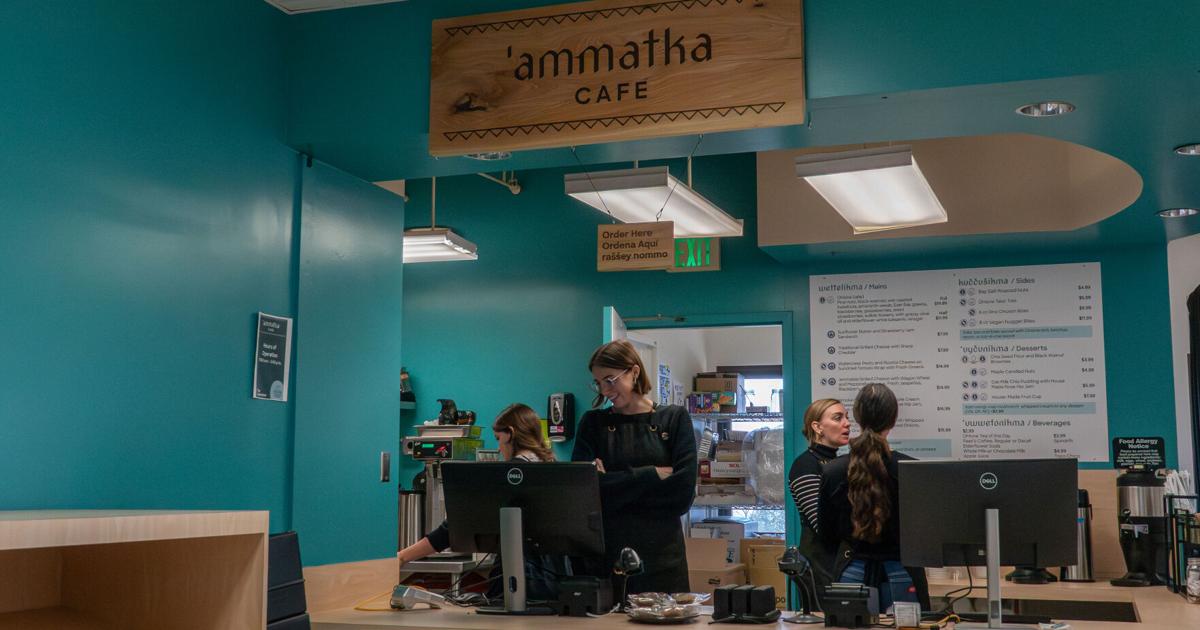
‘ammatka Cafe, a restaurant aiming to promote education of Ohlone culture through cuisine, opened its doors in The Lawrence Hall of Science last Friday.
At the heart of ‘ammatka Cafe is the ‘ottoy initiative, a project between UC Berkeley’s Native American Thriving Initiativesand The Lawrence Hall of Science.
“It’s all centered around education, building up representation and fostering greater respect for East Bay Ohlone people,” said Vincent Medina, who co-founded the cafe along with Louis Trevino.
“‘ottoy” is a Chochenyo word describing a philosophy and intention of repair and mending. The initiative aims to repair the relationship between the campus and the Ohlone community by promoting respect for Ohlone people and culture.
‘ammatka Cafe’s menu includes traditional foods and new recipes, showcasing how Ohlone culture continues to develop in the present day. Items such as the cafe’s Ohlone salad are made with ingredients indigenous to the East Bay, such as watercress and California strawberries.
“The Ohlone salad is a really special dish that we have,” Medina said. “It’s something the elders in our community grew up eating and a good representation of the abundance, the colors, the nature of the land that we come from and how rich this place is.”
Other menu highlights include the smoked duck sandwich, featuring a housemade rosehip jam and triple cream cheese from Mount Tamalpais,and brownies Trevino developed. Incorporating traditional ingredients such as chia flour, the brownies were added to the menu after suggestions from Ohlone elders.
In sourcing indigenous ingredients, the cafe partners with community farms and student initiatives such as the Indigenous Community Learning Garden in the Oxford Tract.
“Through the mak-warep Ohlone Land Conservancy at Russell Research Station, we’re currently in the process of clearing out invasive species,” Medina said.
The initiative also manages more than 100 acres of land in collaboration with Cal State East Bay’s Concord Center, according to Medina. In addition, the ‘ottoy initiative intends to create “a series of native gardens for basketry, medicine and … food.”
Medina noted that staff are given comprehensive training on the mission of the cafe and how to promote education of Ohlone culture.
“Our mission is centered on building up awareness and respect for Ohlone culture and cuisine,” Medina said. “Also teaching them Chochenyo phrases, so they know the language behind the menu items.”
He emphasized the importance of teaching staff about the lived experiences of the Ohlone people.
As a part of community education, Medina and Trevino lead educational sessions at The Lawrence Hall of Science or the ‘oṭṭoytak, the patio adjacent tothe Phoebe A. Hearst Museum of Anthropology.
“We always thought food … is such a wonderful way to teach about the abundance of the land, the sophistication of our traditional foods and how that also pairs in with this deep knowledge that’s carried intergenerationally,” Medina said.