
It’s surprisingly difficult to feed cells.
Across the country, temperature-controlled trucks cart around vats of liquid that scientists use to grow cells. These vats are heavy and high-maintenance, as ensuring that the controlled substances stay clean is critical.
It’s a logistical nightmare and incredibly expensive, explained David Sheehan, founder and CEO of Nucleus Biologics, a contract manufacturer that sends media and buffer mixtures – basically cell food – to hundreds of labs across the country.
“It’s not uncommon that the cost of this shipping is sometimes more than the cost of the media,” Sheehan explained.
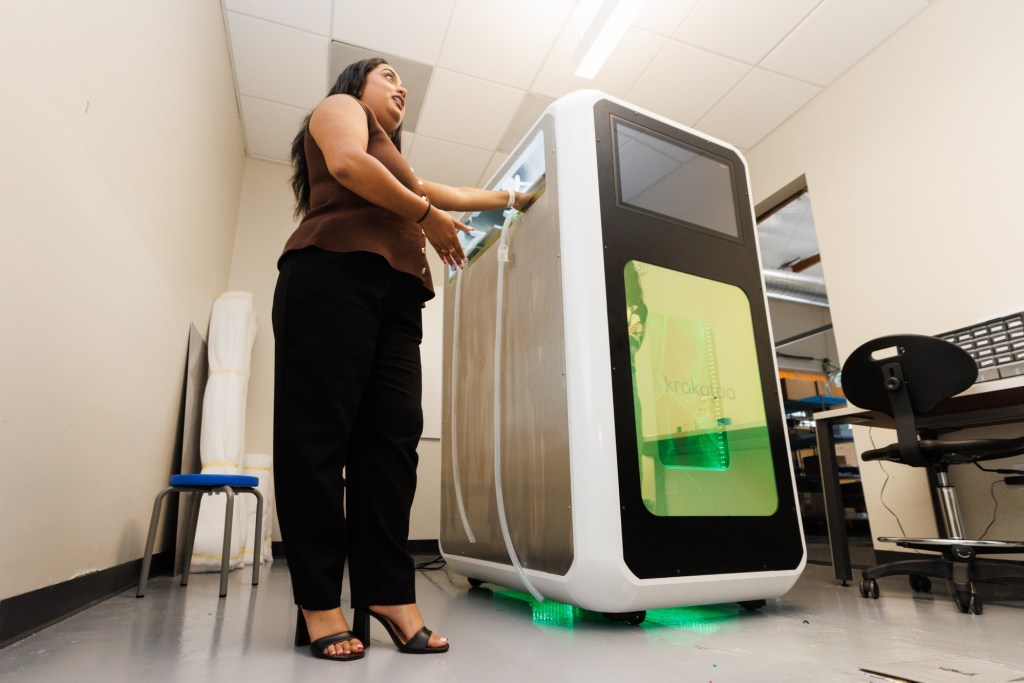
So Sheehan solved his own problem, inventing a machine that dispenses cell food on the spot.
Last week at the Advanced Therapies Conference in San Diego, Nucleus Biologics debuted the device, the Krakatoa K500. Sheehan describes it as a “cellular Nespresso.” Put in a pod with the specialized powder, and in three hours, up to 500 liters of the sterile solution is ready for the lab or clinic.
“Your normal process and timeline for creating 500 liters is probably close to at least an eight-hour shift with three technicians,” explained Parinitha Sharma, commercial operations manager at Nucleus Biologics.
Walking through Nucleus Biologics’ 7,000-square-foot facility, Sharma showed where this cell food is made. Two dry rooms are used to measure out powders, mixing vats are housed in four liquid cleanrooms and a separate manufacturing site packs and stores the cell food in a specialized clean space before it is shipped to labs and clinics across the country, often in a temperature-controlled truck.
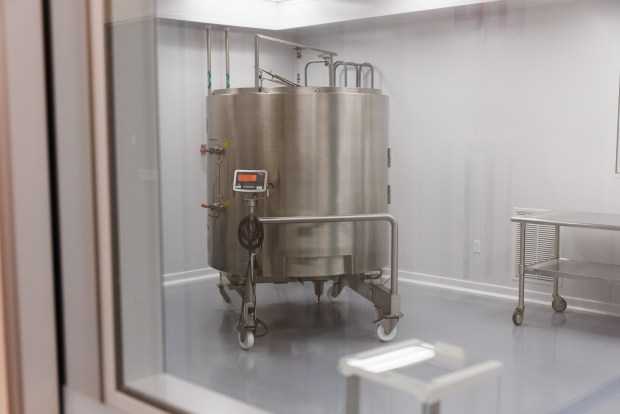 Nucleus Biologics uses two dry rooms to measure out powders, four liquid cleanrooms hold the mixing vats, and a separate manufacturing site packs and stores the cell food in a specialized clean space before it is shipped to labs and clinics across the country. (Kristian Carreon / The San Diego Union-Tribune)
Nucleus debuted the Krakatoa at Advanced Therapy Week, a global event where leaders in genetic therapies gathered at the San Diego Convention Center.
“Expanding access now hinges on addressing key barriers to point-of-care manufacturing,” said Kimberley Barnes, president of Phacilitate, a global trade group that brings together the cell and gene therapy community.
She explained how the hardest part in drug development is often the marginal costs.
Cell food alone can account for up to 50% of research and development costs, creating a significant barrier to accessing newer cell and gene therapies.
Nucleus Biologics will replace some of its manufacturing systems with the Krakatoa K500 device.
But for Sheehan, it’s more than just cutting costs.
The device could reduce greenhouse gas emissions by 65%.
The machine sells for $400,000, and the company has sold two to date.
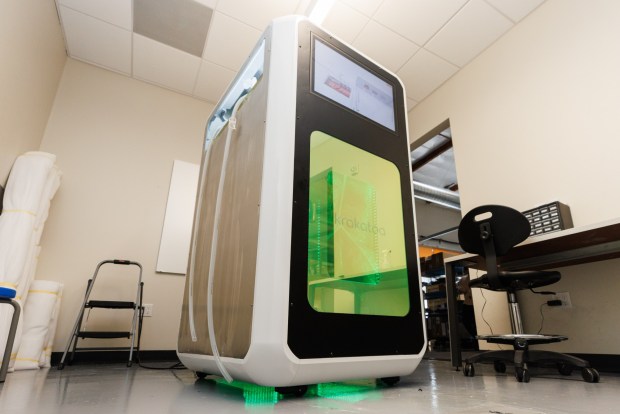 The Krakatoa K500 sells for $400,000, and the company has sold two to date. There are also lease-to-buy options. (Kristian Carreon / The San Diego Union-Tribune)
Nucleus is backed by two other investors, whom Sheehan did not name. The company has over 60 employees, 50 of whom live locally. It plans to hire more people this year. “We grew over 50% last year, and we expect to grow over 50% this year,” he said.
Sheehan said he named the device after the 1883 volcanic eruption of Krakatoa, recognized as the loudest sound in recorded history. “We felt like this product was that disruptive,” he said.