
The Wide Shot celebrates the work of Bay Area photographers, showcasing their latest projects and behind-the-scenes stories.
It wasn’t controversy, tragedy, or ego that captured the world’s hearts as Oakland’s Alysa Liu won the gold medal this week in women’s figure skating. It was her subversive, humble, uniquely Gen-Z approach to figure skating that had everyone in their feelings as they watched her gently alight on the ice like a bleached, zebra-printed cloud of elegance.
But Liu’s journey to the podium in Milan was anything but assured. Four years before making history as the first American woman to bring home the gold medal in figure skating in 24 years, Liu announced her retirement at age 16, stating on Instagram that she was “finally done with her goals” in the sport.
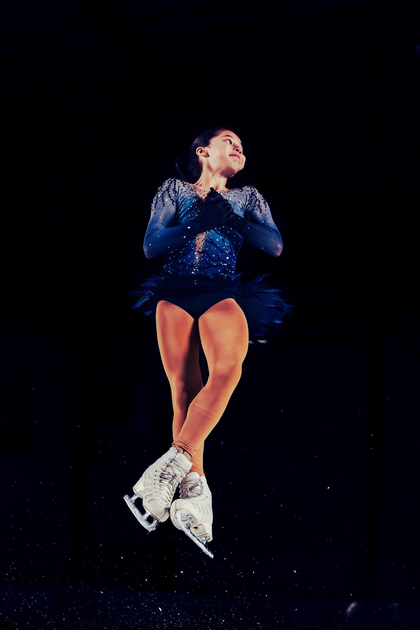
For photojournalist and East Bay native Ryan Young (opens in new tab), the last week was the culmination of a journey that started more than a decade ago, when The New York Times assigned him to shoot a promising athlete practicing at the Oakland Ice Center.
Young captured two pivotal moments in Liu’s career, in 2013, when, on the heels of becoming the youngest woman to land a triple axel in international competition, she was blossoming into a force to be reckoned with, and in 2024, at the Yerba Buena Ice Skating & Bowling Center, shortly after she announced her return to figure skating.
Liu has been described as “the carefree Californian” for her oft-quoted indifference to bringing home medals. But Young’s images show not a carefree athlete but a shark in a feeding machine.
Young has taken portraits of Steph Curry, Gavin Newsom, Bill Gates, Tony Hawk, Brock Purdy, and countless other notables and is perhaps best known for his skateboarding photos. But for him, Liu as a young 13-year-old was “the most powerful display of movement I’ve seen.”


When Young asked to shoot her again in August 2024 — five months after she announced her comeback — Liu responded, referring to their first shoot together, “Omg yeaaaa!! Still some of the coolest shots of me on the ice to this day fs.”
We spoke to him about what it was like to shoot her as a rising star, to follow her through an early retirement, and to witness her historic return.
This interview has been edited for length and clarity.
How did you first come to photograph Liu?
I was introduced to Alysa on an assignment for The New York Times. They do a kids section, and she was the featured athlete. She was getting a lot of attention.
I had never shot figure skating before, so it was definitely an interesting process. I’ve photographed a lot of different athletes, but going there and seeing her in action was just stunning.
When she came back into figure skating, and it was just me and her and my two assistants on the ice, and she was just so patient with us as I fumbled around trying to light figure skating on the ice and not slip and hurt myself.
What was it like working with her?
She was just so giddy and excited to do whatever I asked her to do on the ice. I remember in our first shoot, she was performing the Biellmann spin, where she grabs the skate from behind and then pulls it over her head.
She was doing that over and over again as I fumbled around trying to figure out how to capture it. And I apologized, like, “Hey, I’m sorry if I’m making you dizzy.” And she looked at me, not even trying to be sarcastic, and said, “Oh, I don’t get dizzy.”
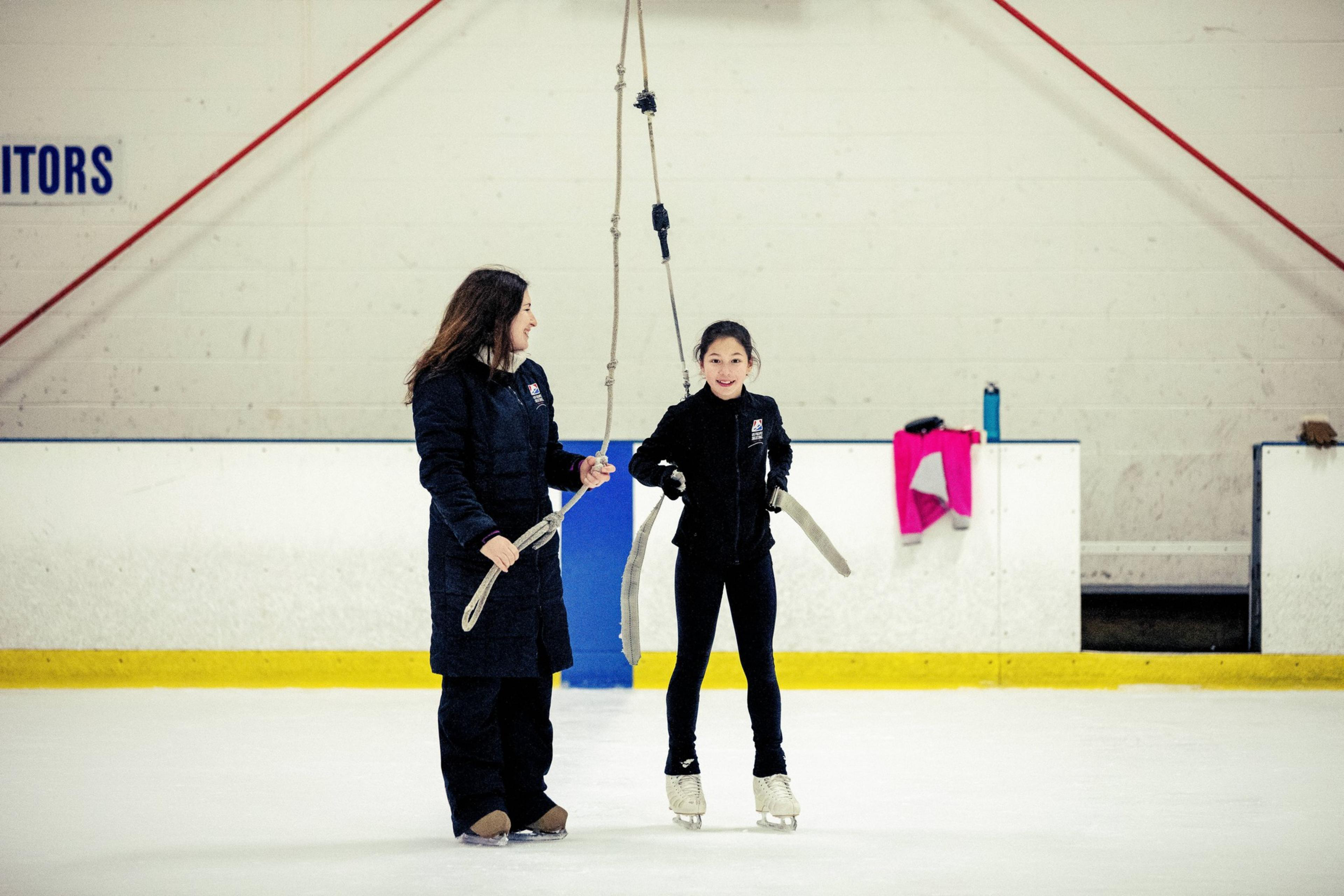
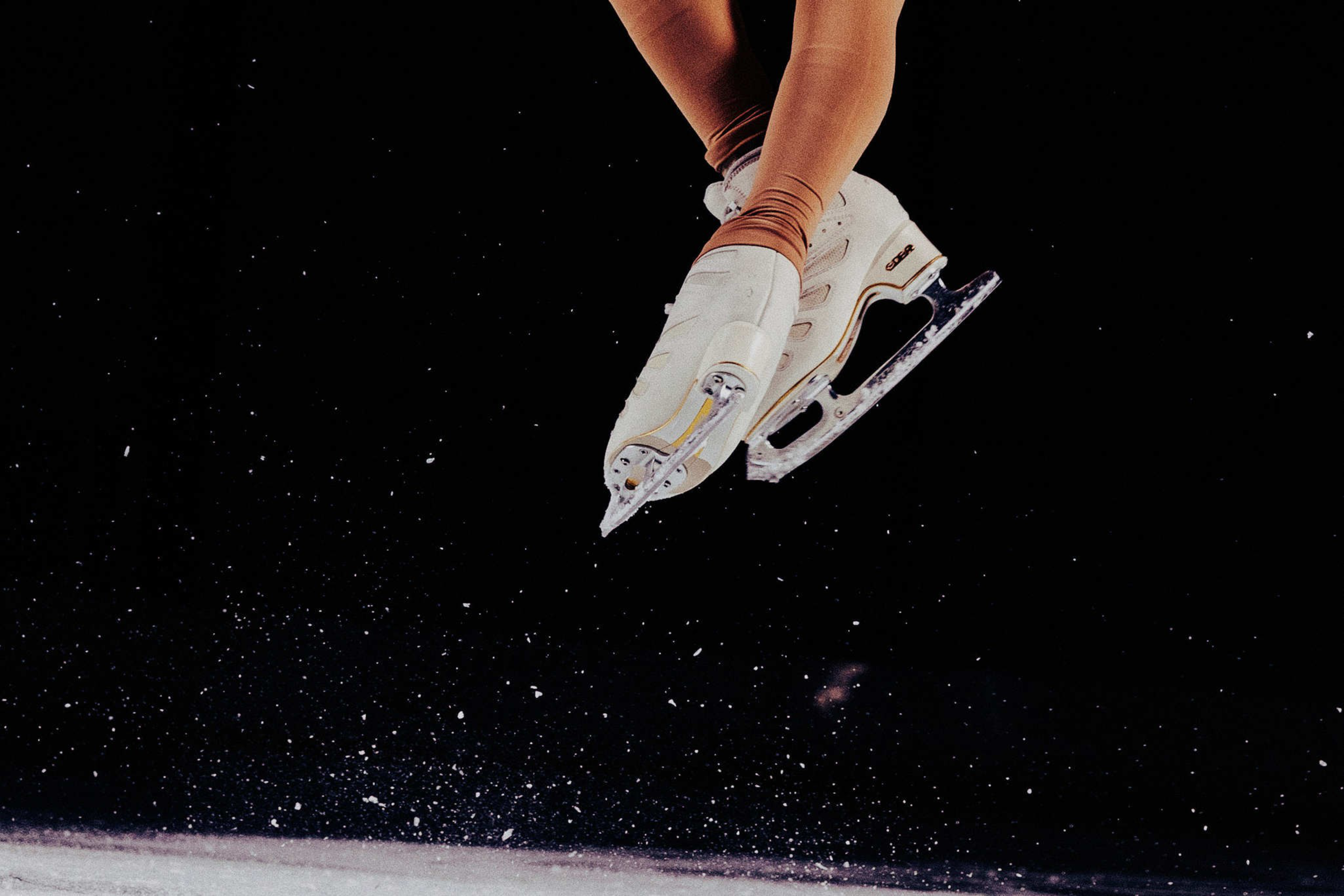
I’ve never heard anybody so confidently say they don’t get dizzy. But she was just going over and over and over for minutes on end, spinning unfazed.
And it was just incredible — a little powerhouse like that, with zero ego. She just looked very confident in her body and knew exactly what she could and couldn’t do. And it seemed like there was no end to her rigor.
She’d say, “What do you need me to do? I will do it.” It was very interesting to see that out of a little 13-year-old person, because I’ve photographed so many different athletes, from skateboarders to basketball players, football players, but watching that kind of regimen, it’s just different.
When you met with her again in 2024, could you sense something had changed?
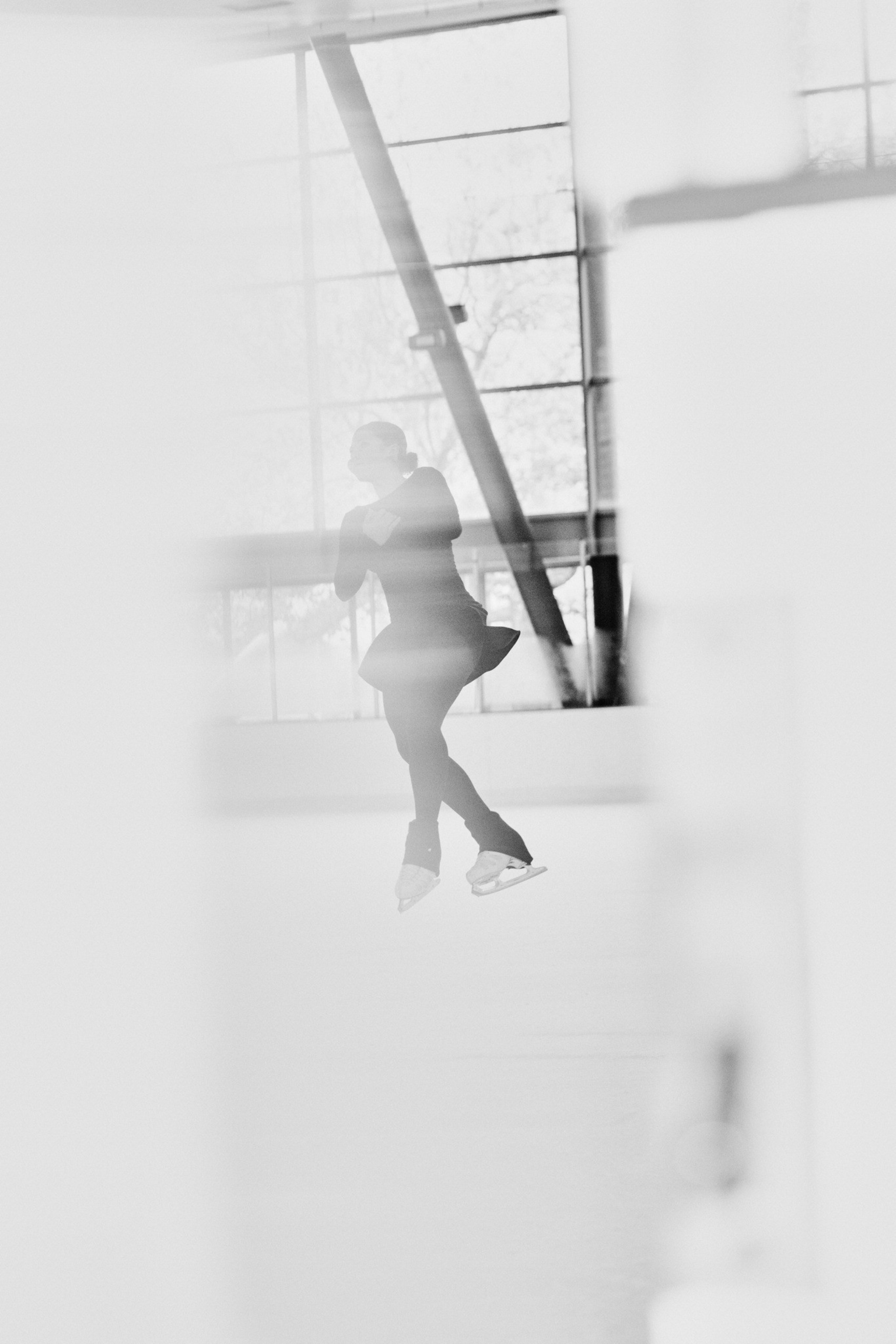
Definitely. It looked like she was learning how to skate again. She had to search for her ice skates and ask her dad where they were because she didn’t know what happened to them.
It was a very early session, and shortly after she went to the figure skating championships in Wichita, Kansas. She ended up winning that. And that’s what centered her — it reminded her that she’s still her, and she can really do this at the highest of levels.

How did you perceive her comeback?
It’s not like riding a bike. I wouldn’t say she was cynical, but she was pretty over figure skating. And it was really refreshing to see someone just come back and pick it up and fall in love with something that they had fallen out of love with. It’s just one of those classic stories that I got to see firsthand.
Being around skateboarders, I see it all the time, where you have this dude who was really good in high school, and they don’t get sponsors and they get pretty jaded, and they’re just over skating.
They don’t even want to touch it anymore, and they just walk away from it and never even pick it up again. So to see somebody return to their sport and fall back in love with it — she didn’t need to win gold for people to care. She seemed happy, and I’m glad that she naturally found it on her own to come back to the ice.