
The echoes of faculty advocacy filled the campus as American River College transfer student Eric Duplantier walked nervously into his first class at Sacramento State: Marketing 101.
Duplantier, 24, began his first semester at an unexpected time. The night before classes started, the California Faculty Association reached a tentative labor agreement with the California State University. Despite this, Duplantier was eager to start his education at Sac State.
“I came in very bright and starry eyed with rose-lenses on,” Dupantier said. “Now that I’m a little bit older, I have a much different perspective on [the trajectory of] my path.”
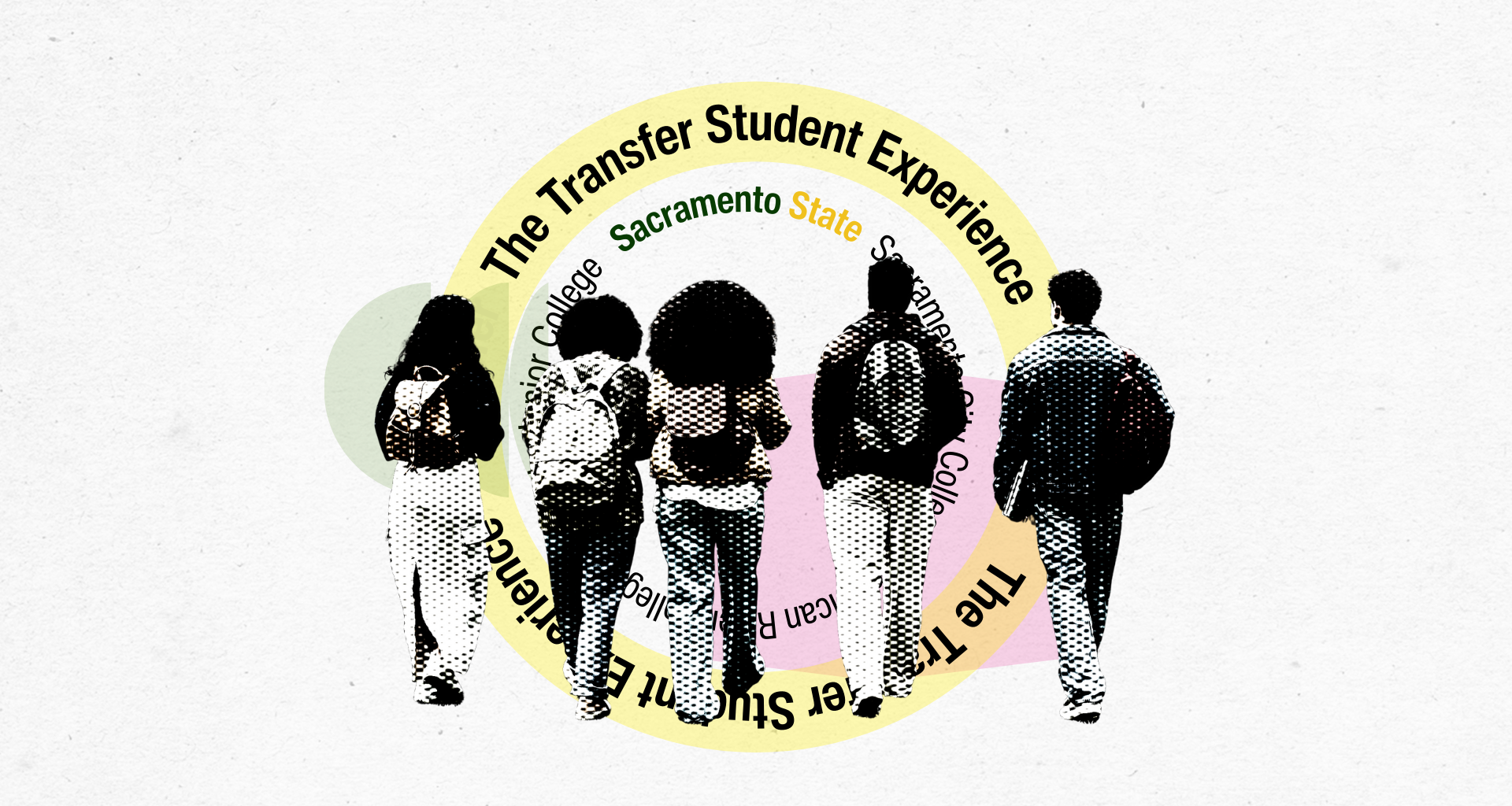
Transfer students occupy a unique position within the undergraduate experience. As they enter a new environment, they bring academic and life experience from their previous academic institutions.
Studies show that human thoughts are guided by the strength of metacognition, or overarching mental processes, a key tenant to wisdom built over time. The continuous thread through the wisdom and confidence that transfer students carry allows them to stitch together their unique higher education journeys.
Many transfer students navigate their transition to a new college in unanticipated circumstances, like Ezra Lilly, a 27-year-old graduate student studying communication sciences. Lilly said that transferring from Modesto Junior College to Sac State during the pandemic was difficult but made her appreciate campus life more.
“Getting to see the campus full of students interacting and smiling was a nice feeling,” Lilly said. “A lot of us could be first-generation, so we’re breaking the chains of the past and creating a new future for ourselves.”
Transfer students contribute significantly to the campus community. As of fall 2024, transfer students made up about 51% of Sacramento State’s incoming class, making them a key part of the student body and campus culture.
In an effort to increase transfer applicants, Sac State adjusted the enrollment requirements to admit students earlier in their higher education. Beginning in the spring 2025 semester, the university began accepting community college transfer students with fewer than 60 semester credits.
After the application adjustment, transfer student enrollment increased by over 600 students. With students transferring from over 100 different California institutions, they each come with unique experiences that shape their level of immersion into Sac State’s culture.
Mikayla Thomas, 22, graduated from Sac State in 2025 with a bachelor’s degree in psychology. When she transferred from Sacramento City College in spring 2024, she moved into an apartment closer to campus and immersed herself into campus culture.
During her time as an employee at the Transfer Resource Center, Thomas was able to use her knowledge of campus resources to support fellow transfer students and tailor her academic journey. She found there was room for improvement in how the university supports transfer students.
“I feel like Sac State would benefit so much more if they put a little more resources into the transfer population,” Thomas said. “Some schools have transfer bridge [programs] and transfer housing that I feel would be helpful for transfer students.”
Sac State’s Transfer Bridge Program is a “free intensive six-week summer academic program” held on Zoom to support the transition from community college to a four-year university. Focused on underrepresented groups, students must be enrolled in at least 12 units for the subsequent fall semester to apply. Programs such as these could benefit from intensified promotion tactics to students.
When it comes to aiding the financial and housing burden some students may face, there is room for improvement. On Aug. 21, 2025, UC Berkeley’s Helen Diller Anchor House opened as a transfer student exclusive housing facility. This addition expanded the university’s existing Maximo Martinez Commons’ Transfer Living Learning Community.
Recent Category II fee increases, along with continued tuition rate increases, have left many students frustrated with the university’s focus on athletics and use of funds. These financial burdens only add to the load that many transfer students carry.
Duplantier has worked for the past 10 years and now holds three jobs while balancing life and full-time study. While he has been supported by financial aid, he said he has had to fill in some gaps with student loans, especially for his recent spring semester studying abroad.
“I’m fortunate enough to where my grants and scholarships pay for most of [tuition],” Duplantier said. “But I can’t help but wonder, if the tuition hadn’t increased, what situation would I be in?”
Thomas said she feels that the increase in sports-related fees and heightened investment in athletics has come at the expense of the broader student population.She said that the university should be directing student fees towards infrastructure and course availability.
“I feel like if they’re going to charge us a bunch of extra money, they should be putting a considerable amount into making sure we have enough classes for students and top-tier resources,” Thomas said. “If our college doesn’t even have good enough materials for us, there’s no point in us having top tier sports.”
RELATED: Students express feeling ignored as fees increase
Despite these pressures, transfer students continue to forge their unique paths and find that the transfer student experience has shaped their academic and life progress in a positive way.
“It’s a beautiful experience because you kind of get the best of both worlds,” Thomas said.
With two younger sisters, Lilly often gives them reassurance as they navigate finding the balance between life responsibilities and finding themselves as college students. Focused on intention and a commitment to education, she said that she reminds her sisters that there’s no rush.
“You don’t have to follow the traditional timeline or path for college,” Lilly said. “Everybody goes on their own journey at their own pace.”