
Driving down the road that hugs the bank of the Sacramento River down the Delta, you’ll pass a few pear orchards that have been torn out. Carcasses of trees are piled up like pyres in one; in another, they are laid flat like a mass grave. A sign on a telephone pole advertises orchard removal services.
Since the 19th century, the region south of Sacramento has been the preeminent pear producing region. Because of headwinds brought on by trade issues and declining demand, that’s changing.
“There were over 50,000 acres back in the ‘40s and ‘50s of pears in California. We’re down under 5,000 now,” said Doug Dickson of River-Pear Orchards in Walnut Grove.
The Dicksons have owned the 45-acre property since 2011, but its roots are much deeper. There are trees on the property they estimate to be 150 years old.
There are multiple factors for the downturn of pear production, going back many years. Pear decline, a soil-borne disease, and blight struck crops decades ago and the farms weathered those losses. A general reduction in consumption of fruit, and by extension sugar, and the collapse of canneries further exacerbate the problem.
Argentinian pear imports more than double since 2016
But the most urgent issue affecting the local pear farmers is the introduction of other pears, imported from Argentina.
Imported pears are not intrinsically problematic. Under normal circumstances, those pears would come into the local market in a contraseasonal cycle to California’s own production. Importing seasonal fruit from a country in the Southern Hemisphere should ensure a more consistent and sustainable supply of fruit year-round.
However, the pears being imported from Argentina are being treated with a gas called 1-MCP, that slows ripening by blocking ethylene receptors in the fruit. Under some circumstances, 1-MCP can halt ripening altogether.
The ripening inhibition is necessary for long-haul shipping, as it keeps the fruit firmer and prevents rot. Under the correct refrigeration conditions, the pears can be allowed to ripen at their destination.
Where this becomes an issue is when large volumes of Argentine pears flood the market close to local harvest season. The pears, whose ripening has been slowed or stopped, create pressure on demand for California pears that begin to come into season in July. Moreover, Argentine imports have increased 125 percent since 2016, according to the California Pear Advisory Board.
California’s pear season begins relatively early. In other pear producing areas, harvest comes in the autumn. Argentine pears are unlikely to be held that long; even if they do not ripen, they will lose internal moisture and wither.
Further complicating the problem is damage to consumer perception. When customers purchase pears that are hard, mealy and never ripen, they think they simply don’t like pears.
“If you’ve ever had a ripe, juicy Bartlett pear, it’s an experience,” said Chris Zanobini, the California Pear Advisory Board’s executive director.
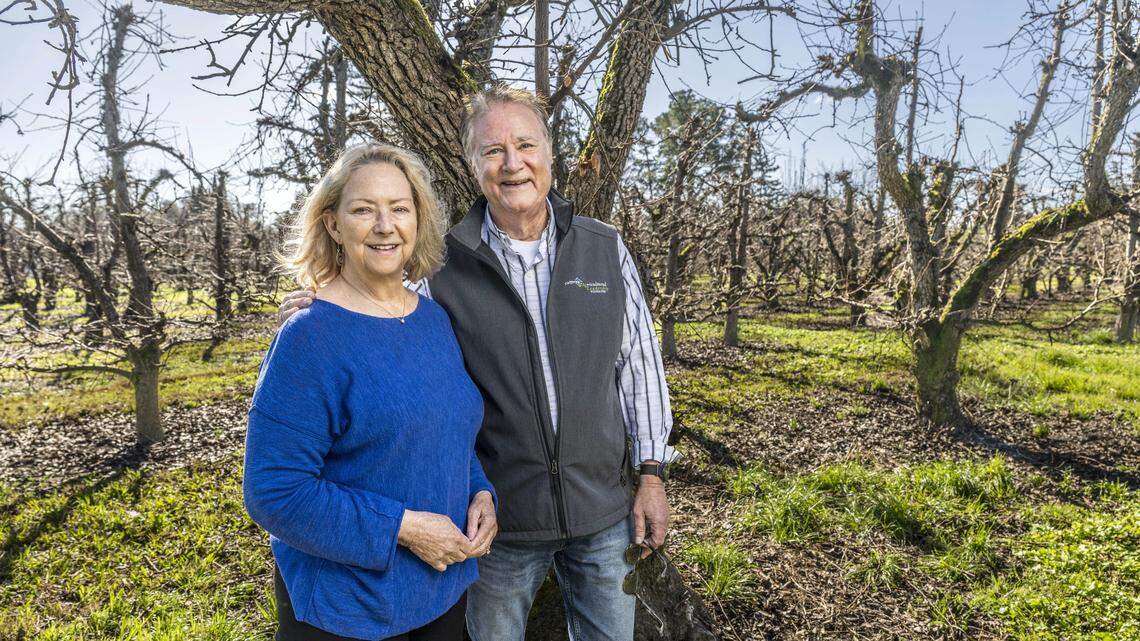
Chris Zanobini, executive director of the California Pear Advisory Board, stands with owner Doug Dickson at River-Pear Orchards in Walnut Grove earlier this month. Argentine pear imports affected Dickson and other Delta farmers. HECTOR AMEZCUA hamezcua@sacbee.com
Farmers’ options to slow or halt the import of late-season Argentine pears are few. The typical path is to lobby local elected officials, who would try to run it up the flagpole to effect change at the federal level.
One idea is to ask for increased tariffs on these imports the closer they come to the local season. Richard Sexton, distinguished professor emeritus of agricultural and resource economics at UC Davis, said the current political economy creates friction in this case.
“A problem that we face here in California is that most of our elected politicians are of the opposite party of who is in power now. I’m quite certain that the Trump administration would be far less likely to respond favorably to appeals from California politicians,” Sexton said.
It’s not that the administration is wholly unsympathetic to farmers. The Trump administration has unveiled a program to offer $12 billion in bridge loans to farms affected by trade disruptions. The funds to qualifying farms will begin to roll out this month.
However, $11 billion of those grants are eligible for commodity crops such as corn, wheat and soybeans, largely grown in the Midwest and Plains states. Just $1 billion is earmarked for “specialty food” crops, which include tree nuts, fruits and vegetables — in other words, California’s main crops.
Canning industry collapse exacerbates market stress
Argentine pears put the squeeze on local fresh market opportunities. But the collapse of the canning industry puts further pressure on the farms, who typically would send large portions of their crops to the canneries.
“We have 12, 13 acres of Bosc and 30 acres of Bartlett. About half of our crop historically has gone to the fresh market, all of the Bosc and about half of the Bartlett, and then the balance was going to the canneries,” Dickson said.
With the closure of the Del Monte cannery, there is only one left in the valley, Pacific Coast Producers. It’s picked up some of Del Monte’s business — but not all. And for smaller producers like the Dicksons, competing with bigger farms makes it hard to get a contract.
“We’re small in terms of the pear industry, but we still produce 2.5 million pounds of pears here, and that’s 40,000 boxes. I can’t survive on going to the farmers market,” Dickson said.
Rows of trees stand at River-Pear Orchards in Walnut Grove earlier this month. The Dicksons and other Delta farmers struggled to sell pears last season due to a flood of Argentine pear imports. HECTOR AMEZCUA hamezcua@sacbee.com
With decreased demand both in the fresh market and to the canneries, the Dicksons were left with an entire season of fruit with no home, or at least one they could afford.
“People keep telling me, why don’t you go to the juice market? They don’t understand. We get $40 to $50 a ton for juice pears. It costs us $120 just to pick them,” he said.
These circumstances conspire to create sometimes impossible pressures on the farms, hence the reduction in acreage. In 2025 alone, Zanobini estimates 12% of existing orchard acreage was torn out.
“Some of these orchards are 60, 80, 100 years old and still producing. A pear tree can take up to 10 years to produce. Once the trees come out, there’s not many options,” he said. “When you see a sixth generation family farm close, when you know the kids and the grandkids, that hurts.”
Zanobini has been in direct talks with the Argentine pear farmers, and learned that they, too, had a troubling year. There’s hope that next year’s imports will be less devastating to the domestic crop. In the meantime, he encourages consumers to advocate for local pears.
“Go to your produce department, and ask for California-grown product in July, August, September, October. And then also to support U.S.-grown products in general. It’s critical to the health of our overall economy,” he said.
This story was originally published February 23, 2026 at 5:00 AM.
Related Stories from Sacramento Bee

The Sacramento Bee
Sean Timberlake is the food and dining reporter for The Sacramento Bee. He has been writing professionally for nearly 30 years, and about food for 20. A variety of well-known outlets have published his work, including Food Network, Cooking Channel, CNN, Sunset Magazine and SF Weekly.