
A San Francisco-based robotics company says the Trump administration has expressed interest in deploying its high-tech robots onto future battlefields.
The tech firm, Foundation, has already scored millions of dollars in U.S. military contracts to have the armed services use the robots for research, logistics, and equipment manufacturing. So far, the contracts do not include arming the robots, however, those at the helm of the company tell the NBC Bay Area Investigative Unit they are having active conservations with military leaders to expand the scope of the work to eventually include equipping the robots with actual weapons.
FoundationFoundation
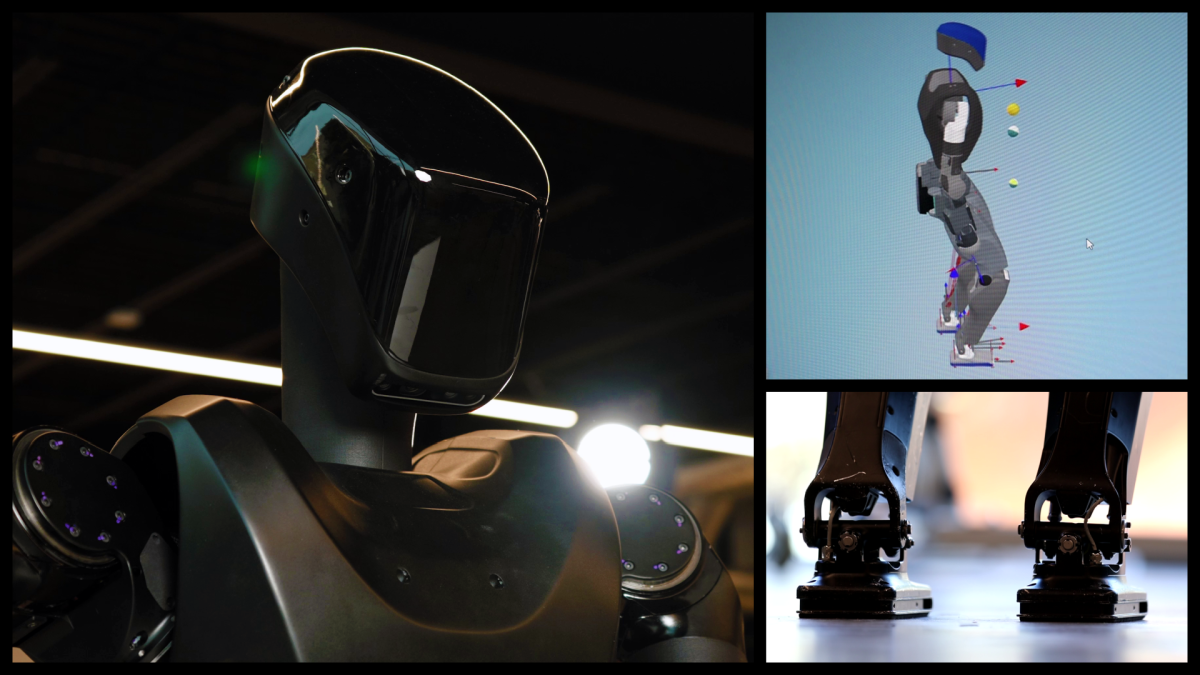
‘Phantom’ is Foundation’s humanoid robot designed for warfare. The machine stands 5 feet 11 inches tall and weighs nearly 180 pounds.
“There are a lot of people that are excited about being able to get these [robots] on the battlefield because they understand there is a big threat out there that we need to confront,” said Mike LeBlanc, Foundation’s co-founder and Marine Corps veteran, who described the robots as “great weapons” and equated his company’s technology to a modern-day shotgun.
“In the hands of a criminal, it’s terrifying,” he said. “In the hands of a sheriff, it could be a godsend.”
In the hands of a criminal, it’s terrifying. In the hands of a sheriff, it could be a godsend.
Mike LeBlanc, Foundation co-founder

Mike LeBlanc, Foundation’s co-founder, is a Harvard business graduate and a Marine Corps veteran.
How soon could armies enlist robot soldiers?
LeBlanc created Foundation in April 2024 with Sankaet Pathak, an accomplished electrical and computer engineer who started coding when he was just 12 years old.
“I think conflict is going to exist – it’s a core part of human nature – I wish it wasn’t, but I think it is,” Pathak said. “So the bigger thing is can you take humans out of that equation and just have machines fight it out and have it be more on economic and financial terms than actual terms of life.”
Pathak predicts Foundation’s humanoid robot, named ‘Phantom,’ could begin assisting members of the U.S. military on the battlefield, in noncombat roles, by next year. In fact, by the end of the month, Foundation is sending two of its robots to Ukraine to assist the government with “military reconnaissance” in its ongoing war with Russia. The company said the robots being deployed to Ukraine will not carry weapons.
Within five years, however, Pathak believes armed humanoid soldiers will become the norm in select countries around the world.
“It would make a lot of sense for the U.S. to not weaponize the robots at all, if no one else was doing it,” Pathak said. “I don’t think the U.S. has a choice to stand down here – peace, from as far as I can see, will come through strength. It will not come through weakness.”
I don’t think the U.S. has a choice to stand down here – peace, from as far as I can see, will come through strength. It will not come through weakness.
Sankaet Pathak, Foundation co-founder

Sankaet Pathak is an accomplished electrical and computer engineer who specializes in computer vision, a field of artificial intelligence that allows machines to analyze and interpret their surroundings.
Foundation has already been awarded millions in U.S. military contracts
Foundation has already been awarded at least $18 million in U.S. military contracts with the Army, Air Force, and Navy, according to a review of federal contracting data and internal documents Foundation provided to NBC Bay Area. So far, the scope of work does not include arming robots. Instead, the contracts focus largely on research and eventually using the robots to build equipment and transport supplies.
LeBlanc, however, says he is actively speaking with representatives from the Trump administration to expand the robots’ roles within the U.S. military, which could eventually include translating for soldiers, leading rescue operations, and even firing weapons.
“[In] all of our talks with the military, they have been adamant that military personnel will approve every single pull of a trigger just as they would with a drone strike,” LeBlanc said. “So just as I might have a dog in my unit, I have a Humvee in my unit, I have drones in my unit, I’m also able to task the robot.”
The Investigative Unit reached out to the Department of Defense for comment but didn’t hear back.
“Humans would still control what to do,” Pathak said. “AI would control how to do it.”
Senior Investigative Reporter Bigad Shaban got rare access to Foundation’s headquarters in San Francisco, where engineers now have the capability of manufacturing one ‘Phantom’ robot per day.
[In] all of our talks with the military, they have been adamant that military personnel will approve every single pull of a trigger just as they would with a drone strike.
Mike LeBlanc, Foundation co-founder
Top robotics firms vow to not weaponize their machines
Some of the world’s leading robotics companies have pledged not to weaponize their robots.
In Oct. 2022, six tech firms, led by Boston Dynamics, co-signed an open letter that famously noted arming robots would create “new risks of harm and serious ethical issues.”
LeBlanc, who served eight years on active duty in the Marines, argues failing to embrace this technology would leave America more vulnerable to other countries that are actively pursuing it.
“With so many of our competitors signing off of this and not being interested in doing it, it’s really given us a clear path to deliver,” LeBlanc said. “I promise you there’s no moral debate going on in China about whether they’re going to use robots in combat.”
Last September, at a military parade in Beijing, China showed off so-called “robot wolves” – four-legged machines perched on armored vehicles. About two months later, UBTech, a China-based company, released video of what appeared to be more than 100 of its humanoid robots ominously marching. Just this month, Chinese state television showcased humanoid robots wielding weapons while doing martial arts during a highly anticipated Lunar New Year telecast.

CCTVCCTV
During its highly anticipated annual Spring Festival gala broadcast, Chinese state television featured humanoid robots performing martial arts while holding nunchucks and swords.
The ethics of arming robots
“I think when we get to arming robots, we get into a much more complex moral area,” said David DeCosse, a professor at Santa Clara University, who has been researching the ethics of war for the past 30 years.
“Who is responsible for making decisions in which human life is involved?” said DeCosse, who warned that delegating life-and-death decisions to machines risks blurring accountability in combat. “If it’s a robot, even a programmed robot, I think that responsibility gets diminished in a problematic way.”

David DeCosse, who has been studying the ethics of war for the past three decades, is Director of Religious and Catholic Ethics and Campus Ethics Programs at the Markkula Center for Applied Ethics at Santa Clara University.
DeCosse appeared to dismiss the argument that America’s pursuit of the technology could be justified as a necessary security measure in the wake of other countries developing their own military robots.
“We have gotten as far as we have in this country by being smart about our defense and also being moral about it,” DeCosse said. “A race to the bottom with these things is not a race that I think as Americans we want to pursue.”
A race to the bottom with these things is not a race that I think as Americans we want to pursue.
David DeCosse, Director of Religious and Catholic Ethics and Campus Ethics Programs at the Markkula Center for Applied Ethics at Santa Clara University
Hollywood’s obsession with killer robots
The concept of enlisting robots into the military is one Hollywood has embraced for decades. Entire blockbuster franchises, such as the Terminator series, were built on it.
But LeBlanc is quick to quiet fears stemming from sci-fi thrillers on the big screen. His optimism for the technology, he says, stems from the tragedies he personally witnessed on the battlefield.
“I can remember one time we had lost a sniper team when I was in Afghanistan and we conducted a 72-hour search,” he recalled. “So we had hundreds of Marines that were going out to all these contested areas to try to go look for them. That kind of that kind of search, for those kinds of hours, is the perfect deployment of a humanoid.”
While Foundation continues to focus on military applications for its technology, the company has already leased three of its robots to an auto manufacturing plant in Atlanta at a cost of $100,000 per robot, per year.
“I believe that we have the first robot that is operating 24 hours a day,” said LeBlanc, who noted one robot can work the shifts of three people. “This robot is doing exactly what a human being would do.”
Foundation is already contracted to send more than 140 additional robots to the plant by the end of the year.
A San Francisco tech startup has pitched the Trump White House on arming humanoid robots. Senior Investigative Reporter Bigad Shaban delves into the proposal and the controversy in a conversation with Anchor Raj Mathai on NBC Bay Area Tonight.
There’s no tool that I’m not willing to give to our American soldiers when they have to go into combat.
Mike LeBlanc, Foundation co-founder
“As soon as [businesses] start seeing what we can do, they start having new ideas about ‘we can make this new product, we can take on this new contract’ – and I think that’s a really exciting avenue for us to go down.”
Since Foundation’s inception two years, the company has fully manufactured 15 robots. The tech startup, however, has recently expanded its manufacturing space and is now capable of building one robot a day at its San Francisco headquarters. Foundation anticipates ramping up production significantly in the coming months to be able to build close to 10,000 of its robots by the end of the year and roughly 30,000 by the close of next year.
LeBlanc hopes the technology could ultimately provide a new level of protection for service members.
“This isn’t a question of whether we should do it or not, “LeBlanc said. “There’s no tool that I’m not willing to give to our American soldiers when they have to go into combat.”
Contact The Investigative Unit
submit tips | 1-888-996-TIPS | e-mail Bigad