
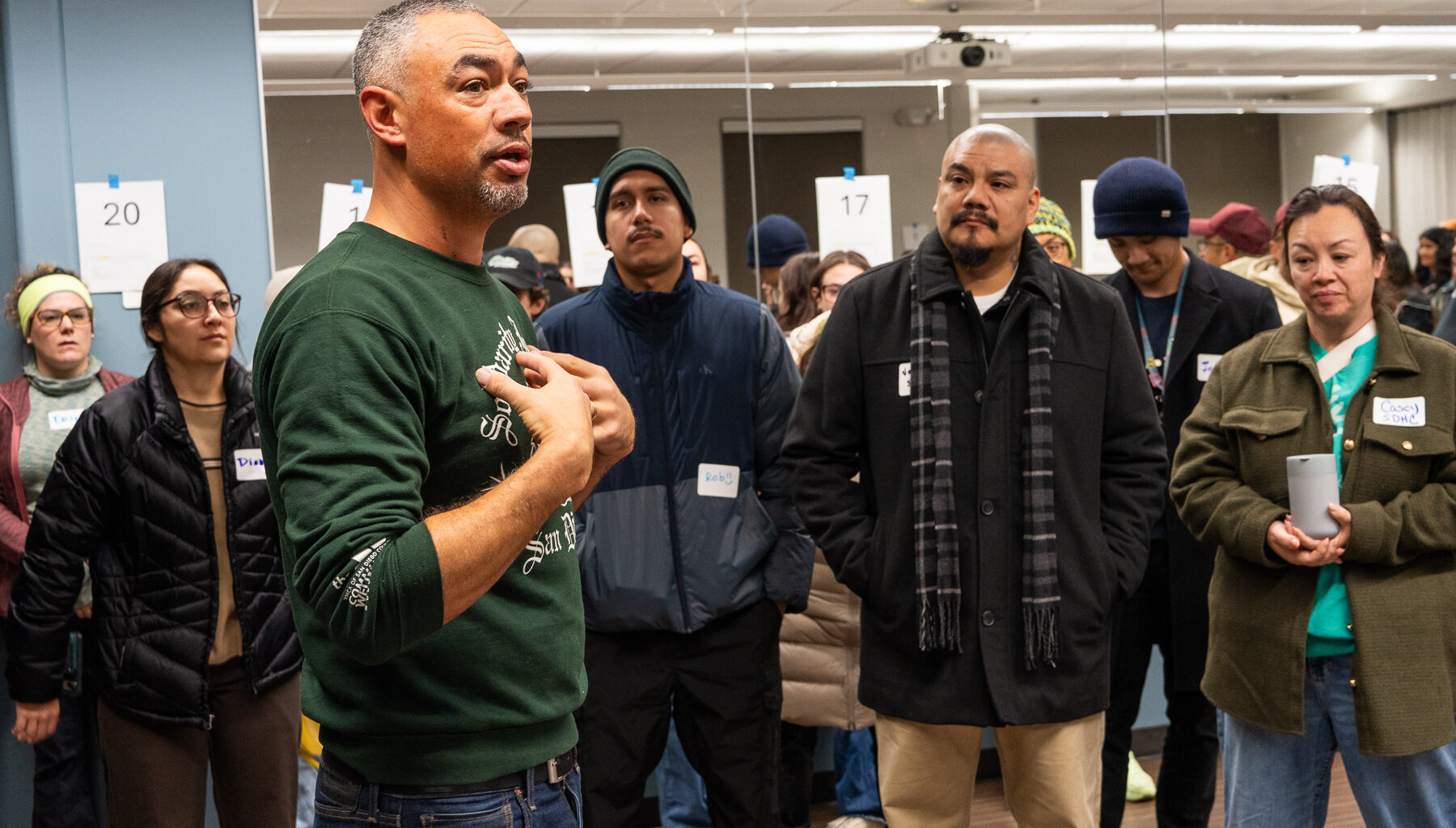
 Councilmember Sean Elo-Rivera addresses volunteers at the Copley-Price Family YMCA for the Point-in-Time Count on Jan. 29, 2026. (Photo by Thomas Murphy/Times of San Diego)
Councilmember Sean Elo-Rivera has revised a proposal to tax empty homes, and it’s headed to a vote from a council committee Wednesday.
The first time around, Elo-Rivera’s ballot measure packed two taxes into one proposal. He’s abandoned one of those ideas — a tax on short-term vacation rentals — after it generated strong opposition backed in part by Airbnb who bussed in paid protestors from Los Angeles to speak against the measure.
This proposal would tax property owners $8,000 per empty second home in its first year and $10,000 per home in its second year. Corporate-owned empty homes would get a $4,000 charge in 2027 and $5,000 in 2028.
Elo-Rivera’s pitch now returns to the same rules committee that voted down his previous measure last month, but with a more limited proposal that two council members indicated they’d be willing to support.
“Let me start with what I do support as a clear progressive tax proposal which is taxing empty second homes, or vacation homes,” Council President Pro Tem Kent Lee said before voting against sending the previous proposal to the full council.
“Someone said earlier and I absolutely do agree, If someone can afford to own a second home and not use it for any other purpose including long-term or short-term rentals, they can absolutely afford to pay that tax and should,” Lee said.
Councilmember Vivian Moreno also said she would support a tax on second homes before voting down January’s proposed measure.
“That said, I do support moving forward with the second empty home or vacancy tax that is narrowly tailored to focus on the 5,115 homes that currently receive the city’s vacation home second home exemption from the rental unit business tax but that is not what is before us today,” she said.
The San Diego Regional Chamber of Commerce, along with Airbnb, led the opposition to the proposal that included taxes on both short-term vacation rentals and second homes.
But even Chris Cate, the Chamber’s president and CEO, indicated after the vote that his group may have come down differently on a proposal that was limited to second homes.
“If there was some iteration of the proposal that was amended, it maybe was a straight second home tax of some kind — there may have been a world in which the chamber could have got behind that, or remain neutral to an extent,” Cate said, on the most recent episode of the San Diego Politics Show.
He isn’t ready to take a position on the new proposal yet.
“We are currently reviewing the language now to ensure there are no negative impacts to the short-term rental industry,” Cate told Times of San Diego. “We are also interested to hear how the conversation goes at committee.”
So what would Elo-Rivera’s proposal look like this time around?
His office says it would apply to the roughly 5,000 homes that are not claimed as primary residences or rented long term and are instead used as second homes or vacation homes. In practice that would mean homes that are left vacant more than 183 days per year.
There are certain exclusion periods for circumstances like military service or for those who inherit a home following the previous owner’s death or the primary owner is in a long-term treatment facility.
Ultimately, Elo-Rivera’s office said the goal of the tax is to get owners of empty homes to contribute to the housing stock through renting or selling the home, or contribute to the City.
Elo-Rivera’s office estimates that the tax would bring in up to $51 million — but that total assumes property owners of every eligible home pay the tax. If the tax encourages owners to rent or sell instead, or to find other workarounds, that would decrease revenue expectations.