
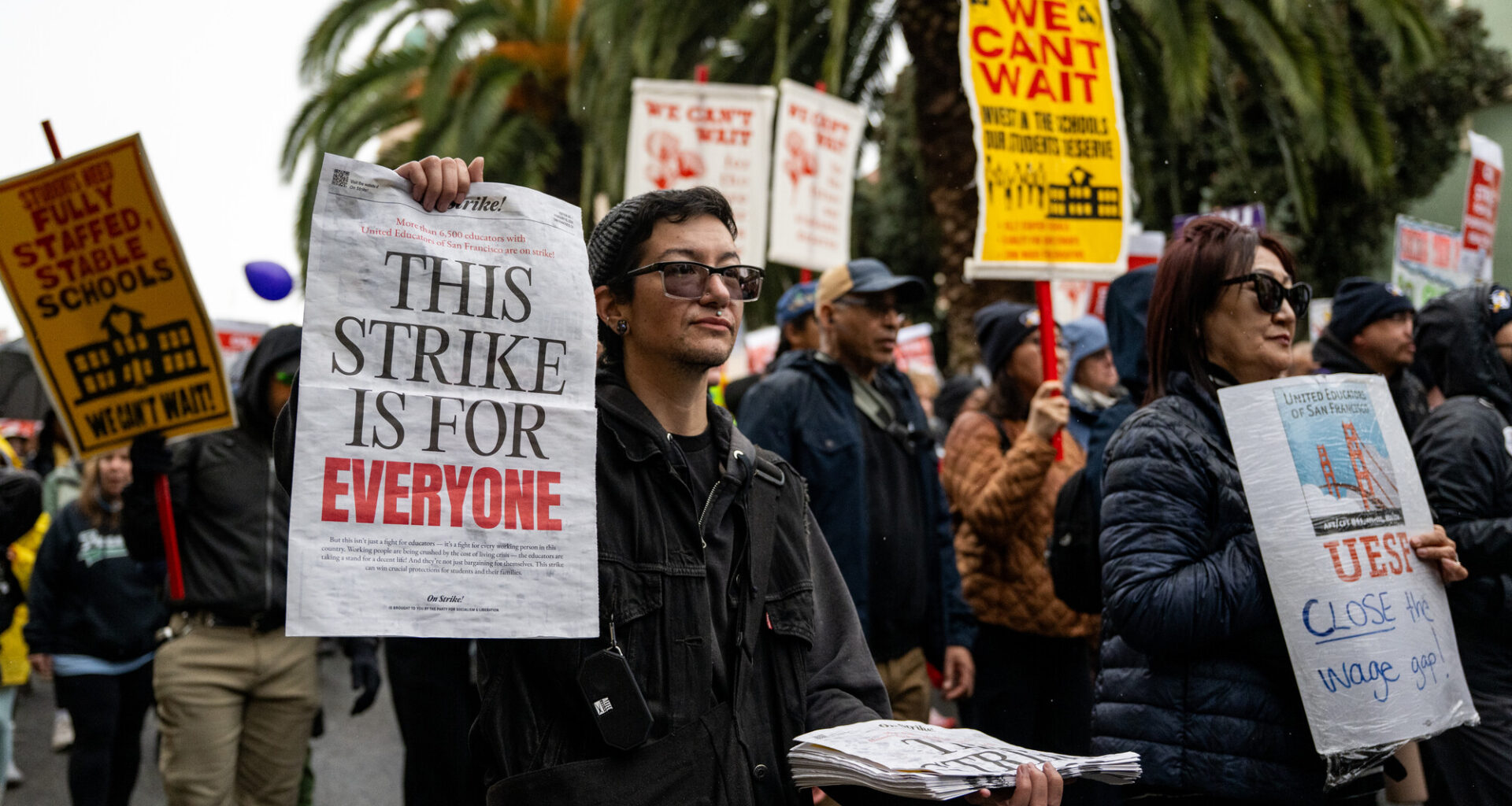
Alias has taught English at Balboa for the last five years. His wife is also an SFUSD teacher, and their two daughters are enrolled in elementary and middle schools in the district. Right now, he said, about 15% of his annual pay goes toward health care coverage.
“That money represented an inability to save for retirement, an inability to put much away for college for my kids,” he told KQED.
This week’s ratification vote by UESF’s 6,000 members, one of the final steps in securing the deal, is expected to pass.
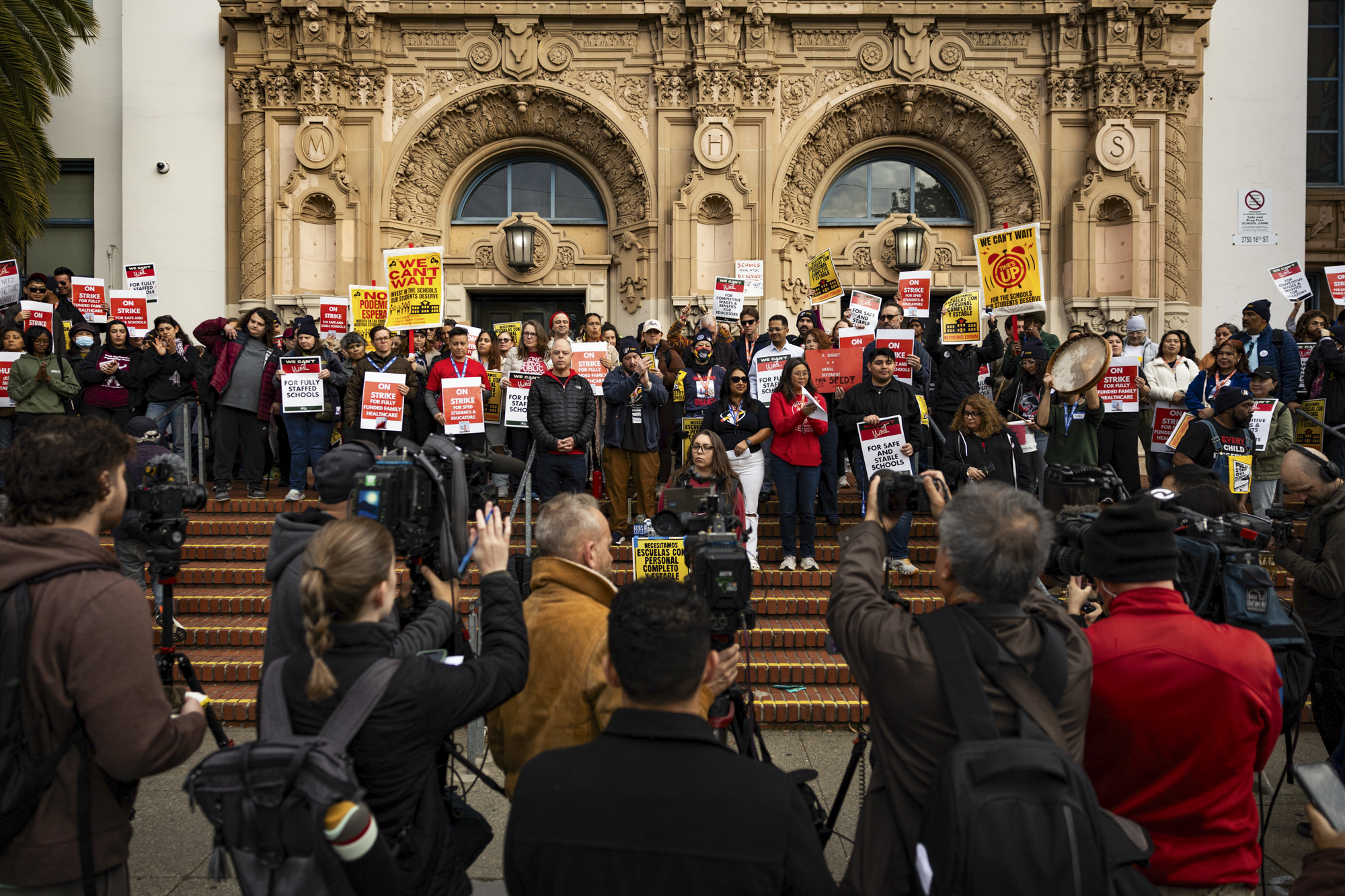 Cassondra Curiel, president of the United Educators of San Francisco, center, speaks during a press conference at Mission High School on Feb. 9, 2026. Teachers went on strike for the first time in nearly 50 years. (Gina Castro for KQED)
But while the tentative agreement secures funded health care and significant wage hikes for classroom aides, along with commitments to support unhoused and immigrant students, it doesn’t meet the salary demands the union put forth for classroom teachers and other credentialed employees, or their plan to change special education workloads.
“It’s complex,” said Todd Albert, who teaches science at Buena Vista Horace Mann Middle School. “Big picture, [I’m] really happy that our classified staff is getting like a 9% raise, very happy that a lot of my colleagues are getting fully funded health care.”
“But selfishly, [I’m] feeling like I didn’t get as much as I would have liked,” he continued.
Contract wins
Since reaching the tentative agreement on Feb. 13, UESF has called the contract a “massive win” for members.
“What we were able to achieve in this bargain with this contract is truly the ability for us to stabilize our school staffing and for our members to be able to improve our ability to afford living and working in San Francisco,” union President Cassondra Curiel told KQED.
A big part of that is health care coverage, which will save some educators with families up to $1,500 a month.
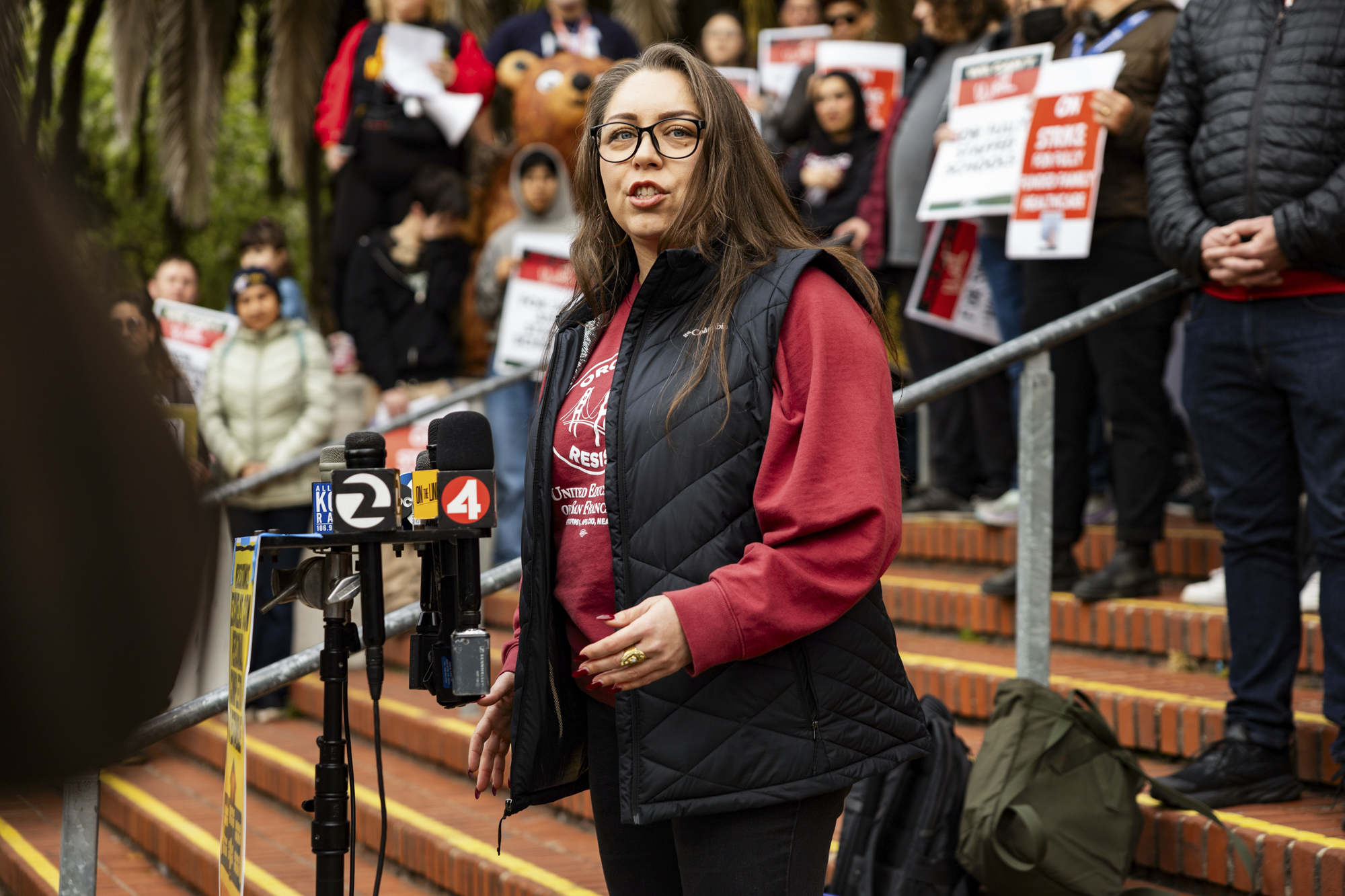 Cassondra Curiel, president of the United Educators of San Francisco, speaks during a press conference at Mission High School on Feb. 9, 2026. (Gina Castro for KQED)
“That was an incredible burden,” said Alias, who had worries about being able to keep his family in San Francisco. “There’s also housing instability. We rent a place nearby the school, which is fantastic, but having access to that $1,500 of our paycheck that we never see would give us so much more ability to feel safe, feel stable.”
Paid premiums will be especially impactful for paraeducators, said Teanna Tillery, who has been a para in SFUSD’s central office for more than two decades.
The positions are some of the lowest-paid in the district, but Tillery said she and other paras pay the same amount as other educators for their current plans.
“For our paraeducators who have two or more dependents, they’re paying upwards of $700 per paycheck, which is almost 40% of their take-home [pay],” Tillery told KQED.