
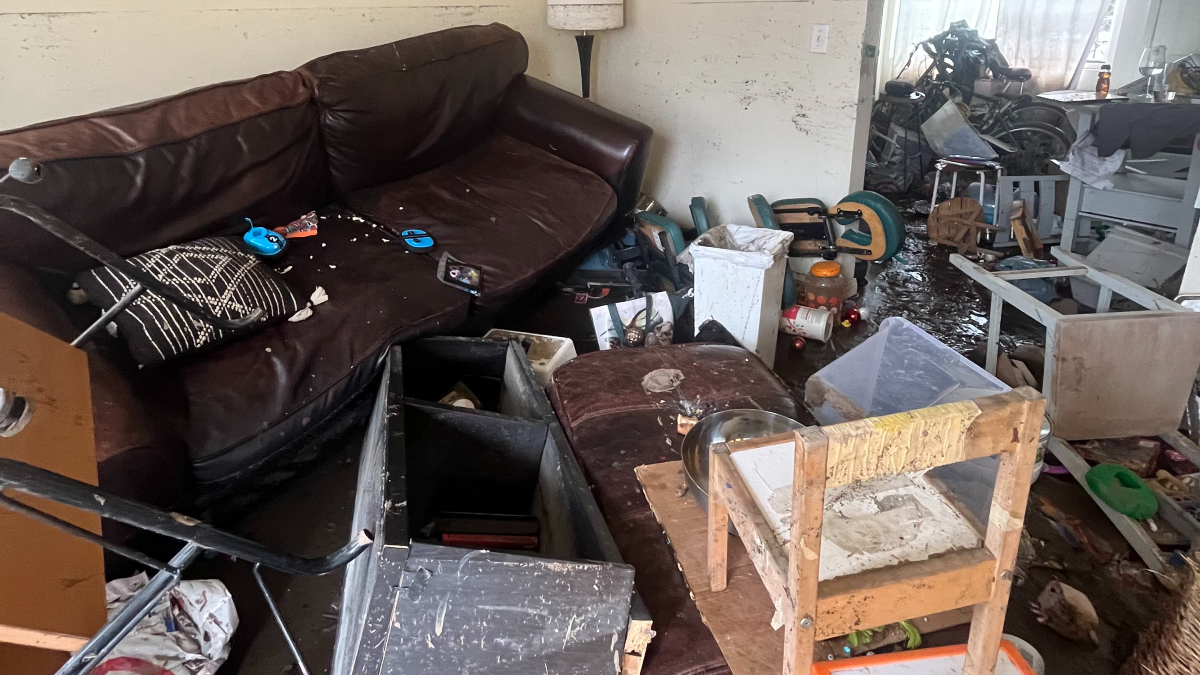
San Diego City Council on Tuesday approved a $6.3 million settlement payment to insurance companies that sued to recover their payouts for the historic January 2024 flooding that devastated some neighborhoods, angering some residents who say they’re still trying to rebuild.
“It’s really insulting. It’s really hurtful. And it’s just like a reoccurring slap in the face,” said Jessica Calix, who lost everything in the flooding and is still living in an RV more than two years later.
The settlement is the first money to be paid by the city in connection with the flooding that damaged hundreds of homes and displaced residents, particularly in Southcrest, according to Domenic Martini, an attorney who represents Calix and hundreds of others.
Hundreds of San Diegans have yet to return home following last January’s floods and are pleading with the city of San Diego to help them, reports NBC 7’s Joe Little.
At least 1,400 people have sued San Diego over the floods, alleging the city did not maintain its infrastructure and channels like Chollas Creek, making the devastation of the heavy rainstorm on Jan. 22, 2024, far worse.
“They’re frustrated, right?” Martini said. “They finally see that the city is taking some responsibility and paying money, but it’s not to the individuals who are hurt. It’s not the people down on Beta Street in Southcrest who are still working to rebuild. Instead, it’s going to multi-billion dollar companies that, candidly, barely took a loss in this action.”
City Council approved the settlement to 17 insurance companies – including Palomar, State Farm, Allstate and Esurance, among others – that filed four separate lawsuits seeking to recover property damage claims paid out after the flooding.
“I think we can all agree that insurance companies have enough money. But as survivors, we’re all struggling,” Calix said. “Recovering from a disaster is extremely expensive and this is something that could have been prevented. And so the only right thing to do is to invest into our communities so that we can get back to where we were.”
In approving the settlement to the insurance companies, some councilmembers noted the ongoing pain of residents.
“While we’re resolving this litigation, I just can’t say enough that we need to make sure that we are continuing to remain focused on our impacted families,” Councilmember Henry Foster said. “Most of these families are still navigating repairs and enduring financial strain and uncertainty, and some impacted did not have adequate insurance coverage at all.”
“Obviously, the folks who were impacted continue to be impacted, regardless of whether or not they have been able to return back to their homes, whether that’s from still picking up pieces, living somewhere else, or the trauma that comes with every time it rains,” said Councilmember Sean Elo-Rivera. “We haven’t forgotten about what happened or about the responsibilities that we have moving forward.”
But Calix said in the two years since the floods, words of support from elected officials have rung hollow.
“At this point, it just feels like thoughts and prayers because here we are, we’re getting no support, and these insurance companies are getting paid out before us, families that need real help,” she said.
Martini said the survivors’ lawsuits have a trial date set for Oct. 2, but it’s possible the city could settle those suits before then as well. He said the plaintiffs have yet to make a specific ask on compensation, and it’s difficult to calculate the total damages because it depends on each individual household, but he estimated the city could be on the hook for hundreds of millions of dollars.
Tuesday’s settlement to the insurance companies, Martini said, is relatively small compared to many disasters like wildfires, in part because many victims weren’t insured at the time of the floods.
“I think that’s probably the most frustrating part, right? Is that the city is basically prioritizing these companies that don’t really offer flood insurance to these victims to begin with,” Martini said, adding that the settlement is also an indication that the city won’t contest its liability in the survivors’ ongoing litigation.
“I would categorize it as progress in the city taking responsibility,” Martini said. “But it’s going to lead to a lot of frustration from survivors who are saying: Why them and why not us?”
“I don’t know how anyone can turn their back on the flood survivors,” Calix said. “As much as everybody has suffered and continues to suffer, I don’t know how anybody can sleep at night knowing that they could have helped, and they didn’t.”