
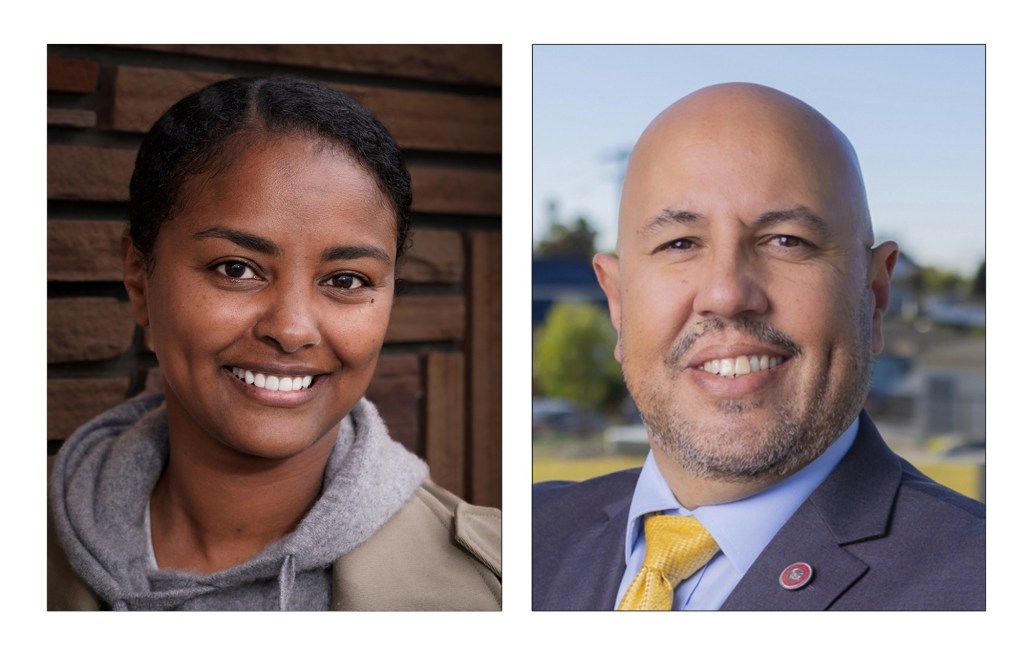
This year’s race to represent San Diego’s southeastern neighborhoods on the City Council looks more competitive than expected, with incumbent Henry Foster facing a community activist who’s raising far more money than he is.
Martha Abraham, a longtime nurse and single parent, emerged politically during last year’s high-profile fight over a housing policy in Encanto that neighbors charged was racist. Now she is also criticizing Foster for supporting charging drivers to park in Balboa Park.
Incumbents rarely lose San Diego City Council races. It’s only happened twice since 1992, but both those losses — by Myrtle Cole and Lorie Zapf — were relatively recent in 2018.
Foster, who represents District 4, could also be vulnerable to anti-City Hall sentiment in many San Diego neighborhoods fueled by outcry over parking in Balboa Park, city policies on backyard apartments and other issues.
“My blood pressure rises at the thought of being taxed to visit a public space,” Abraham said. “It has transformed something that belonged to all of us into something only some of us can afford.”
Foster defended paid parking and said last week he still supports it.
“I stand by my vote on Balboa Park parking,” he said. “My voting record reflects leadership. I do share in the public’s frustration surrounding the matter, as the implementation by the mayor has been poorly executed.”
Foster noted that he has opposed other recent policy changes that have impacted city residents, such as a new trash fee for single-family homes.
Foster acknowledged Abraham is a viable opponent who has attracted considerable support in the Democrat-versus-Democrat battle. No other candidates have reported raising any money.
“I’m pleased to see we have an active race and that my community is engaged,” he said. “This is a serious race for me.”
Abraham says Foster does a poor job of responding to neighborhood concerns and making the communities he represents feel heard.
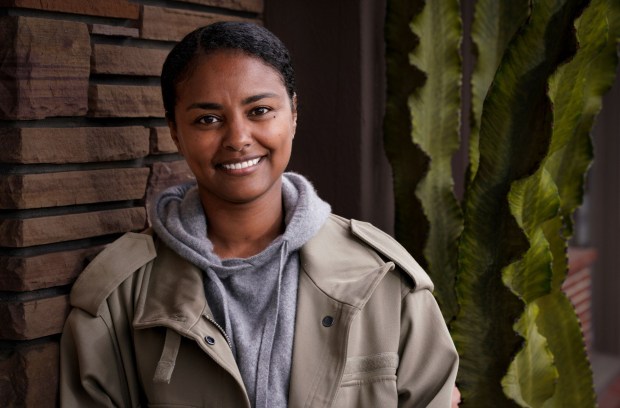 Martha Abraham, a candidate for San Diego City Council in District 4, photographed on Wednesday, Feb. 11, 2026, in the Webster neighborhood of San Diego. (Howard Lipin / For The San Diego Union-Tribune)
Foster pointed out he has weekly office hours every Friday and said his office has handled about 4,000 Get It Done! service requests since he won a special election in 2024 to replace his former boss Monica Montgomery Steppe after she was elected county supervisor.
Abraham says one example of Foster not listening to the communities he serves is a controversial policy known as Footnote 7.
That policy reduced the minimum lot sizes on some parcels of land in Encanto and Emerald Hills from 20,000 square feet to 5,000. Critics said it targeted neighborhoods with low incomes and the highest concentrations of Black residents for a zoning change that was not applied anywhere else in the city.
Abraham and many other residents lobbied the City Council to reject housing projects that relied on Footnote 7. But the council — including Foster — said that would make the city highly vulnerable to litigation.
Instead, during a hearing on Footnote 7, Foster responded to the criticism by proposing a rollback of an unrelated density bonus policy for accessory dwelling units — backyard apartments. His proposal eventually led to significant changes in the policy that have appeased critics.
But Abraham believes Foster should have fought harder against projects allowed by Footnote 7.
“Instead of addressing the community and the concerns we had, he added in the bonus ADU — and that completely took all the attention away from Footnote 7,” she said.
In response, Foster said land-use policies are complicated and often involve tough compromises, and he said the ADU rules changes he spearheaded have been a huge success. In addition, Footnote 7 has since been repealed.
“We went to work and came out successful,” he said.
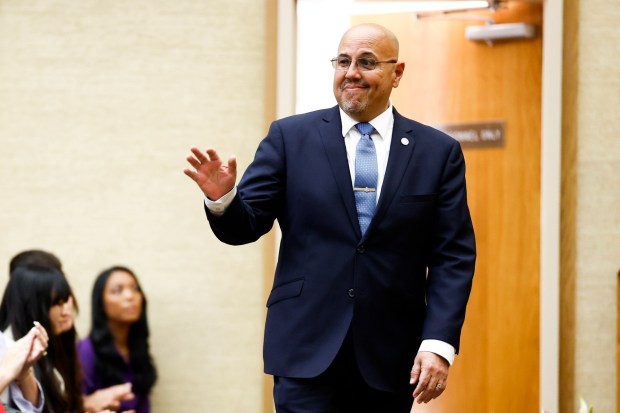 Councilmember Henry L. Foster III waves to a crowd before the mayor’s State of the City speech at City Hall on Thursday, Jan. 15, 2026, in San Diego. (Meg McLaughlin / The San Diego Union-Tribune)
Abraham describes her campaign as “grassroots” and “people-powered,” while Foster said his campaign is focused on “results and experience.”
Foster contends he successfully fought against many budget cuts proposed last spring by Todd Gloria, including plans to shrink hours at libraries and recreation centers more sharply.
Abraham more than doubled Foster’s $8,557 fundraising total during the last six months of 2025 with $19,506 in donations. She said she hopes to send out a campaign mailer.
Asked about the disparity, Foster said he directed potential campaign donors to give instead to community projects that needed more funding to get built. He said he plans to focus more on fundraising this winter and spring.
Foster has dominated endorsements in the race, as most incumbents do.
He has been endorsed by the county Democratic Party, several labor unions in the private and public sectors and four members of the council: Joe LaCava, Kent Lee, Sean Elo-Rivera and Vivian Moreno. Those four and Foster together form a soft five-member majority on the nine-member, all-Democrat council.
Should Abraham win, that five-member block would be in jeopardy. But with Moreno termed out and two other seats also up for grabs, the makeup of the council in 2027 is already up in the air.
Abraham, 39, lives in Emerald Hills, where she operates a home care business and works as a neonatal intensive care nurse for Kaiser Permanente.
She was born in Sudan in 1986 to Eritrean parents fleeing civil war. She emigrated to the U.S. with her family at 8 months old and grew up around San Diego.
Foster, 54, lives in Valencia Park. He was born and raised in District 4, and his family has a long history in the area.
Other candidates in the race include Johnny Lee Dang, Mykel Gadson, Erik Ibarra and Tylisa Suseberry. None have reported raising any money.
The top two finishers in the June 2 primary will advance to a November runoff even if the first-place finisher gets more than 50% of the vote in June.
That makes June potentially less consequential for the battle between Abraham and Foster, and could give Abraham until November to build enough support to unseat the incumbent.