
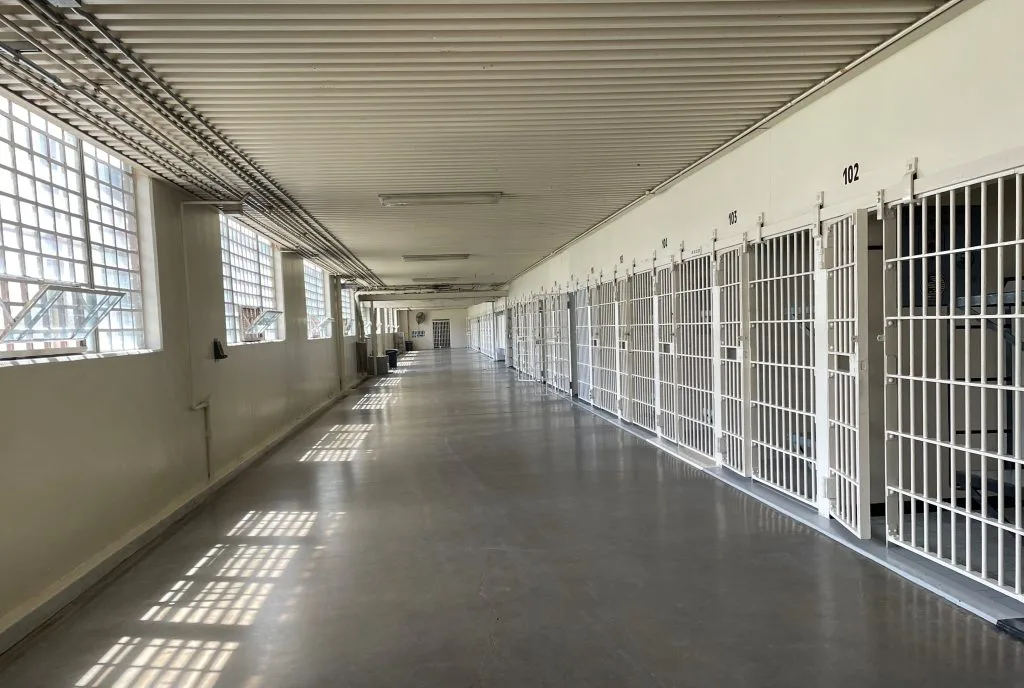
Image courtesy CDCR/ State of California
SACRAMENTO, Calif. — California is spending hundreds of millions of dollars to maintain thousands of unused prison beds even as the incarcerated population continues to decline, according to a new report from the state’s Legislative Analyst’s Office that recommends closing another prison in the next few years.
In its February 2026 budget brief on the California Department of Corrections and Rehabilitation, the LAO states, “we find that the state could close an additional prison within the next few years and still retain a significant buffer to manage unexpected population increases.” The report estimates such a closure “could save around $150 million annually in operational costs and avoid the need for infrastructure projects at the closed prison.”
The recommendation comes as California confronts projected long-term budget shortfalls while continuing to fund a corrections system built for a much larger population.
According to the LAO, CDCR is currently responsible for incarcerating about 90,300 people, most of whom are housed in 31 state prisons. The Governor’s 2026-27 budget proposes $14.1 billion to operate CDCR, reflecting a $258 million decrease from the revised 2025-26 level. However, overall corrections spending is projected to reach $18.86 billion, an increase of more than $618 million compared to last year’s enacted budget, according to Californians United for a Responsible Budget.
The LAO report emphasizes that California’s prison population has declined significantly in recent years and is projected to continue falling through at least June 30, 2030. Under current projections, the state would retain thousands of empty beds even after the planned closure of the California Rehabilitation Center in Norco.
Fall projections cited by CURB estimate the average daily adult incarcerated population will drop to 84,664 by June 30, 2030.
Despite those trends, nearly 14,000 beds remain empty in state prisons. The LAO concludes the state could close another prison while maintaining approximately a 2,500-bed buffer to guard against unexpected population increases.
Advocates argue that the state has already demonstrated the fiscal benefits of reducing prison capacity. The LAO notes that previous closures and yard deactivations have resulted in “around $1 billion in General Fund savings annually,” while also allowing the state to avoid major infrastructure investments at aging facilities.
One of the strongest candidates for closure identified by the LAO is the Correctional Training Facility in Soledad. The office describes it as “a strong candidate for closure.” Within the next decade, the administration estimates the facility will require kitchen replacements costing $296 million and a fire alarm system replacement estimated at $83 million.
The LAO recommends rejecting proposed infrastructure funding at the Soledad facility unless the administration identifies a different prison for closure, cautioning that the state risks paying for projects that “ultimately provide little or no benefit if the prison is closed in the coming years.”
The fiscal stakes extend beyond individual facilities. As of December 2025, CDCR identified “46 deferred maintenance or capital outlay projects across 25 prisons at an estimated total cost of $2.5 billion that are expected to be needed over the next ten years.” The LAO adds that anticipated air-cooling installations could push required infrastructure spending into “the several billion dollar range.”
At the same time, the state faces mounting financial pressures. CURB notes that California is dealing with structural operating deficits and projects a deficit of roughly $22 billion in 2027-28.
“It costs nearly $128,000 a year to incarcerate an average person in California prisons,” CURB states. That figure climbs significantly for older adults, who make up a growing share of the prison population.
More than 19,000 incarcerated people in California are age 55 or older. According to data cited by CURB from California Correctional Health Care Services, annual health system costs per person increase sharply with age, reaching $237,325 for individuals age 80 and older. The organization describes expanded release pathways for elders and medically vulnerable people as “a humane, direct cost-reduction strategy.”
The LAO also highlights broader structural issues within CDCR’s budget, including rising infrastructure obligations and a structural shortfall linked to declining vacancy rates among staff. The office recommends providing limited-term funding for certain personnel costs while continuing to scrutinize the department’s fiscal outlook.
Ultimately, the LAO urges lawmakers to act proactively rather than wait for fiscal pressures to intensify. It recommends that the Legislature “direct CDCR to begin planning to close another prison in 2027-28 or as soon as logistically possible.”
For advocates, the conclusion is clear. With nearly 14,000 empty beds, a declining population, and billions in looming infrastructure needs, they argue that maintaining excess prison capacity constitutes avoidable waste at a time when the state faces difficult budget choices.
Whether lawmakers embrace additional closures in the coming budget cycle could signal how California balances fiscal restraint, public safety, and ongoing debates over the future scale of its prison system.
Follow the Vanguard on Social Media – X, Instagram and Facebook. Subscribe the Vanguard News letters. To make a tax-deductible donation, please visit davisvanguard.org/donate or give directly through ActBlue. Your support will ensure that the vital work of the Vanguard continues.
Categories: Breaking News Everyday Injustice Law Enforcement State of California Tags: Aging Prison Population California California Department of Corrections and Rehabilitation CURB Governor’s 2026-27 budget Incarcerated Population Legislative Analyst’s Office prison budget Prison Closures state prisons