

This Black History Month, the California Museum invites visitors to explore the state’s history through a lens focused on the stories, struggles, and achievements of Black Californians.
The museum’s self-guided Black history tour — offered year-round — takes on added visibility in February.
Jessica Cushenberry, the museum’s public programs manager, said this month is an opportunity to intentionally highlight stories already woven into the institution’s exhibits.
“The tour is offered year-round to promote Black history and updates yearly as we get new temporary exhibits,” Cushenberry said. “During Black History Month, we use the tour as a tool to remind current audiences and engage new audiences about our exhibits and the evergreen display of Black history at the museum.”
The tour lets guests see the museum’s ongoing display of Black history and better understand the broad impact and influence of Black Californians.
 A display featuring Venus and Serena Williams is part of the California Museum’s self-guided Black history tour. Photo courtesy California Museum
“It is important to highlight Black History during Black History Month because it gives us a chance to illuminate Black Californian stories,” Cushenberry said.
While Black History Month often spotlights national icons, the museum’s tour shifts the focus to figures rooted in California, some of whom visitors may not recognize.
Among them is Delilah Beasley, a journalist who chronicled the advancement of Black Californians from pre-statehood through the early 1900s. Visitors also learn about Andrea Perez and Sylvester Davis, who challenged bans on interracial marriage before the U.S. Supreme Court struck them down, and Nathaniel Colley, Sacramento’s first Black attorney, who successfully fought for housing desegregation and racial equality.
“What is unique about this tour is that it allows guests to view vignettes or small illustrations of Black American culture and history through the lens of California,” Cushenberry said.
She said the tour’s mission is to engage, educate and enlighten visitors about California’s rich history and diversity. Exhibits are designed to present multiple perspectives and place Black American history within the broader context of each era, helping audiences understand how Black Californians shaped both state and national narratives.
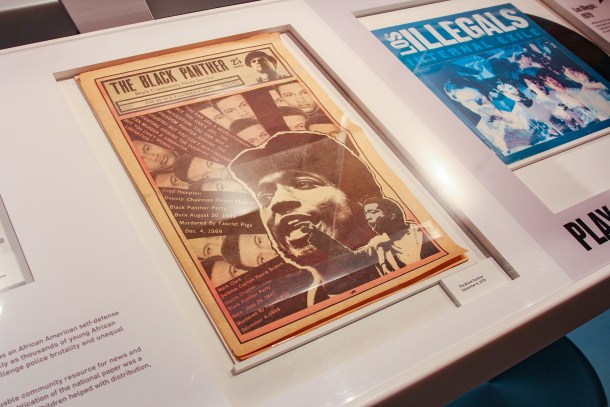 A Black Panther Party flier on display at the California Museum is included in the self-guided Black history tour. Photo courtesy California Museum
At a time when conversations about race and history are increasingly politicized, Cushenberry said the museum views its role as educational rather than political. Past exhibits have included a Smithsonian Institution traveling exhibition on the Green Book and a recent exhibit focused on members of the Black Panther Party.
“We don’t hold all the answers, nor do we have the physical space to tell all of California’s history at one time,” she said. “Some of these stories are uplifting, while others reveal that California has not always lived up to its promise.”
Presenting both injustice and resilience, she said, gives visitors context to better understand the present and encourages them to help shape a more equitable future.
Though spotlighted during Black History Month, the tour is not seasonal. It is offered year-round and updated as new exhibits are introduced. February serves as a reminder — and an invitation.
“I hope guests feel more knowledgeable about the impact that Black Californians have made on this state,” Cushenberry said.
Related