
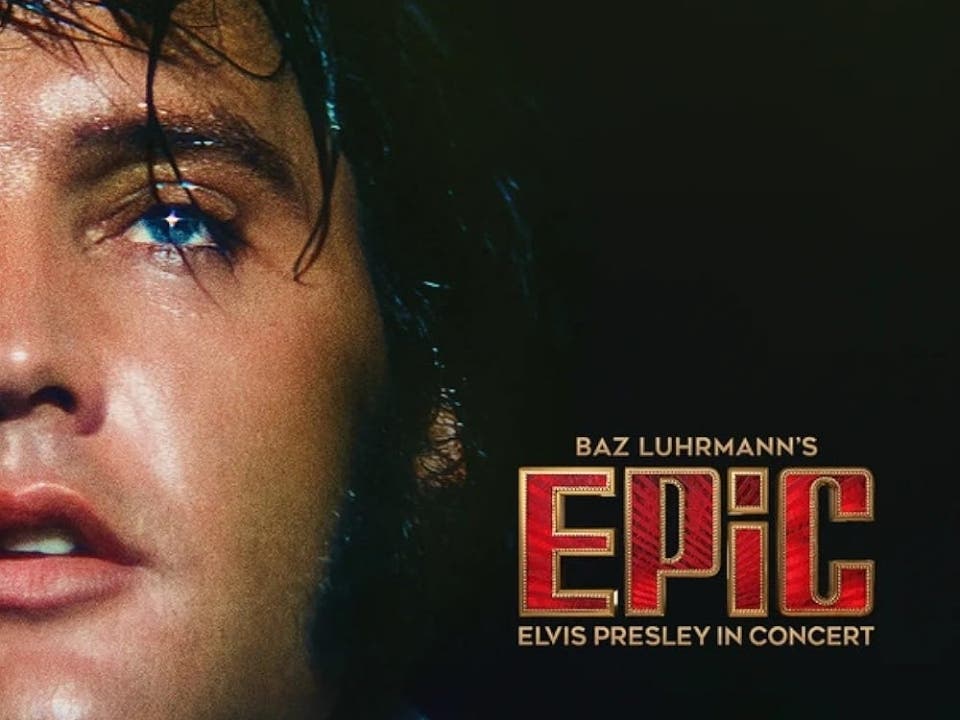
LOS ANGELES, CA — “EPiC: Elvis Presley in Concert” arrives as both an extension of Baz Luhrmann’s 2022 biopic and a recalibration of what a concert documentary can be.
Rather than revisiting Elvis Presley through dramatization or cultural commentary, Luhrmann turns to the archive itself, drawing from roughly 59 hours of performance and interview material that had been sitting for decades in a Warner Bros. vault deep inside a Kansas salt mine. He supplements it with rare Super 8 reels from the Graceland archives, all of it painstakingly restored.
The result feels less like a retrospective and more like a collapse of time — summoning back the one‑and‑only Elvis Presley. Colors are sharpened, details clarified, and Elvis’ physical presence — the way he moves, sweats, and commands — has a voltage that seems to zap off the screen with almost hallucinatory force.
What sets “EPiC” apart is its Elvis‑exclusivity, a deliberate narrowing of the frame to an Elvis‑only focus that keeps every moment anchored to the King of Rock and Roll. Luhrmann avoids contemporary interviews entirely, relying instead on concert footage and candid archival clips that show Elvis laughing, talking — just Elvis being himself.
Early on, he describes his jittery performance style with cheerful bluntness to an unseen interviewer — he “can’t stand still” — a line that lands as both confession and explanation for the seductive signature gyration that would define his stage presence. The performances — and Elvis’ own archival voice — carry the narrative, creating a sealed, intimate space that feels profoundly alive.
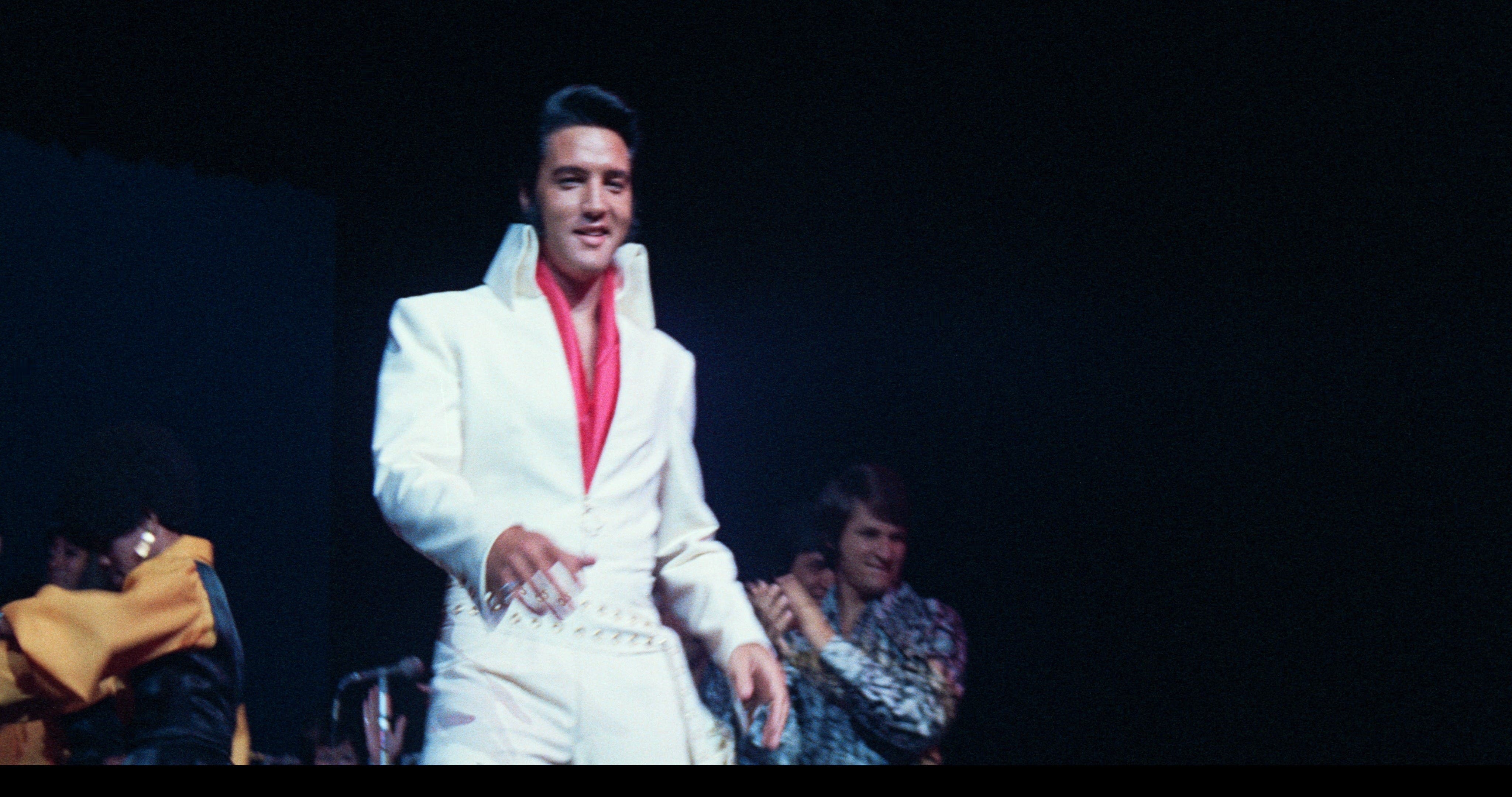 “EPiC” Courtesy of Neon
Luhrmann moves briskly through Elvis’ early career, touching on the string of films he made between 1956 and 1969 — many of which he openly disliked — and his Army service in Germany from 1958 to 1960. Glimpses of his grief after his mother’s death and the manipulative maneuvering of Colonel Tom Parker appear without fanfare.
The film also includes hypnotic footage from a 1957 performance in Hawaii, where Elvis, draped in a gold jacket and lei, radiates the kind of beauty and ease that defined his early superstardom.
But the film’s core is the material from his Las Vegas residency between 1969 and 1976. His stage wardrobe — bell‑bottom jumpsuits, high collars, macramé belts, fringe that sways with every movement — becomes a visual signature. The performances themselves show a restless creativity: he builds ingenious medleys, letting “Little Sister” slide into the Beatles’ “Get Back,” and leans into the playful sensuality of “Polk Salad Annie.”
These moments deepen the sense of presence without breaking the film’s temporal seal — its commitment to staying entirely within Elvis’ own era.
Luhrmann’s instinct for abundance is unmistakable. The quick cuts, the layering of imagery, the sheer density of material can occasionally feel like too much, especially when the footage already carries its own charge. But even when the film edges toward excess, its energy remains rooted in the archival material, not imposed upon it.
“EPiC” may not deepen the man, the myth, or the legend, but it makes a compelling case that Elvis’ power lives on. Luhrmann’s film is an intoxicating burst of archival razzle‑dazzle — sometimes over the top, often irresistible — that leaves you, in the end, all shook up.