
“From a city perspective, we really don’t see the future of building out the city around single-family homes and lower densities. We’ve got to continue to maximize opportunity to add,” he said. “But in a process like this, we have to balance all of those interests.”
Converting golf courses and sprawling private recreational spaces into havens of housing and retail is not a new idea, particularly in places where development tends to happen as infill in small pockets. But like in San José, some communities oppose the idea.
Just over the border from San José in Santa Clara, developers are planning 316 apartments on a portion of the popular nine-hole Pruneridge Golf Course, which already has older housing stock woven into it. That project doesn’t plan to replace the course, but will require a reconfiguration of three holes.
In Brentwood in the East Bay, voters overwhelmingly chose in a 2022 ballot measure to restrict potential developments across several golf course properties.
And in San Diego, a developer is working to replace the Riverwalk Golf Club with 4,300 residential units, more than 150,000 square feet of retail space and 1 million square feet of office space, plus nearly 100 acres of green space, according to The San Diego Union-Tribune.
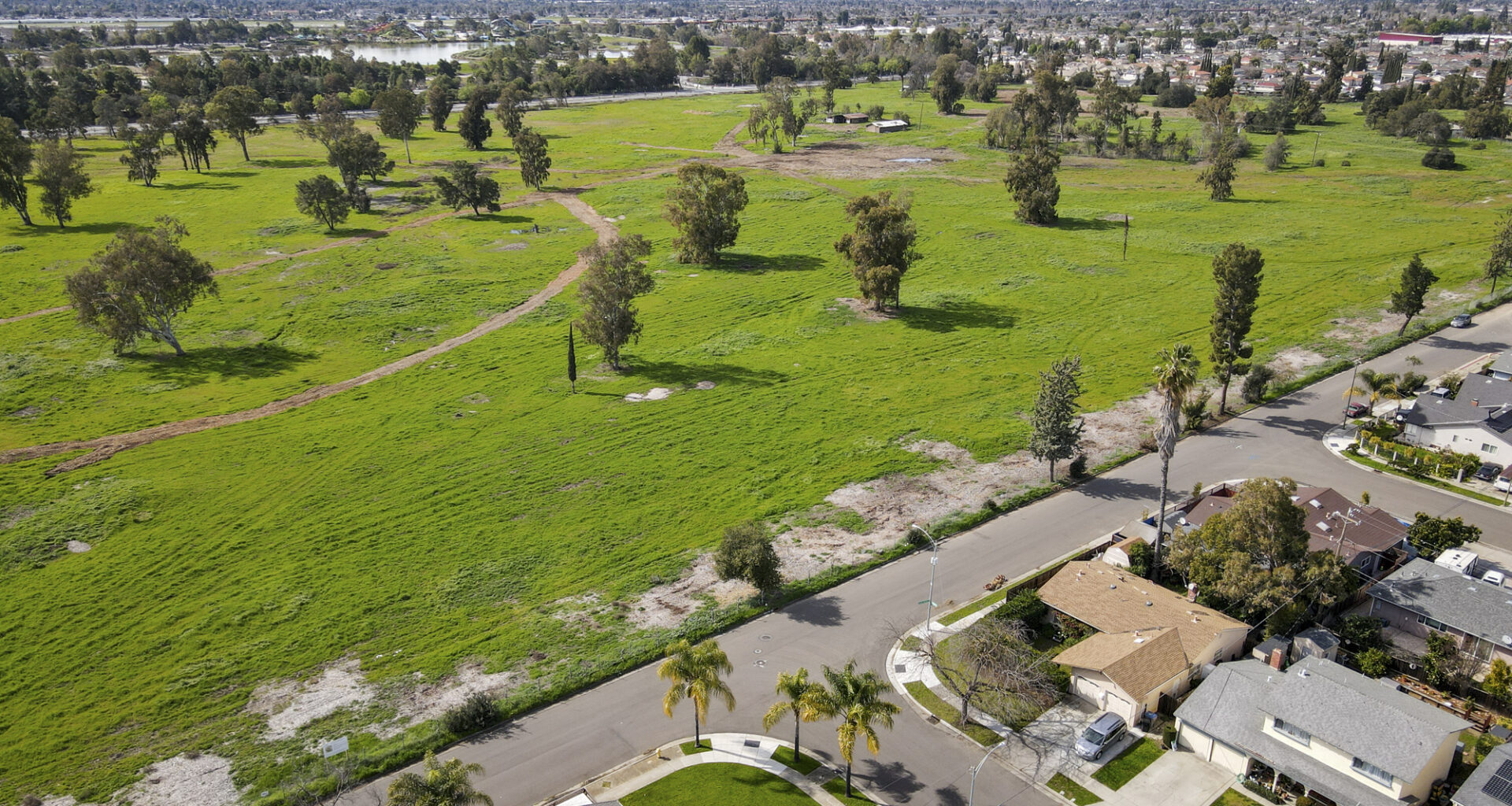
In San José, the Pleasant Hills Golf Course proposal is still undergoing environmental review. A formal vote to greenlight a final version of the project isn’t likely to happen this year.
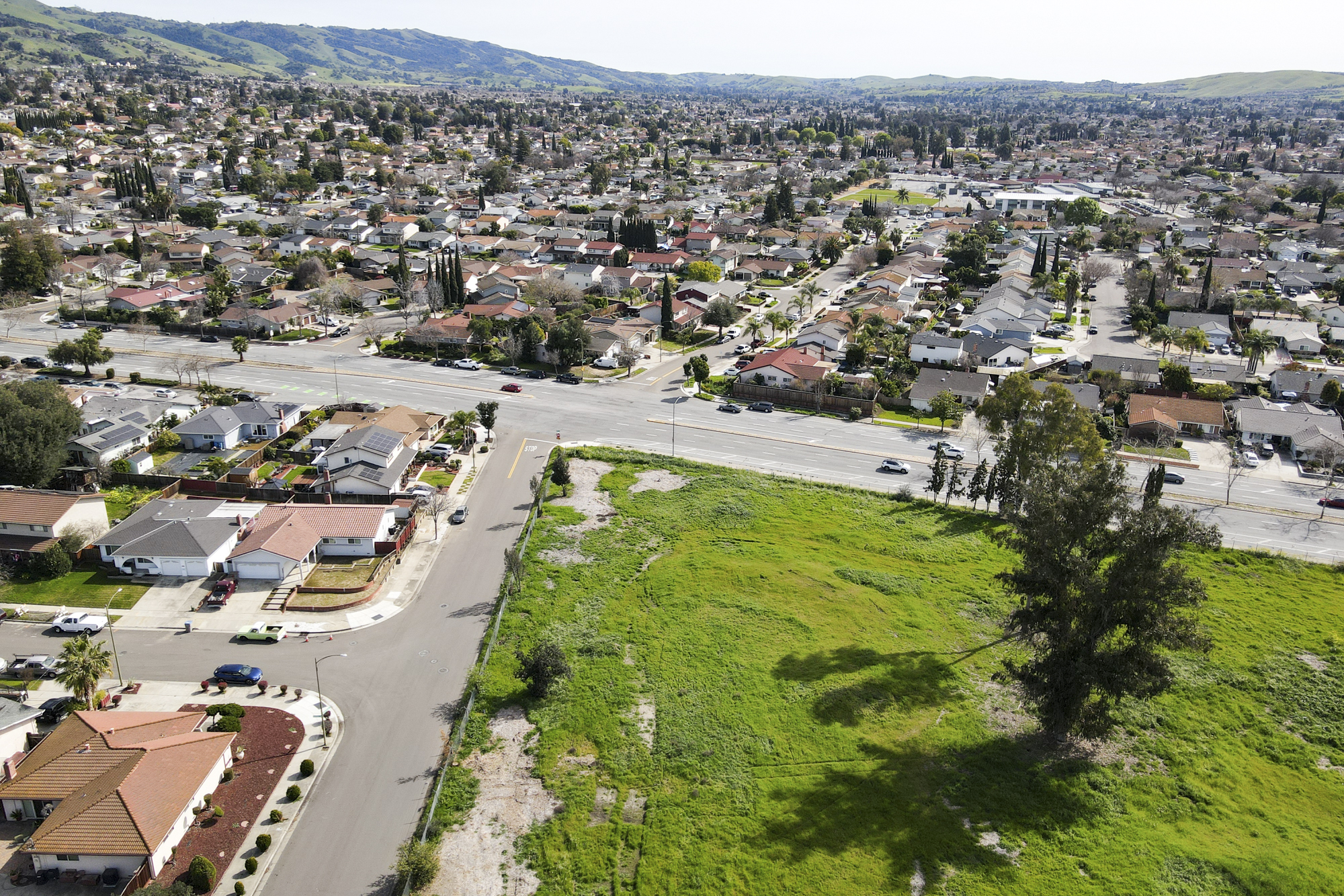 An open grassy area at the former Pleasant Hills Golf Course in San José on Feb. 23, 2026. (Beth LaBerge/KQED)
District 8 City Councilmember Domingo Candelas, who represents the area where the land sits, said there are still many questions to be answered, and declined to say how big or dense the project should be.
“I firmly believe we’re not going to solve our housing crisis with this single project,” Candelas said. “I remain fully committed to finding a thoughtful, responsible solution that addresses this crisis while protecting the quality of life of our neighborhoods and of our neighbors.”
Shoor said the housing crisis in Silicon Valley — with average homes in San José valued at roughly $1.4 million — and the Bay Area needs to be treated with more urgency by officials around the region, and compared the situation to California’s drought cycles.
“If we don’t build enough housing on Pleasant Hills, it’s like we’re in a drought, and we say, ‘One day of rain will be OK. If we just get a day of rainfall, we’ll get back to where we need to go,’” Shoor said.
“What we need is a rainstorm of housing,” he said. “We need a deluge of new housing to provide for the people who are already here, the people growing up here, the people that are trying to move back here, and the new immigrants who deserve to be here, as well.”