

New restrictions at LAX are prohibiting Los Angeles police helicopters from flying near the airport, cutting off air support for several stations.
In a radio broadcast on Thursday, dispatchers advised officers at mostly South LA stations that they would not be able to receive air support.
“Attention all units, effective immediately, air support will not be able to fly over 77th, Newton, Southeast and parts of Pacific due to restricted airspace around LAX until further notice,” the dispatcher said in the broadcast.
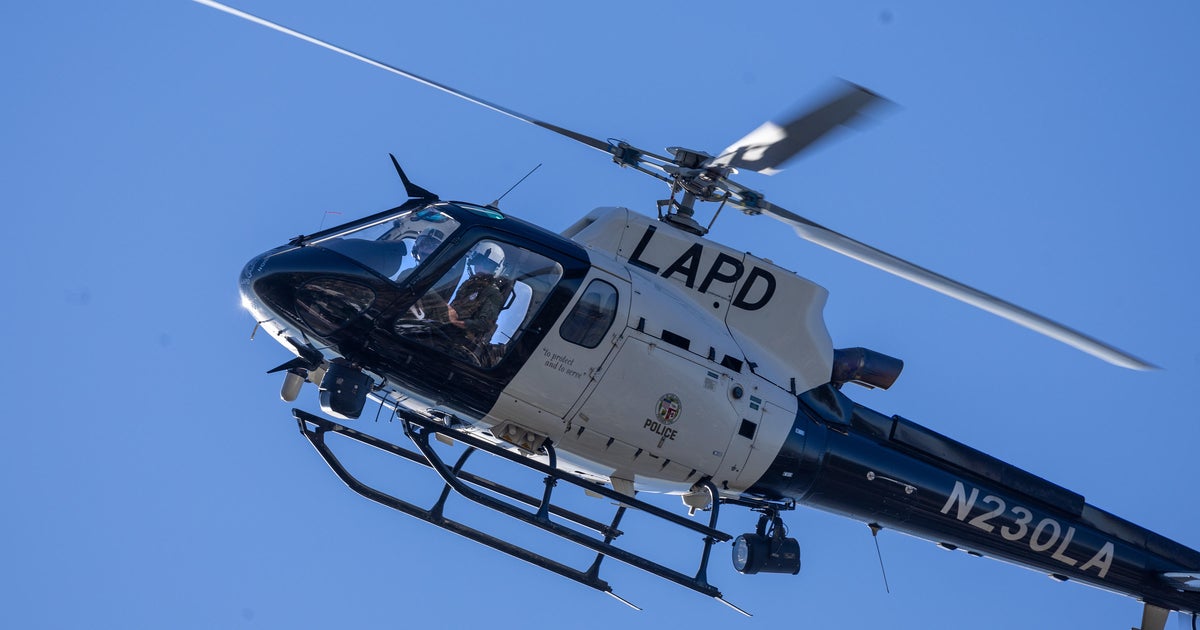
A Los Angeles Police Department helicopter circles over a ceremony.
Brian van der Brug | Getty Images
The new restrictions come as part of the Federal Aviation Administration’s effort to improve safety following last year’s deadly midair collision in D.C.
“As a result of the FAA’s proactive nationwide safety review of airports with mixed helicopter and airplane traffic, we are evaluating restricting Visual Flight Rules (VFR) operations near Los Angeles International Airport (LAX),” the FAA said in statement. “While we conduct this evaluation, air traffic controllers will more often prohibit VFR operators from entering LAX airspace based on the volume and complexity of traffic they’re working, along with daily airspace occurrences including weather and any nearby construction.”
The President of the SoCal Rotors Association, the organization that represents helicopter pilots in the region, including law enforcement, said helicopters flying through LAX airspace pose no risk to public safety.
“We have safely navigated LA airspace for a very long time with the cooperation of LAX controllers,” President Steve Goldsworthy said. “This is a pretty broad brush. They’re putting millions of lives at risk by not allowing any public safety entry at all.”
Earlier this year, the FAA implemented changes at Van Nuys Airport to reduce the number of Traffic Collision Avoidance System (TCAS) alerts for aircraft arriving at Burbank, leading the FAA to permanently lower Van Nuys’ traffic pattern.
TCAS is a program designed to prevent midair collisions.
More from CBS News