
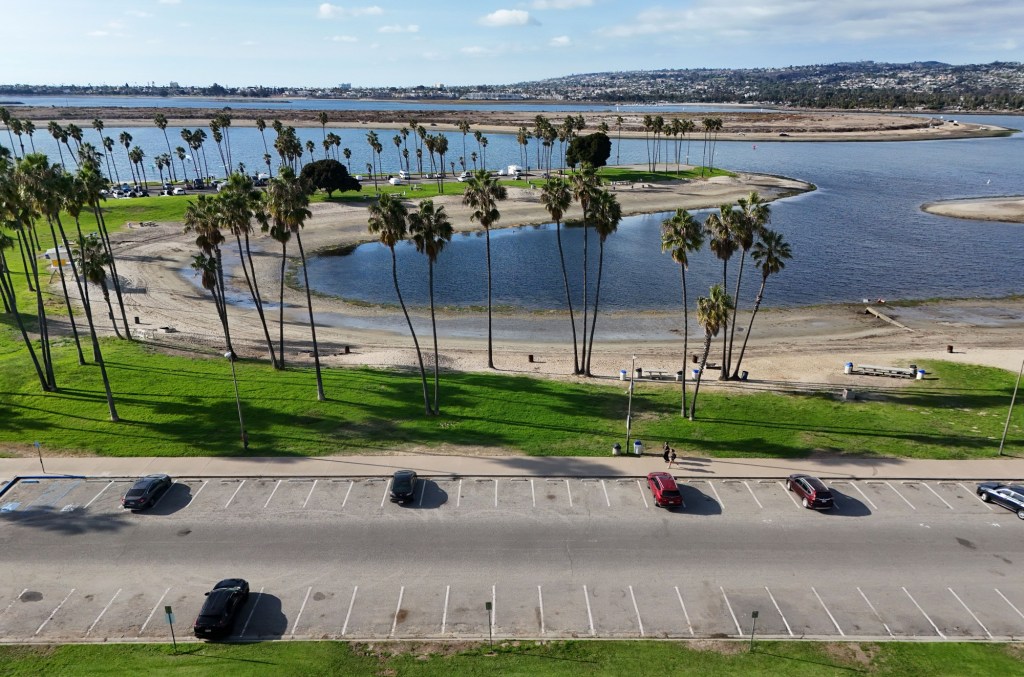
When San Diego Mayor Todd Gloria last year asked the City Council to declare three commercial properties within Mission Bay Park as surplus land in order to negotiate new leases, it did not go over well.
The recommendation, based on the requirements of state law, alarmed council members and environmentalists concerned the designation could pave the way for housing and other development on the cherished waterfront.
And it was resisted even after Gloria promised that a developer’s unsolicited effort to build 900 homes there would never be approved.
By the fall, city officials had dropped the surplus-land effort and decided instead to pursue exemptions with the help of state housing officials and lawmakers.
Now Assemblymember Chris Ward, a San Diego Democrat who previously served on the City Council, has introduced a bill that would exempt the city-owned Mission Bay Park from the state law that undergirded the recommendation, and that was designed to prioritize housing on unneeded public property.
Ward’s legislation, introduced as Assembly Bill 2525, would exempt from the Surplus Land Act all of the property included in the Mission Bay master plan — more than 4,200 acres all told.
“This bill would exempt lands that comprise Mission Bay Park, as defined and located within the city of San Diego, as specified, from these requirements,” states the legislation, introduced Feb. 20. “This bill would make legislative findings and declarations as to the necessity of a special statute for Mission Bay Park.”
The legislative exemption was sought because the Surplus Land Act was amended in 2020 to require that public property that is no longer needed be made available for affordable housing, an effort to promote homebuilding.
The city sought the surplus land designation for the Mission Bay Park parcels because it was required to renegotiate leases longer than 15 years — and developers of projects like hotels generally require decades-long leases to raise financing.
San Diego officials asked state housing officials last year to exempt the three properties from that requirement, but the state denied the request.
As a result, Gloria then recommended last summer that three commercial parcels totaling 28 acres in Mission Bay Park be declared surplus so they could be redeveloped. In particular, the mayor wanted a hotel built, as called for in the park’s master plan.
The properties are now home to the aging Marina Village conference and banquet center along Quivira Way, the nearly 1-acre Sportsmen’s Seafood restaurant site a few blocks north and the 4.5-acre Dana Landing marina on nearby Ingraham Street.
The current Marina Village lease is due to expire in April 2027. The leases for Dana Landing and the seafood restaurant already have expired and are on a month-to-month holdover basis.
City officials said last summer that they had recently received an unsolicited proposal for the Marina Village leasehold, a 23-acre parcel they say is dilapidated and under-performing.
Aides to Mayor Gloria said the proposal was dead on arrival because it included housing. The master plan that governs land use along Mission Bay allows a hotel and conference center on the site, but not homes.
Ward said he introduced the bill to protect the public tidelines from undue development that could emerge if any of the property were legally declared surplus.
“Mission Bay Park is a public resource deeded by the state of California to the city of San Diego nearly 100 years ago with clear direction for its use,” he said. “It was intended for public recreation and enjoyment, commerce, navigation and maritime activity.”
When the Gloria administration recommended the surplus designation on the three Mission Bay Park parcels last year, officials said they were confident they could legally restrict any unwanted development on the properties during a required good-faith negotiation.
“This action does not authorize or require the lease of the properties,” the report to the City Council said. “This action is solely intended to declare the properties to be surplus land. Any future leases related to the properties will be brought forward for consideration under separate council actions.”
But critics such as former San Diego Councilmember Donna Frye said the surplus designation could invite developers to pursue building homes on the land and force the city to defend its decision in court.
Frye welcomed the Ward legislation the city had sought.
“Not every acre of land in California is appropriate for building affordable housing,” she said. “There are special places that need to be protected and preserved, and Mission Bay Park is one of them.”
A spokesperson for Gloria pointed out that any effort to allow residential development there would require voters to approve a charter amendment. If Ward’s bill is passed, it will protect the bayfront park, the spokesperson said.
“While the (Surplus Land Act) serves an important statewide housing purpose, its procedural requirements are not feasible where housing is prohibited by law, such as Mission Bay Park,” mayoral spokesperson David Rolland said by email.
The bill has yet to make its way through the California Legislature. Records show it may be considered in committee as soon as March 23.