
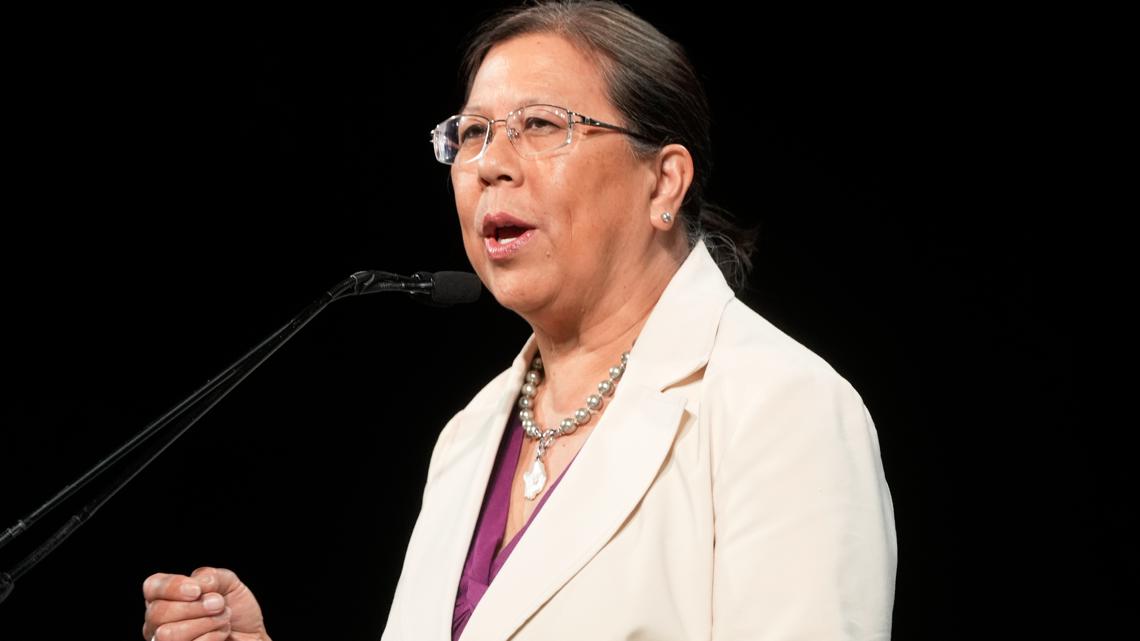
“To the Point” host Alex Bell sat down with California’s candidates for governor to hear directly from them about their priorities and what they’d bring to the job.
SACRAMENTO, Calif. — This June, Californians will head to the polls to help decide who could become the state’s next governor. While the final decision comes in November — for now, nine leading Democratic hopefuls and several Republicans are in the race.
To help you get to know them and what they say they’d bring to the job — Alex Bell sat down with the candidates at this past weekend’s Democratic convention and will do the same with the Republican Party.
To keep things fair, names were drawn at random for these interviews. Interview responses have been cleaned up and slightly condensed for easier reading, while keeping the candidates’ words intact.
Betty Yee
Q: For people that are meeting you for the first time, why are you deciding to run for governor of California?
Betty Yee: “I am a native Californian who has just seen a lot since I grew up here as a daughter of immigrants in terms of just opportunities becoming fewer for many Californians. And so, I am running to really apply my fiscal and financial experience to deal with the affordability issues, and we can’t really tackle them unless we really stabilize our state budget and so just being very clear about the work that has to be done and my background experience being very relevant to that.”
Q: Now if you were to be elected, what would be your top three priorities your first year in office?
Betty Yee: “Top 3 has to be really stabilizing the budget because as we’re trying to deal with our investments in housing and healthcare, our environment, our schools, we need to know that we have that stability in our budget and with the budget deficits we’re facing, the federal funding cuts that are looming. We need to have really an all of the above strategy where we’re going to have to look at how we make cuts to make California government more efficient.
We’re going to have to look at how we raise revenue to be sure that we’re keeping our safety net programs intact, particularly in the Medi-Cal cuts looming, but also how we look at investing in our communities and our people because one of the things that we don’t talk enough about is how do we invest in California where we grow our economy and hopefully develop more resilience against some of these threats that we’re seeing near term.”
Q: California has spent billions of dollars trying to address the homelessness crisis, yet the problem persists. What would you do differently to address this?
Betty Yee: “You know, I think we’ve had a lot of dollars that have been put toward homelessness, but what I would do is to be sure that we are very clear about the roles and responsibilities among the state, the counties, and the cities to be sure there’s coordination, to be sure we have accountability for the dollars that we put out there in terms of what kinds of systems are we creating that hopefully will be there for the long term, to keep people one from becoming homeless, and then two, for the unhoused, how we are able to give them the supportive services, how we are going to be sure that we are moving people into interim supportive housing as quickly as possible.
Permanent supportive housing, stable rental situations, and yes, even home ownership. And so, I think when we can see a continuum like that where we have accountability at every point; we can see our dollars going much further and actually being successful at helping people become more housing secure.”
Q: Do you think California has gone too far, not far enough, or has struck the right balance when it comes to criminal justice reform?
Betty Yee: “Yeah, I think what we have done in California has been, we’ve progressed a lot in terms of just looking at what’s happened when we’ve had early releases from our state prisons. And when I look at the promising programs that are helping formerly incarcerated people, it’s making an investment in holistic re-entry programs where former incarcerated people really are gaining the life skills but also the economic opportunities for jobs and stable housing.
And so, I hope to invest more in that, particularly since Governor Newsom has been closing more prisons, that these are the kinds of programs that people can transition into and be much more ready to re-enter communities. But we also have, I know Prop 36 was just on the ballot, and so with that, I would really prioritize funding more drug treatment capacity, which we don’t have around the state.
As the courts are deciding that people aren’t going to be diverted into drug treatment, I want to be sure that those slots are available for them.”
More interviews with the candidates for governor will be posted as they air on ABC10.
Why no candidate won the Democratic endorsement for governor
ABC10: Watch, Download, Read