
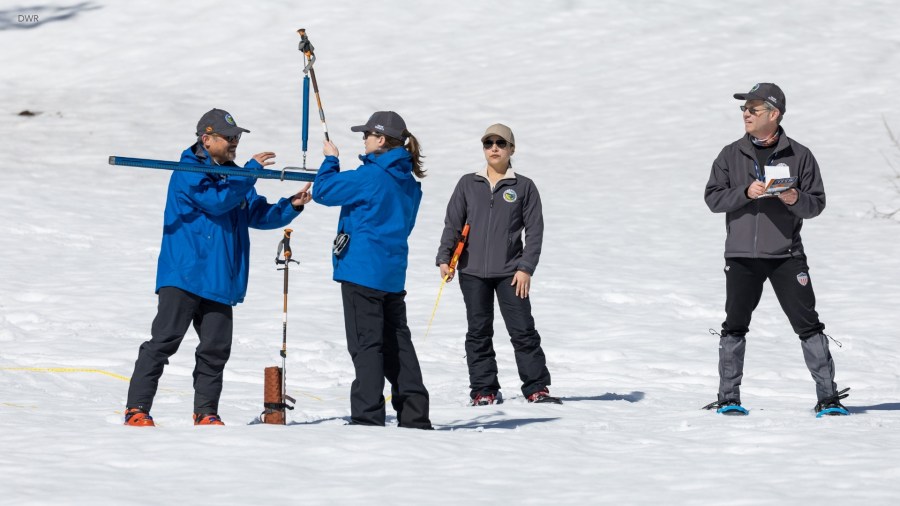
Despite our mid-February storms, California’s snowpack still needs a lot of help, according to state water managers, and the clock winding down to when peak runoff begins.
Officials with the state’s Department of Water Resources trudged into the Sierra snow at Phillips Station on Friday for the third survey of the season. And while the landscape looked far whiter than it did a month ago, the numbers weren’t encouraging.
The survey recorded 28 inches of snow depth and a snow water equivalent of 11 inches, just 47% of average for that location. Statewide, the snowpack sat at 66%.
“Although the storms we saw in mid-February were some of the coldest and best snow-producing storms we have seen since 2023, they were not enough to get us back to average conditions,” said Andy Reising, manager of DWR’s forecasting unit. “The snowpack is in better shape than it was one month ago, but we only have a month left of our snow-accumulation season and time is rapidly running out to catch up.”
The numbers vary widely by region.
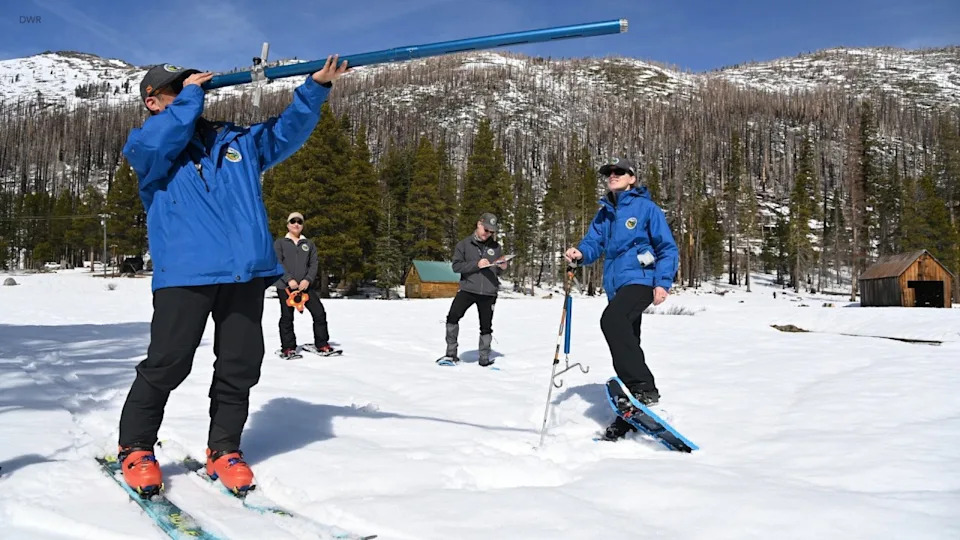
The California Department of Water Resources (from left) Engineer Derick Louie, Hydrometeorologist Angelique Fabbiani-Leon, Snow Survey and Water Supply Forecasting Unit Manager Andy Reising and Engineer Jordan Thoennes conduct the third media snow survey of the 2026 season at Phillips Station in the Sierra Nevada. Photo taken February 27, 2026. (Ken James/ California Department of Water Resources)
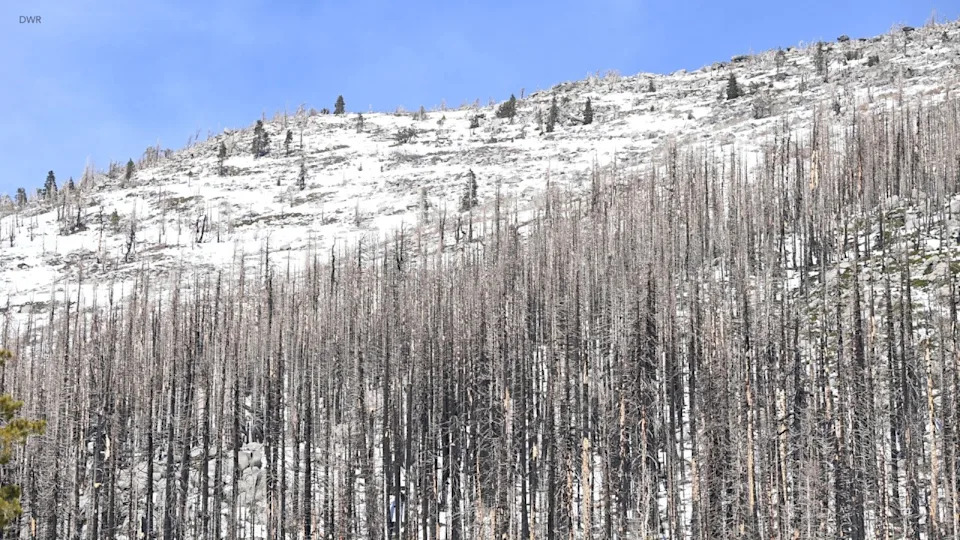
Snow blankets mountains near the meadow where the California Department of Water Resources conducts the third media snow survey of the 2026 season at Phillips Station in the Sierra Nevada. Photo taken February 27, 2026. (Ken James/ California Department of Water Resources)
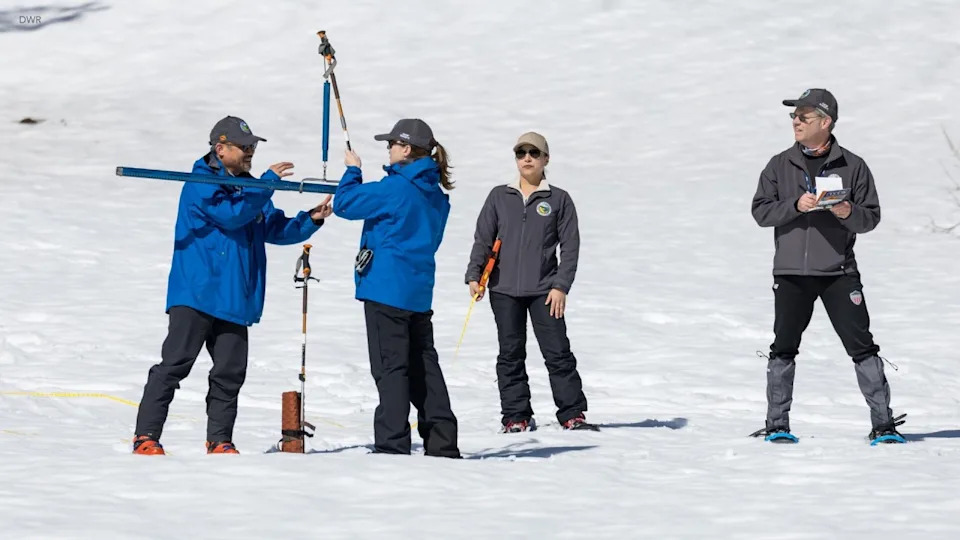
The California Department of Water Resources (from left) Engineer Derick Louie, Engineer Jordan Thoennes, Hydrometeorologist Angelique Fabbiani-Leon and Snow Survey and Water Supply Forecasting Unit Manager Andy Reising conduct the third media snow survey of the 2026 season at Phillips Station in the Sierra Nevada. Photo taken February 27, 2026. (Xavier Mascareñas / California Department of Water Resources)
The Southern Sierra was in far better shape, at 90% of its average. But the Northern Sierra, home to the state’s largest and most critical reservoirs, was at just 46%, officials said.
Historically, the snowpack peaks on or near April 1, after which it begins melting and feeding California’s rivers and reservoirs.
“Water supply in California increasingly depends on a small number of big storms,” said DWR Director Karla Nemeth. “The dramatic wet-dry swings this winter remind us again that ever-warmer average temperatures have reshaped the California water cycle. We must adapt.”
Nemeth said the shifting climate means the state must modernize infrastructure to capture more water when those major storms do hit.
Despite the thin snowpack, the latest U.S. Drought Monitor map still shows all of California free of drought conditions.
Copyright 2026 Nexstar Media, Inc. All rights reserved. This material may not be published, broadcast, rewritten, or redistributed.
For the latest news, weather, sports, and streaming video, head to KTLA.