

In a meant-to-be fusion of timing and chutzpah, Bernie Weiner launched his influential run as the San Francisco Chronicle’s theatre critic in 1974. Originally hired in 1971 to work the 4:30 p.m.-1 a.m. copy desk shift at what was then the thriving “Voice of the West,” Bernie began filing unassigned movie and theatre reviews that editors with a big copy hole to fill were grateful to have. With enough bylines to make his case, Bernie was poised to seize the critic’s chair when Paine Knickerbocker, the aptly named reviewer from the school the courtly, coat-and-tie school of newspaper reviewers, retired. The tide, to put it mildly, was turning. Bernie was there to ride the fresh currents.
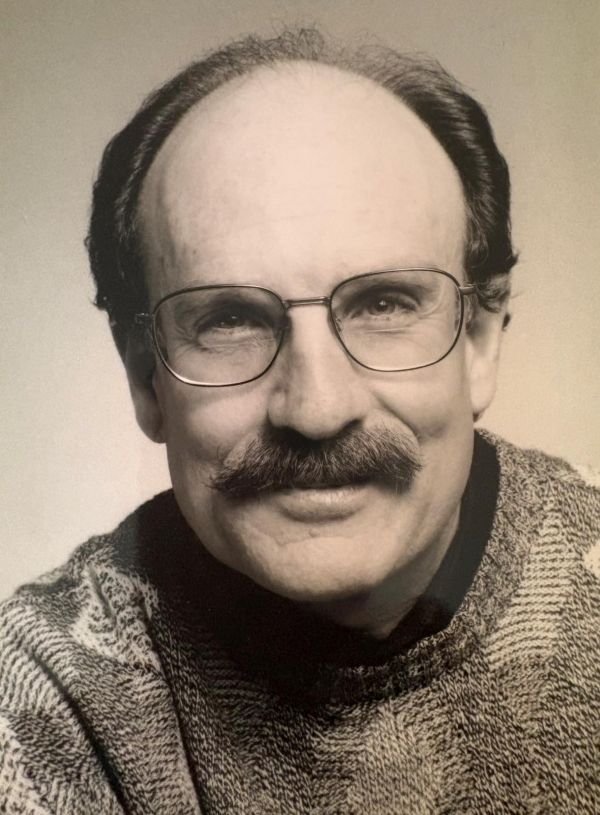 Bernard Weiner.
Raised in Miami and educated at the University of Miami and Claremont College, where he received a political science PhD in 1966, Bernie set out to be a teacher. But feeling the wave of countercultural change, he reversed course, landing in 1968 at The Northwest Passage, a left-wing alternative paper in Bellingham, Washington, where he worked as an editor and writer.
With his academic background and activist leanings, Bernie was ideally equipped to help “shape and articulate the cultural explosions” in the Bay Area, as he put it himself in a 2020 memoir, Little Man Clapping. (The title invokes the Chronicle’s ideogram method of rating shows.) Whether he was reviewing the overtly political agitprop of the San Francisco Mime Troupe, abstract, semi-sculptural works by SOON 3, or the delicate, puppet-centric plays of Winston Tong, Bernie consistently sought to explore how theatre spoke to and mattered in a larger social context. The opening line of a 1978 Tong review put his defining critical approach succinctly: “Great art is a secret universe that goes public.” Bernie aimed to understand and document that transmutation.
“I think about an artistic identity that was formed in the ’60s and gone by the ’90s,” said Larry Eilenberg, former artistic director of the Magic Theatre and longtime theatre professor at San Francisco State University. “Bernie was in the thick of that as a champion and advocate. Maybe that wasn’t the purest critical stance to take. But he was more than a critic. He was part of a community trying to find its coherence.”
Writing in the Cambridge Guide to American Theatre, his colleague and friend, the late Misha Berson, noted that during his tenure Weiner “encouraged an explosion of new fringe theatre activity” in the San Francisco Bay Area.
There was no disguising his enthusiasm and excitement when he wrote about shows such as Snake Theater’s 1979 Auto, which was staged in a vacant Sausalito gas station, or Nightfire Theater’s 1980 Surface Tension, mounted by the Bay Area Playwrights Festival en route to a statewide tour of swimming pools. Although he covered plenty of it, traditional, proscenium-framed realism was not his strong suit.
That’s not to suggest that Bernie was just a shill for anything off the mainstream track. Not everything on the edge received his approbation. And he wasn’t afraid to acknowledge confusion, perplexity, even incomprehension of what a theatremaker was up to. He did so in a way that opened a space where many compelling theatre experiences take place: by submitting to an experience without trying to pin it down.
In a 1987 column about Actual Sho, an abstract new wave opera by the visually inventive George Coates Performance Works, Bernie described a telling exchange he had with a frustrated companion after a performance.
“But what does it mean?” he reported his seatmate asking.
“What do you mean by mean?” he replied.
This Socratic dialogue went on (probably too long), touching on everything from Alan Watts to Dolly Parton, and was left pointedly unresolved. After asking rhetorically what Monet’s lily pads or Frank Stella’s colored squares signified beyond themselves, Bernie played his strongest card. “Why,” he asked, “can’t you celebrate the fact that an artist hasn’t laid it all out for you, that he’s left it up to you to figure out a meaning for yourself?”
As a critic and Sunday feature writer, I worked with Bernie for nine years, until his retirement in 1990, when he sensed (correctly) that the experimental scene was starting to fade. “It’s truly a turnover in generations,” he told the Los Angeles Times.
Somewhat owlish, with a salt-and-pepper beard, receding hairline and metal frame glasses, Bernie spoke softly, in level tones. His smiles tended to be wry, his laughter in the office muted. “He had a twinkle,” said Eilenberg.
Attending shows, the twinkle could turn into a sunburst. More than once he reported laughing so hard the tears ran down his cheeks. There were also tears when something moved him. His reviews occasionally took on a peculiar wrinkle that could prove memorable. “Miss it at your aesthetic peril,” he cautioned in one rave. Vaudeville Nouveau, a 1980s physical comedy troupe, didn’t wait long to mount a new show entitled Aesthetic Peril.
Confessing burnout, Bernie retired from the Chronicle at 50 to spend more time with his family and concentrate on writing poetry and plays. In 2002, he and a friend established and wrote for The Crisis Papers, a progressive online site that remained active until Trump’s first election. In a way he had come full circle, writing about the political dynamic that had been a throughline from his teenage and graduate school days through his Chronicle years and on to The Crisis Papers.
While the experimental foment of the 1970s and ’80s is past, the kind of striving Bernie heralded remains alive here in companies like We Players, which has mounted shows in parks, at a decommissioned fort, and on Alcatraz. If Bernie were still on the theatre beat, he would have been there for all of them.
Steven Winn was on the staff of the San Francisco Chronicle from 1980 to 2008. He reviews for Musical America, Opera and San Francisco Classical Voice.
Support American Theatre: a just and thriving theatre ecology begins with information for all. Please join us in this mission by joining TCG, which entitles you to copies of our quarterly print magazine and helps support a long legacy of quality nonprofit arts journalism.