
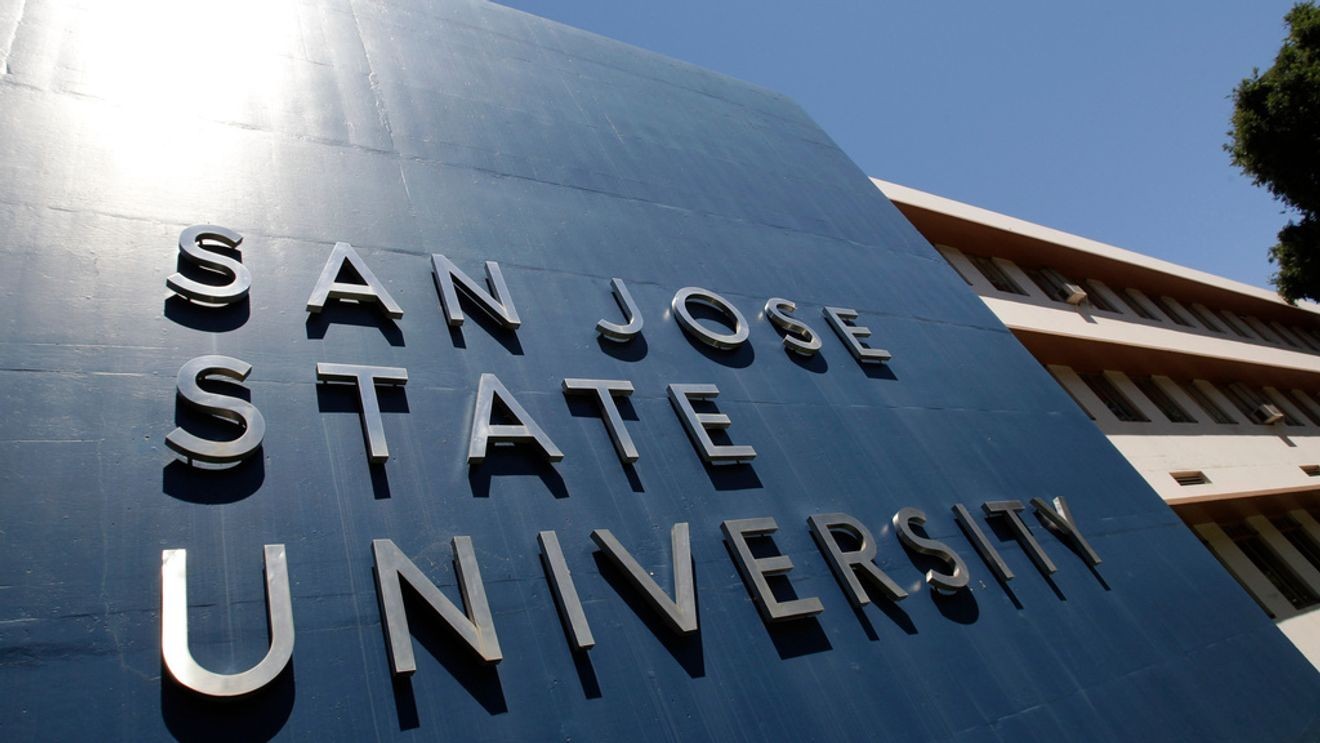
WASHINGTON (TNND) — A federal judge put part of a lawsuit against San Jose State University and the Mountain West Conference on hold pending a Supreme Court decision that could reshape how Title IX applies to transgender athletes nationwide.
Brooke Slusser filed a lawsuit against the school and Mountain West Conference in fall of 2024 after she learned one of her teammates was transgender and was allegedly made to share bedrooms and changing spaces without being informed the teammate was a biological male.
On Wednesday, a federal judge struck down parts of the case against the Mountain West but allowed Title IX complaints against the university and the California State University system to move forward.
“What remains of the Amended Complaint is Plaintiffs’ Title IX claims for damages against the CSU Board… So the Court defers ruling on the Title IX damages claims until after the Supreme Court has issued its ruling in B.P.J.” Crews wrote in the decision.
While the lawsuit was going through courts, the NCAA changed its rules around transgender athletes that Crews said made much of the case moot. In February of 2025, the NCAA prohibited athletes assigned male at birth from participating on women’s teams, a rule the Mountain West also adopted.
After the policy change, the defendants argued much of the case was moot and asked for it to be dismissed.
“Plaintiffs do not allege that there is currently a transgender athlete playing volleyball in the Mountain West Conference,” U.S. District Judge S. Kato Crews wrote in a 38-page opinion. “The NCAA changed its [transgender eligibility policy]. The policy now precludes student-athletes assigned male at birth from competing on women’s teams.”
Crews deferred the ruling on whether to dismiss the Title IX charges until after the Supreme Court issues its decision in BPJ v. West Virginia, a case involving a transgender teenager who identifies as female that is challenging the state’s restrictions on trans athletes. Justices are also considering whether to uphold Idaho’s laws barring transgender girls and women from playing on school teams.
In explaining his decision, the judge relied in part on existing Supreme Court precedent. Crews did not block the conference’s rule, citing the 2020 Supreme Court decision in Bostock v. Clayton County that held discrimination based on sexual orientation or gender identity constitutes sex discrimination under federal law.
Conservatives on the court appeared ready to rule in favor of the states during January’s arguments that the bans do not violate the Constitution or Title IX, a federal law that prohibits sex discrimination in education. The ruling is likely to have a nationwide impact as more than two dozen GOP-led states have adopted similar bans in recent years. A decision is expected this summer.
The Independent Council on Women’s Sports, the group representing the plaintiffs in the case, said in a post on X that it expects the court to rule in West Virginia’s favor and helping it advance its case.
“This case continues to move forward, and we are encouraged that further guidance from the Supreme Court may provide additional clarity and momentum to the Plaintiffs’ claims that San José State University violated Title IX by permitting a male athlete to compete on the SJSU women’s volleyball team,” the group said in a statement.
Slusser’s attorney Bill Block told Fox News the group was likely to appeal the ruling that dismissed charges against the Mountain West.
How to handle transgender athletes playing school sports has become an increasingly prominent issue in recent years, with President Donald Trump and congressional Republicans pushing to alter federal statutes around Title IX. The president signed an executive order last year directing the Department of Education to tell school systems and colleges that forcing girls and women to compete with trans girls and women was a Title IX violation that risked losing federal funding. The administration has also opened investigations into school districts and colleges that allowed transgender athletes to compete in girls’ and women’s athletics.
Prior to Idaho’s state-level ban, the decision on how to handle transgender athletes’ participation was mostly left up to local athletic associations. The last six years have brought a wave of laws passed in 27 states as the political debate over the issue intensified.
Backlash over transgender athletes came to national prominence when Penn swimmer Lia Thomas became the first trans woman to win an NCAA championship after spending the first two years of her career on the men’s team. San Jose State University’s volleyball team also entered the spotlight as matches were forfeited because its roster included a transgender athlete.
There is no official count on the number of trans athletes playing K-12 sports, and NCAA president Charlie Baker told Congress in 2024 that there were fewer than 10 out of the 510,000 students who play college sports.