
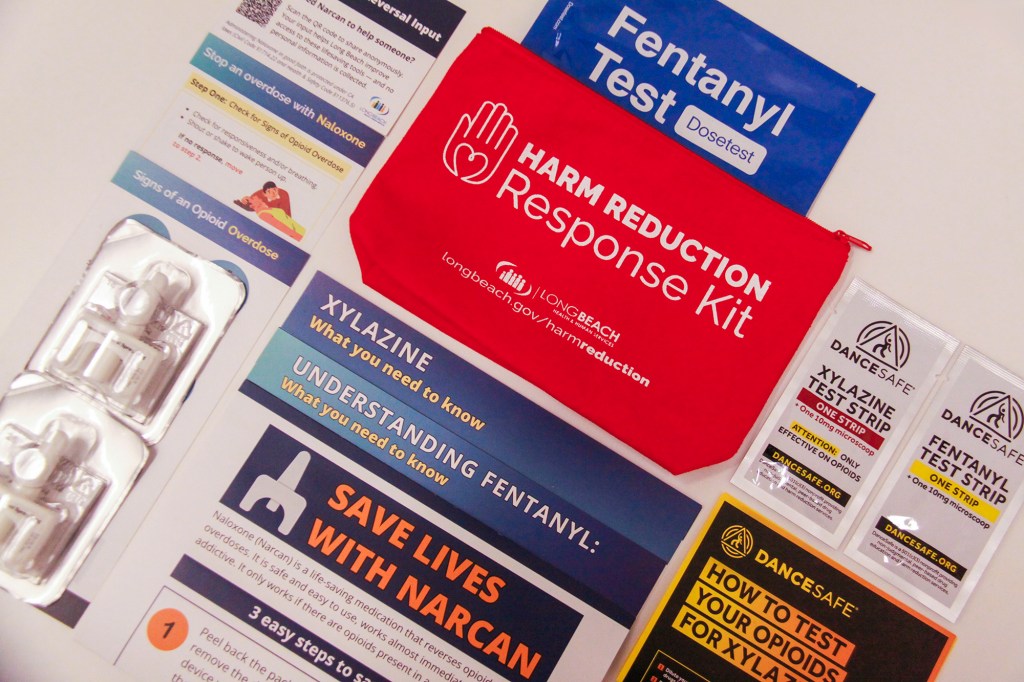
Long Beach’s Department of Health and Human Services has expanded its Harm Reduction Program to include a mail-based delivery option for Long Beach residents seeking free harm-reduction supplies, such as fentanyl test kits, naloxone and educational materials.
The Harm Reduction Program provides resources and education focused on substance-use dependency, particularly opioids, which is linked to misuse and accidental overdoses, according to a press release.
“Overdose prevention is about protecting lives and meeting people where they are,” Mayor Rex Richardson said in a statement. “Long Beach remains committed to making public health programs accessible, equitable and responsive to the needs of our community, especially those most impacted by the opioid crisis.”
The expanded program allows residents with a Long Beach mailing address to request a free Harm Reduction Response Kit online and have it delivered discreetly to their homes. Each mail-order kit will include fentanyl and xylazine test strips, instructional and educational materials, and two doses of naloxone – the nasal spray medication used to reverse opioid overdoses.
Fentanyl detection kits are single-use tools that enable people to identify the presence of fentanyl in medications or substances before using them, helping reduce the risk of accidental opioid overdoses, the press release said.
Residents interested in requesting a kit can visit longbeach.gov/harmreduction to complete an online request form.
Orders are typically processed within 48 hours, with discreet shipping that generally arrives within three business days, officials said. The health department also offers free community workshops and provider training on opioid overdose prevention and naloxone administration. Information on requesting training and viewing the workshop calendar is available online.
The program expansion is in response to the City Council asking staffers to develop a pilot program to distribute all-in-one fentanyl detection devices at no cost to residents and that addresses concerns related to equitable access to life-saving tools for residents most impacted by opioid-related overdoses and deaths, according to the press release.
The item was brought forward in November 2024 by Second District Councilmember Cindy Allen, with support from Councilmembers Kristina Duggan of District 3 and Suely Saro of District 6.
“This program reflects our commitment to addressing the opioid crisis by ensuring our residents have equitable access to these life-saving tools,” Allen said in a statement. “By protecting our residents who are most impacted by opioid-related overdoses, we are taking meaningful action to protect our entire community and are committed to further solutions.”
About 224 fentanyl-involved overdose deaths occurred among Long Beach residents from 2022 to 2024, according to preliminary data from the health department’s Vital Records Office.
Nearly half of these deaths occurred in residential settings and most involved men ages 25 to 34, officials said. The impact was concentrated in several areas of the city, with ZIP codes 90813, 90802, 90805 and 90806 accounting for about 47% of the fentanyl-related overdoses during that period.
Cities nationwide are beginning to see declines in opioid-related overdose deaths, according to the Centers for Disease Control and Prevention, and Long Beach is among those experiencing improvement.
Comparing preliminary data from 2023 and 2024, records shows a 39% decrease in fentanyl-related overdose deaths. This decline is attributed, in part, to expanded prevention efforts, increased awareness, access to no-cost fentanyl test kits and broader availability of naloxone, officials said.
“Expanding test kit access is a practical, evidence-based prevention strategy,” Alison King, director of the health department, said in a statement. “Our goal is to ensure that every Long Beach resident has access to the tools, information and services needed to stay safe, healthy and supported.”
People seeking support or treatment for opioid use disorder can contact the Harm Reduction Program or visit the city’s Community and Providers Resources webpage to find local support services.