
When Oakland officials eliminated the Neighborhood Services Division last year to balance a $265 million budget deficit, the decision was buried in a dense spreadsheet of cuts.
But for the nearly 50 volunteer-run neighborhood councils that relied on the division, the impact was immediate and personal.
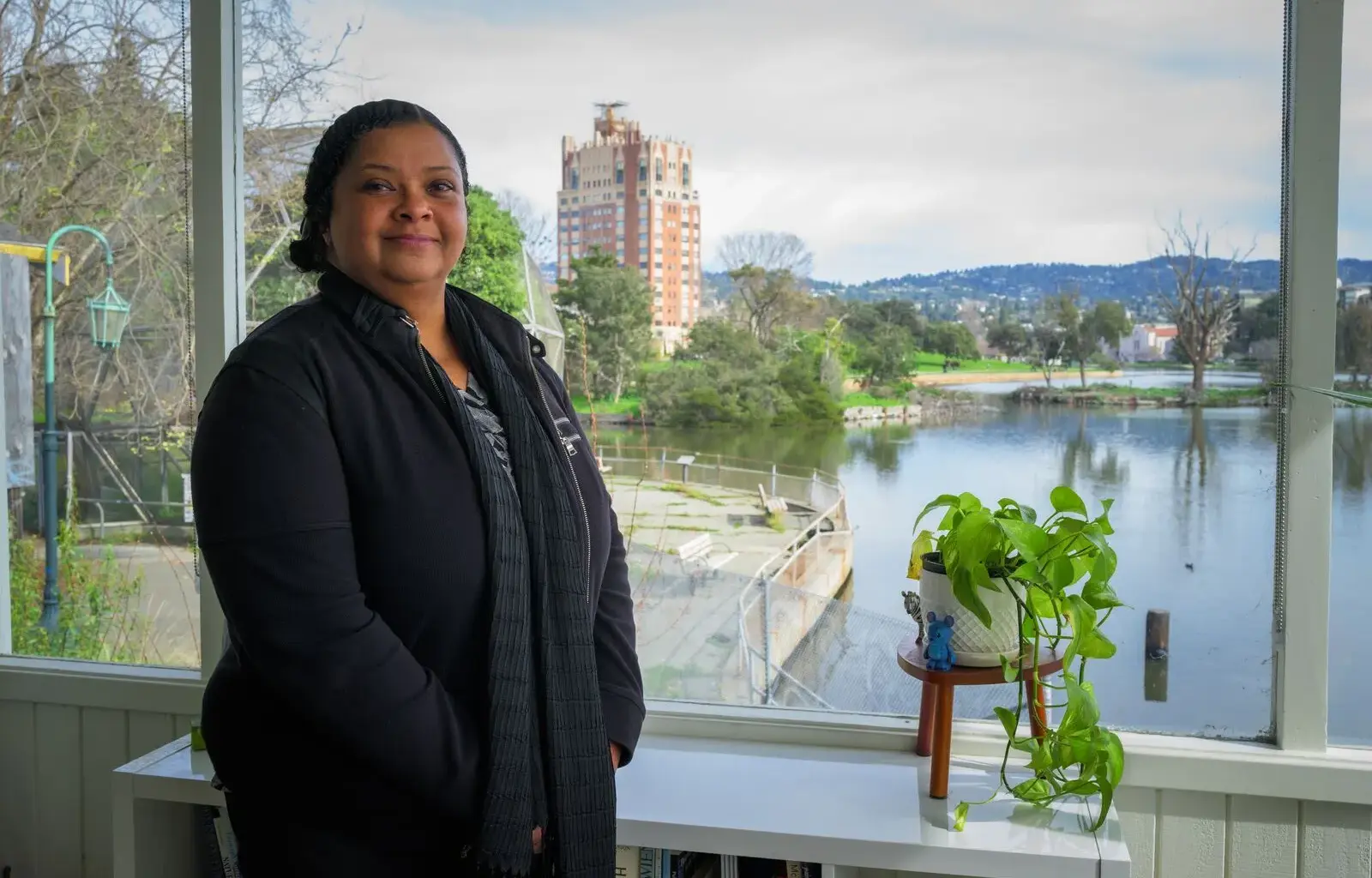
Ana-Marie Jones, safety lead for the Adams Point Neighborhood Group, called the loss of the neighborhood services coordinators and the community resource officers “devastating.”
“All the neighborhood councils are essentially on their own,” she said in a recent interview.
“It was bad enough to reduce our ability to be effective with what we want to do for our neighborhood and for the lake,” said Jones, whose group hosts regular cleanups around Lake Merritt, “but to take that money away from neighborhoods that are struggling to survive on a daily basis — and dealing with child trafficking, gang shootouts, and sideshows — is a huge loss.”
“That communication with the police department is really missed,” said Cynthia Elliott, chair of the Jingletown neighborhood group and District 5 representative on the Community Policing Advisory Board.
Since the city and OPD made these changes, some neighborhood council chairs have taken it upon themselves to keep their communities safe without dedicated help from the city or OPD, applying for outside grants and leveraging help from their council members and police area captains.
The results are mixed. Some neighborhood leaders say new sources of funding have helped. Others say not much has changed because the city never actually invested in community policing.
Everyone seems to be scraping by, doing what they can in hopes that the funding situation will turn around in the next budget cycle. But most aren’t hopeful that a panacea will emerge anytime soon.
Colleen Brown, chair of the Community Policing Advisory Board, said she and her fellow board members are “doing everything possible” to support the remaining active neighborhood councils.
“If we aren’t doing what we’re doing, the city would be perfectly willing to let it drop,” she said. “It’s the easiest thing for them to do — to just let the neighborhood councils die.”
Small dollars, big impact
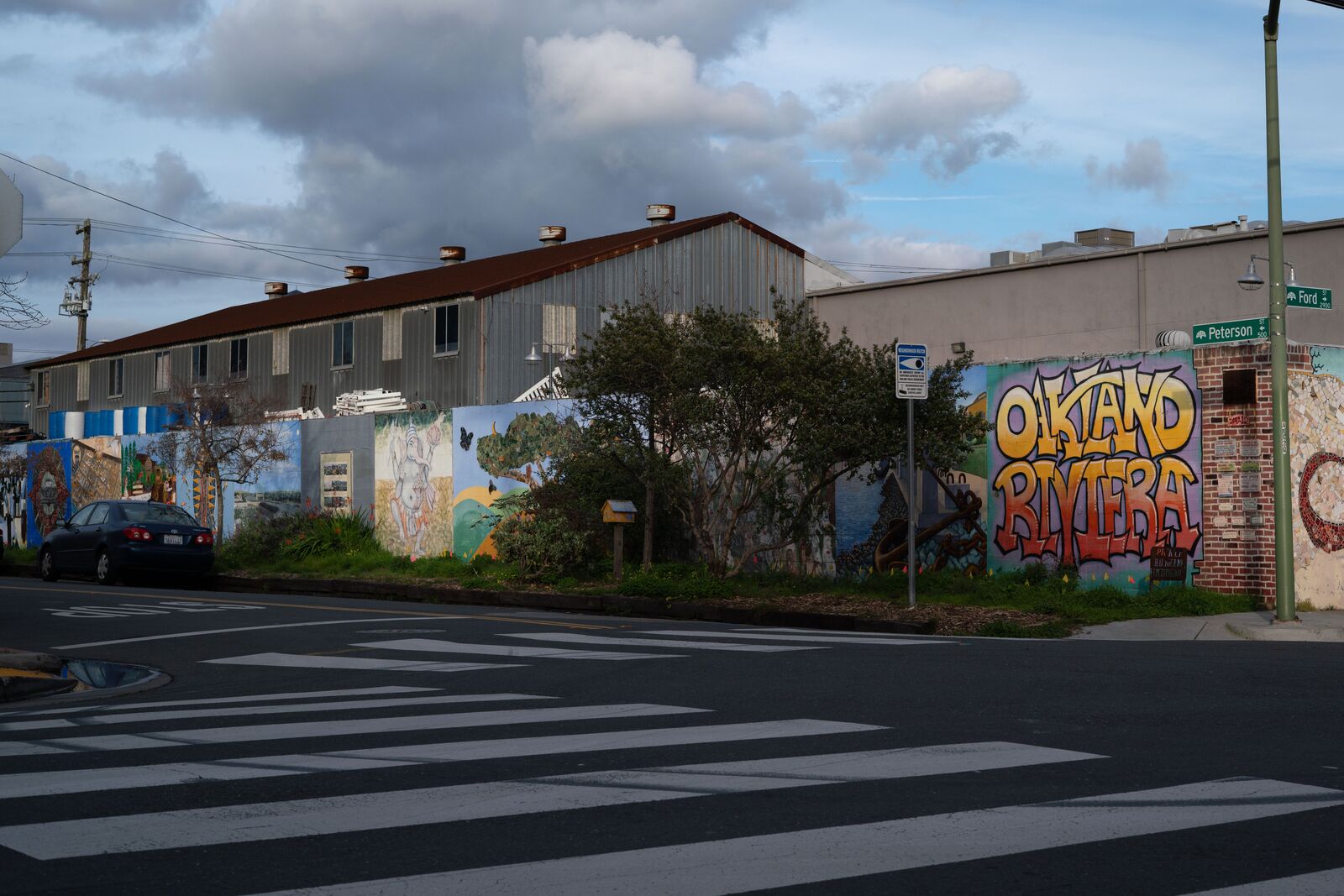 Murals and art installations line the streets in Oakland’s Jingletown neighborhood, home to one of the city’s nearly 50 active neighborhood councils. Credit: Katie Rodriguez for The Oaklandside
Established in 1996, the Neighborhood Services Division was designed to make it easier for residents to collaborate with city departments like public works and the police to tow abandoned cars, prevent sideshows and illegal dumping, clean up graffiti, and address other quality-of-life concerns. Before the cuts, six neighborhood services coordinators acted as liaisons between residents and City Hall, supporting 48 certified neighborhood councils citywide.
At the same time, OPD assigned nine community resource officers to partner with neighborhood council leaders on hyper-local problem-solving. It involved attending monthly meetings, sharing neighborhood-specific crime data, and working through persistent issues block by block.
That meager infrastructure largely disappeared in 2025, when the City Administrator’s Office laid off all six services coordinators, and OPD’s nine community resource officers were reassigned to patrol.
Before these cuts, each neighborhood council received roughly $1,100 annually from the city. The funds could be used for outreach, website hosting, Zoom subscriptions, food and drinks for monthly meetings, and special events like National Night Out.
The return on investment, Jones said, was “unbelievable.” Her group was able to hang Adams Point banners on light poles along Grand Avenue, install colorful mosaics on trash bins, and launch a quarterly zine with crowdsourced content.
Previously, neighborhood services coordinators and community resource officers regularly attended neighborhood council meetings to give updates and answer questions. Now, that responsibility falls largely on volunteers, many of whom already juggle full-time jobs and family obligations.
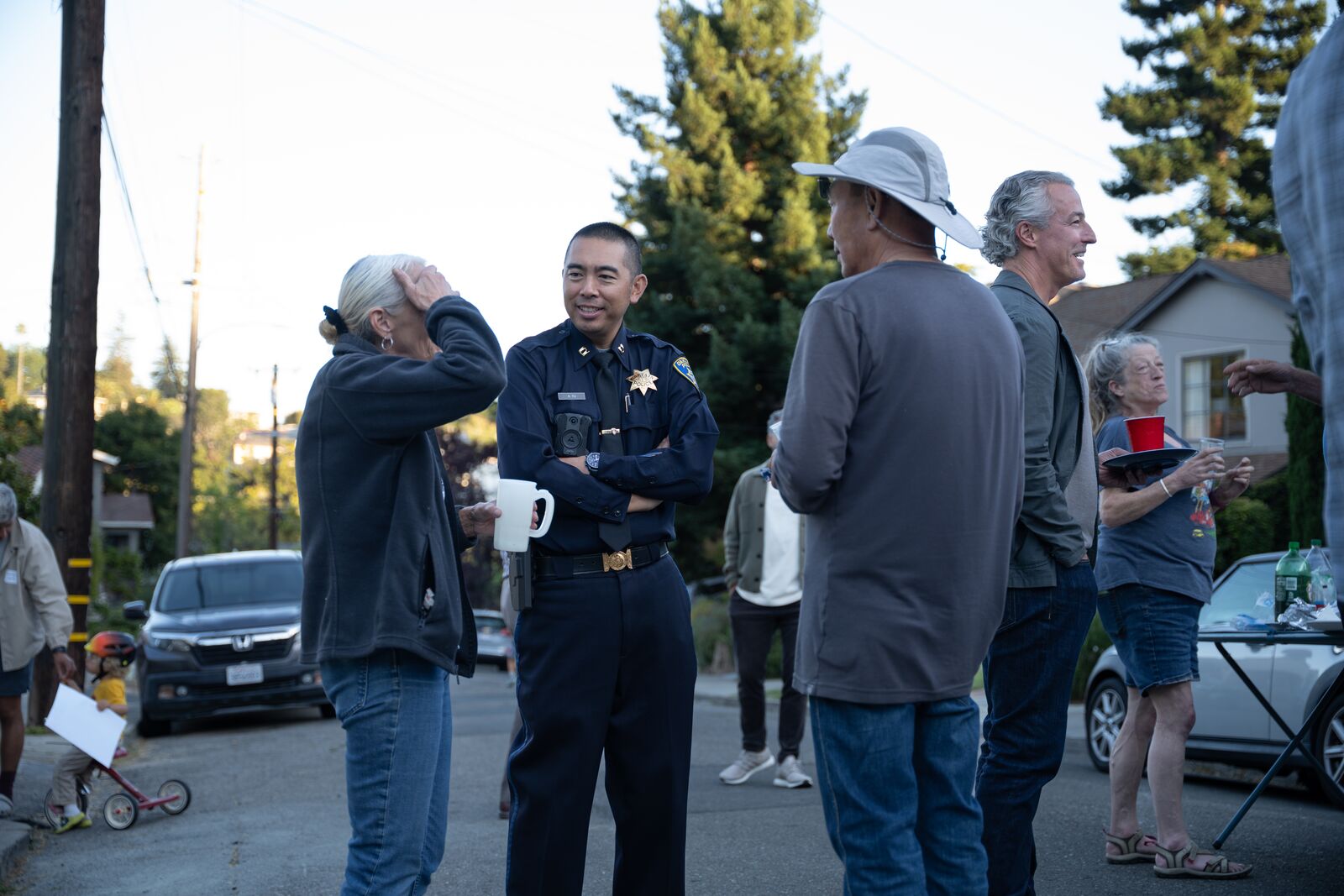 OPD Captain Alan Yu speaks with residents during National Night Out, which used to be organized by the Neighborhood Services Division. Credit: Florence Middleton for The Oaklandside
In recent months, the City Administrator’s Office has organized informal quarterly meetings by police beat, bringing together three to five neighborhood council representatives, the police area captain, and a city staff member.
But neighborhood council leaders say the gatherings lack the consistency and follow-through that once came with dedicated staff. Some neighborhood council chairs who have attended these meetings say they’re not very helpful.
“I know they were more helpful for other neighborhood councils that struggled with basic things like organizing meetings, but I didn’t need their help to set up a meeting,” said Yuliya Rzad, chair of the Golden Gate Neighborhood Council in North Oakland.
Brown, head of the Community Policing Advisory Board, is working on an updated neighborhood council meeting schedule but is still waiting on some groups to get back to her. She said some neighborhood council leaders may have moved out of Oakland or didn’t onboard neighbors who could take over their responsibilities.
This communication gap, Brown said, has made it difficult to get more groups involved and revealed that some neighborhood councils are effectively defunct.
Perhaps the biggest attempt to make up for the city’s budget cuts is a new grant program. In December, PG&E agreed to provide one-time grants of up to $750 for each certified neighborhood council, for a total donation of $50,000. To qualify, neighborhood councils must first apply for recertification.
Grant applications will be reviewed by a Community Policing Advisory Board subcommittee, after which the nonprofit Keep Oakland Beautiful, acting as a fiscal agent, will disperse the funds. Most applications so far have been for beautification and emergency preparedness projects, according to Brown.
The partnership came about after Joe DeVries, the former assistant city administrator, asked PG&E last year if it would offer funding for neighborhood councils.
The Community Policing Advisory Board has received 29 applications representing 36 community policing beats as some neighborhood councils joined forces, according to Brown.
Neighborhood council leaders feel the grant, though modest, is a step in the right direction.
“It is incredibly uplifting that PG&E has stepped up. However, it’s not going to help some of the groups that need the greatest support,” Jones said. “We can’t have all of these groups and hundreds of volunteers scrapping it out and trying to split money together just so they can have a website.”
Jones said her neighborhood council applied for the $750 grant to cover website costs, the zine, and Earth Day cleanup supplies. While the Adams Point neighborhood group waits for the funds, she said, collaboration with other community groups like the Junior Center of Art and Science is essential to keep the momentum going.
The neighborhood council held a party earlier this week at the Junior Center to launch the second edition of the zine.
The center will also host the Lake Merritt Stewards Initiative, a collective of groups like the Adams Point neighborhood council and the Trash Falcons, to bring these organizations together and leverage resources.
Cybele Gerachis, executive director of the Junior Center of Art and Science, calls this “a web of community organizing.”
“If we want to shift the narrative about Oakland, we need to have community groups that are celebrating each other and bringing people together,” she said.
Uneven impact across neighborhoods
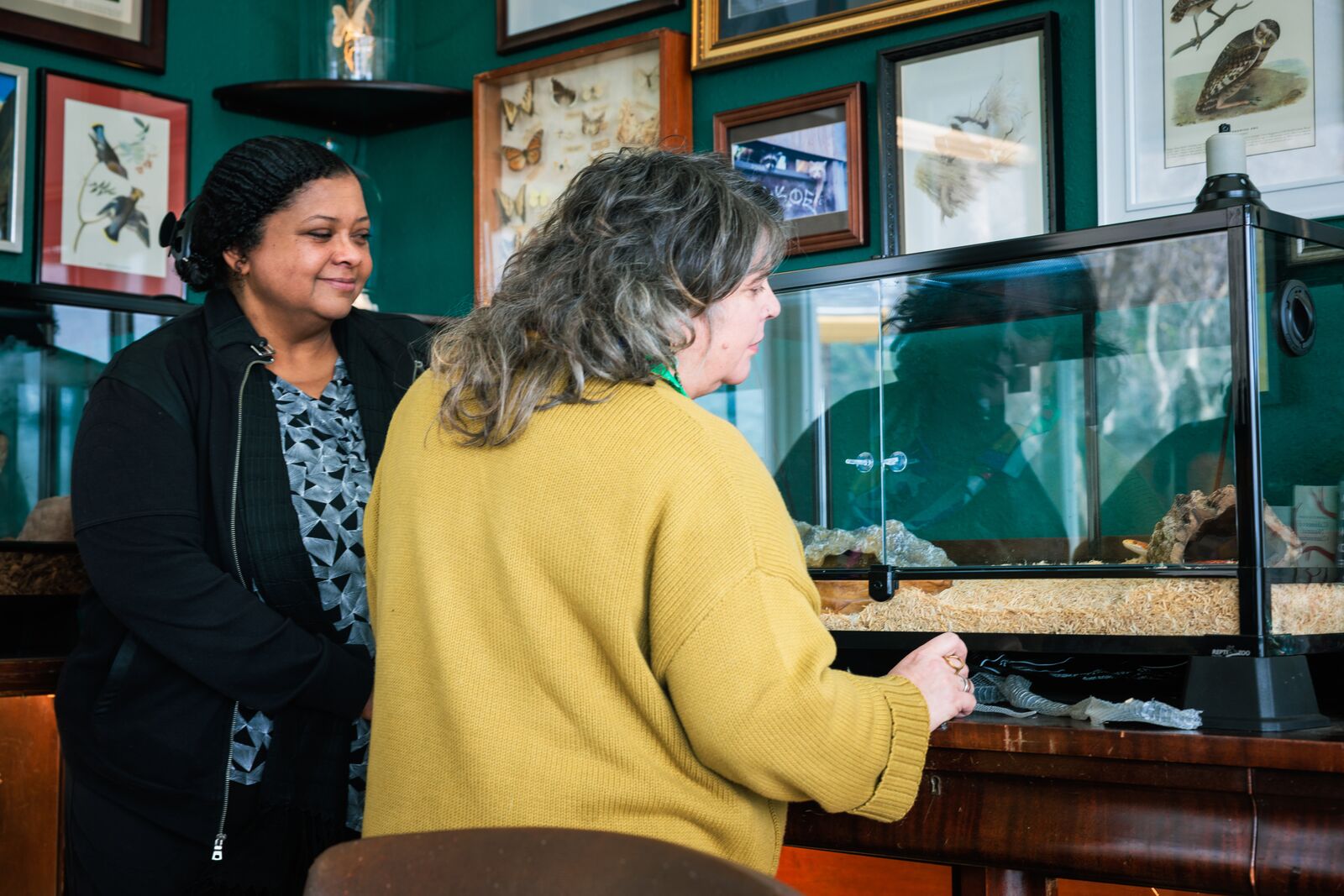 Jones and Cybele Gerachis, executive director of the Junior Center of Art & Science, say neighborhood groups need to collaborate in the face of limited city resources. Credit: Richard H. Grant for The Oaklandside
Not all neighborhood council leaders say the loss of the division has impacted their day-to-day work.
Jose Dorado, head of East Oakland’s Maxwell Park Neighborhood Council, said his group has long operated with little support from the city. In his view, Oakland never fully implemented community policing as intended.
Community resource officers, he said, were trained in problem-solving policing but were often pulled into patrol duty or other assignments, undermining the program’s effectiveness. Neighborhood services coordinators were supposed to help neighborhood councils become self-governing, but Dorado felt they didn’t always succeed in building strong leadership pipelines.
“Not much has changed for our neighborhood council after the Neighborhood Services Division was gutted,” he said.
Still, others worry the long-term consequences will be harder to measure: fewer active neighborhood councils, weaker communication between residents and police, and diminished trust.
“Public safety only truly improves when there’s trust between all the players in the equation — the residents, the police, the district attorney, and the city,” Rzad said. “The way that trust was built was through routine and continuous collaboration. The Neighborhood Services Division was the platform for that collaboration.”
What are city leaders saying?
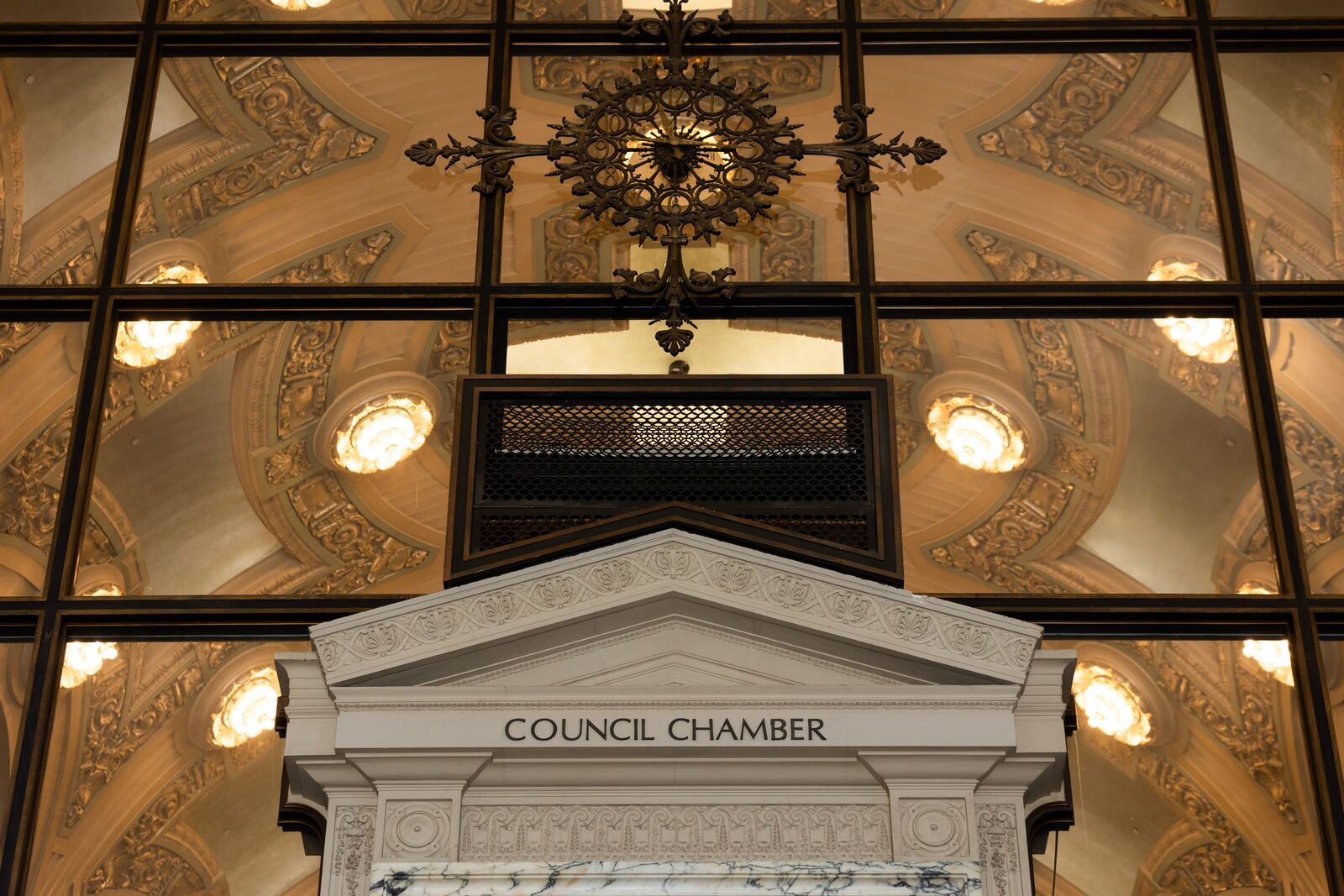 The Oakland City Council will determine whether to restore funding for the Neighborhood Services Division during its mid-cycle budget review this year. Credit: Amir Aziz/The Oaklandside
Whether the Neighborhood Services Division will return — and whether OPD reinstates the community resource officers — remains unclear.
Councilmember Charlene Wang, who chairs the public safety committee, said she is weighing the trade-offs associated with bringing back the program.
“Council offices can step up to actively support neighborhood councils and coordination with their police area captains in the meantime,” the District 2 councilmember wrote in a statement. Reassigning community resource officers to patrol, she added, has helped “reduce impacts to 911 response times.”
To address police understaffing, Wang said she’d like to see the neighborhood councils and the Community Policing Advisory Board play a bigger role in recruiting more officers.
The Oakland Police Department did not answer emailed questions about whether or when it would bring back community resource officers from patrol duty.
Asked whether there’s room in the municipal budget to bring back the Neighborhood Services Division, city spokesperson Jean Walsh said the City Administrator’s Office is “currently in midcycle budget development and is still in preliminary stages of evaluating all programs and services.”
“*” indicates required fields