
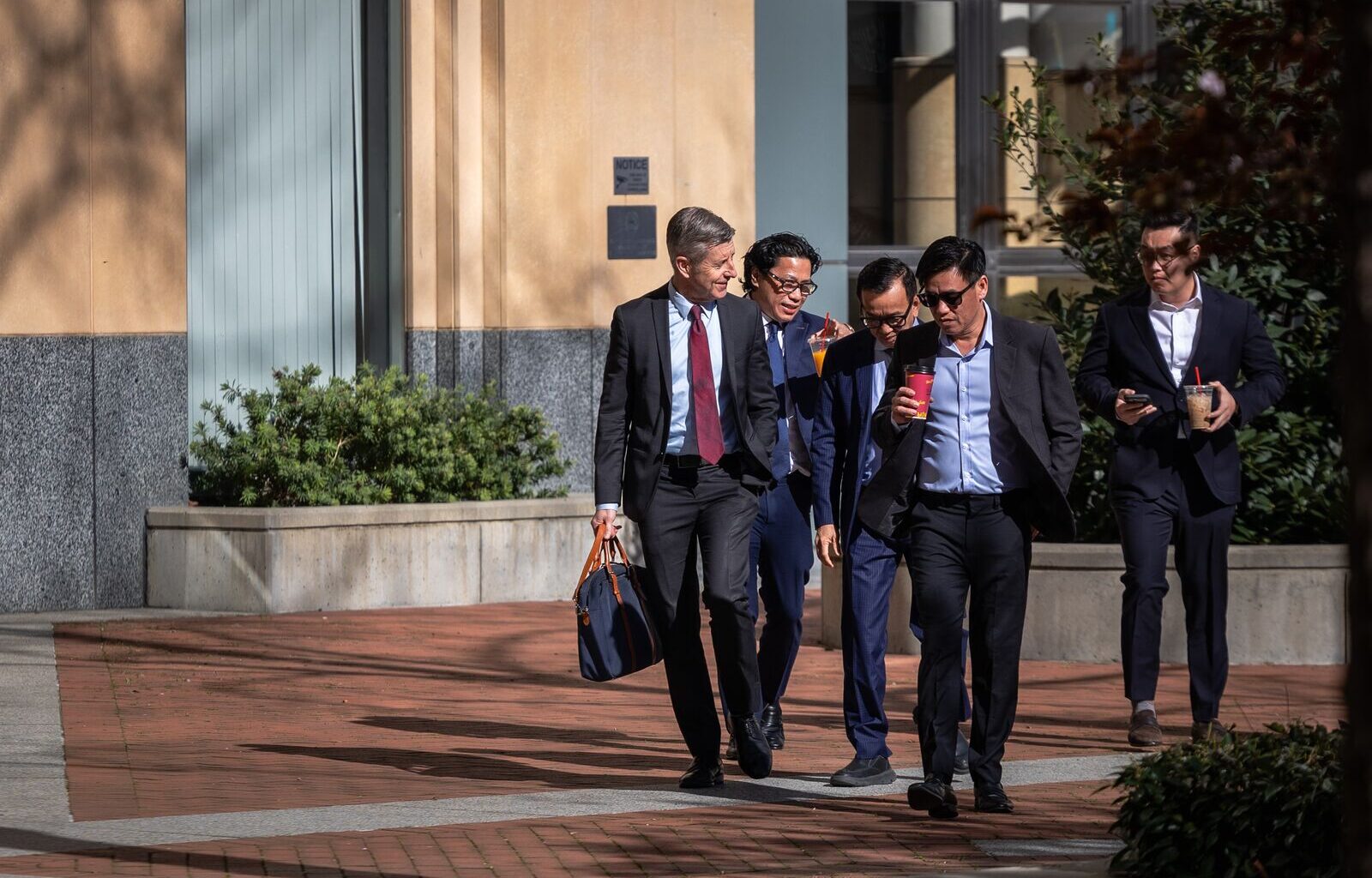
A federal judge said it is “unlikely” that she will grant a request to exclude the evidence FBI agents seized almost two years ago from the homes of former Oakland Mayor Sheng Thao, her partner Andre Jones, and David Duong and his son Andy.
“I would not stop preparing for trial if I were you,” Judge Yvonne Gonzalez Rogers said during a court hearing on Thursday morning in Oakland. The four defendants, sitting in separate rows in the courtroom, did not react much to the judge’s comments.
Federal agents raided the home of Thao and Jones, and the homes and offices of the Duongs, in June 2024. All four were indicted by a federal grand jury last year, accused of participating in an extensive bribery scheme.
According to prosecutors, Thao and Jones accepted tens of thousands of dollars from the Duongs in exchange for promising to extend the city’s contract with its recycling company, California Waste Solutions. Thao also allegedly promised to help the Duongs secure a contract with the city to purchase modular houses from a different company they operated called Evolutionary Homes.
The motions under discussion at Thursday’s hearing concerned the FBI’s requests for the search warrants that led to the raids.
The defendants are seeking what’s known as a Franks hearing, where they would be allowed to question the FBI agent who authored the search warrant affidavit. They believe this would bolster their request to suppress some or all of the evidence obtained during the FBI raids, including records, items, and data from their phones and computers.
The Judge didn’t seem to buy the argument that the FBI’s search warrants were defective
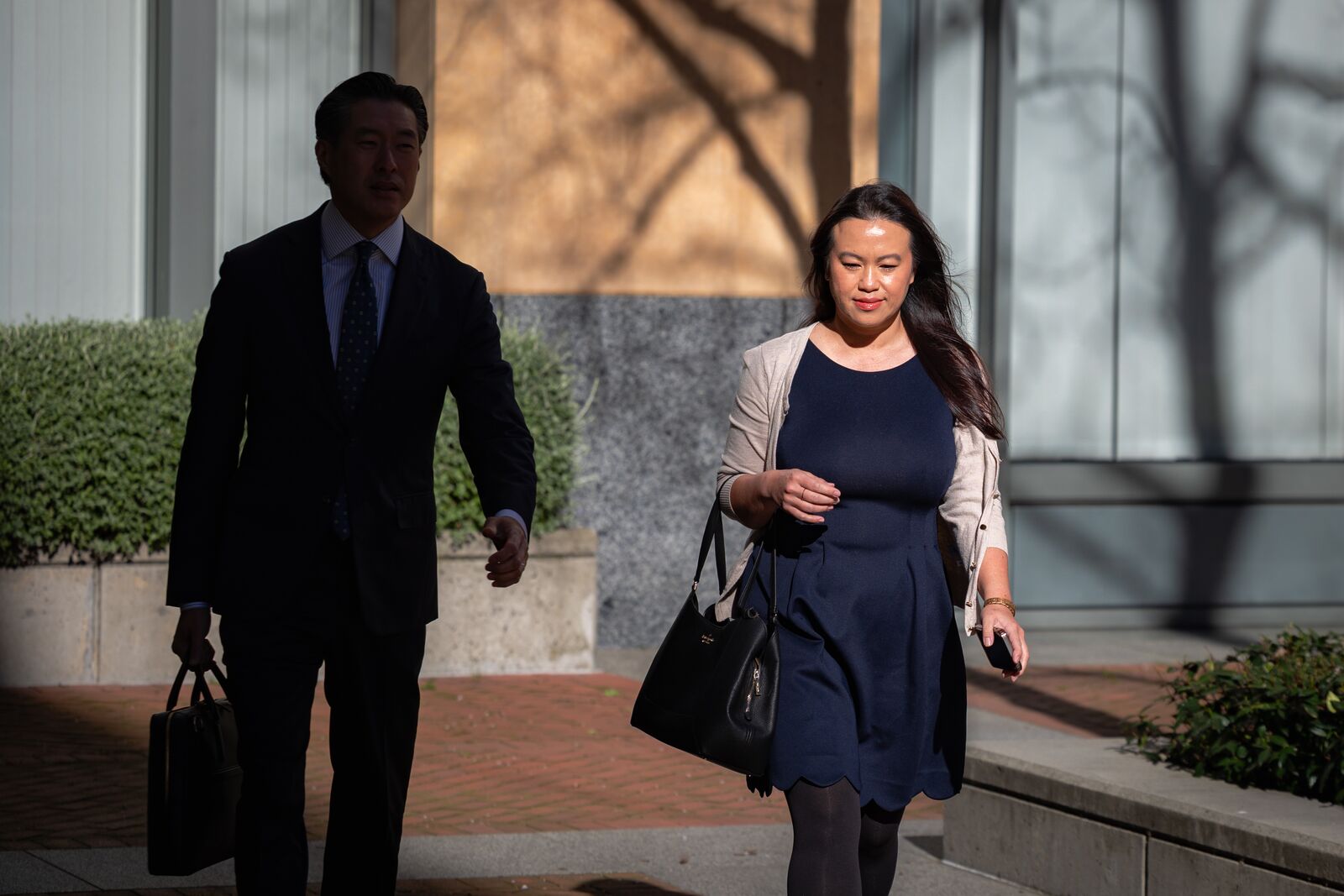 Former Oakland Mayor Sheng Thao walks towards the United States Federal Court House in Oakland with her lawyer on March 5, 2026. Credit: Richard H. Grant for The Oaklandside.
David Duong filed a motion in November that accused federal agents of building their case against him based on an informant who had a “decades-long history of fraud.” That person, referred to in court records as “Co-conspirator 1,” is widely believed to be Mario Juarez, a controversial Fruitvale businessman.
Duong also claimed that the FBI withheld other critical information from the judge who approved the search warrant of his home. Thao, Jones, and Andy submitted similar motions soon after. They also argued that Juarez exhibited racial prejudice against Jones, who is Black, claiming the FBI “surgically” omitted an incendiary text exchange from their affidavit in which Juarez refers to Jones doing “stupid black shit.”
Juarez is a longtime Fruitvale businessman with deep political ties throughout Oakland. In 2024, he launched a homeless housing company called Evolutionary Homes with Andy and David Duong, trying to sell high-priced tiny homes made out of shipping containers to Oakland and other cities. Evolutionary Homes never secured any contracts, however, and the enterprise fell apart after a blow-up between Juarez and the Duongs. Lawyers mentioned Evolutionary Homes by name on Thursday for the first time.
Thao, Jones and the Duongs argue that Juarez’s extensive history of lawsuits and criminal charges reveals him to be a dishonest informant, undermining the FBI’s case. Juarez has been party to over 30 lawsuits, many of which accuse him of defrauding associates, investors, and the government of hundreds of thousands of dollars. He’s also been criminally prosecuted four times for fraud, forgery, and embezzlement, but never convicted.
Rogers appeared alternately unimpressed and irritated by the arguments raised by attorneys for all four defendants.
At one point, Thao’s lawyer, Jeffrey Tsai, argued that the FBI didn’t have probable cause to search Thao’s home and seize her phone and computer. He said there’s no evidence that Thao herself generated digital documents relevant to the case and that there was no clear connection between her electronic devices and her home.
“It strains credibility that people do not communicate without computers and cellphones,” the judge said, interrupting him. “Perhaps Elon Musk, I’ve read that he doesn’t use a computer. But otherwise that’s what people use, so I don’t even understand the basic premise of your argument.”
Later in the hearing, Rogers told Andy Duong’s attorney, Winston Chan, that she understands why the defendants are trying to attack the government’s search warrants.
“There was a considerable amount of information given about this co-conspirator that did not bear in a positive way on his credibility” in the affidavits, Rogers acknowledged. But she pointed out that a magistrate judge still found it appropriate to grant the warrants.
David Duong’s attorney, August Gugelmann, argued that the search warrant for the June FBI raids depended on inaccurate and incomplete information provided to a judge by a special agent about a shooting outside of Juarez’s home. Gugelmann said that the affidavit the agent filed to obtain the search warrant portrayed the shooting as an attempt by the Duongs to murder Co-conspirator 1 because he was cooperating with the feds.
Surveillance data that came out later — after the warrant was granted but before the raids — showed that Juarez actually fired the first shot. He also gave conflicting information to law enforcement about the incident, both the government and the defendants’ lawyers acknowledge.
“It’s undisputed that what the affidavit said was wrong,” Gugelmann told the judge. “It’s undisputed that Co-conspirator 1 didn’t tell the truth about what happened that night…It’s as serious and incendiary an allegation that you can make in an affidavit, that legally we need to get into this person’s house because he attempted to kill a government witness.”
Assistant U.S. Attorney Abraham Fine called the focus on the shooting a “red herring.” Even if the shooting was removed from the affidavit, “there’s so much there about public corruption” that warranted a search regardless, he said.
The judge seemed to agree.
Rogers stopped short of issuing a ruling on the spot, but said there was a low probability that she’d grant the defendants a Franks hearing or suppress evidence.
Government informant’s identity will likely be revealed
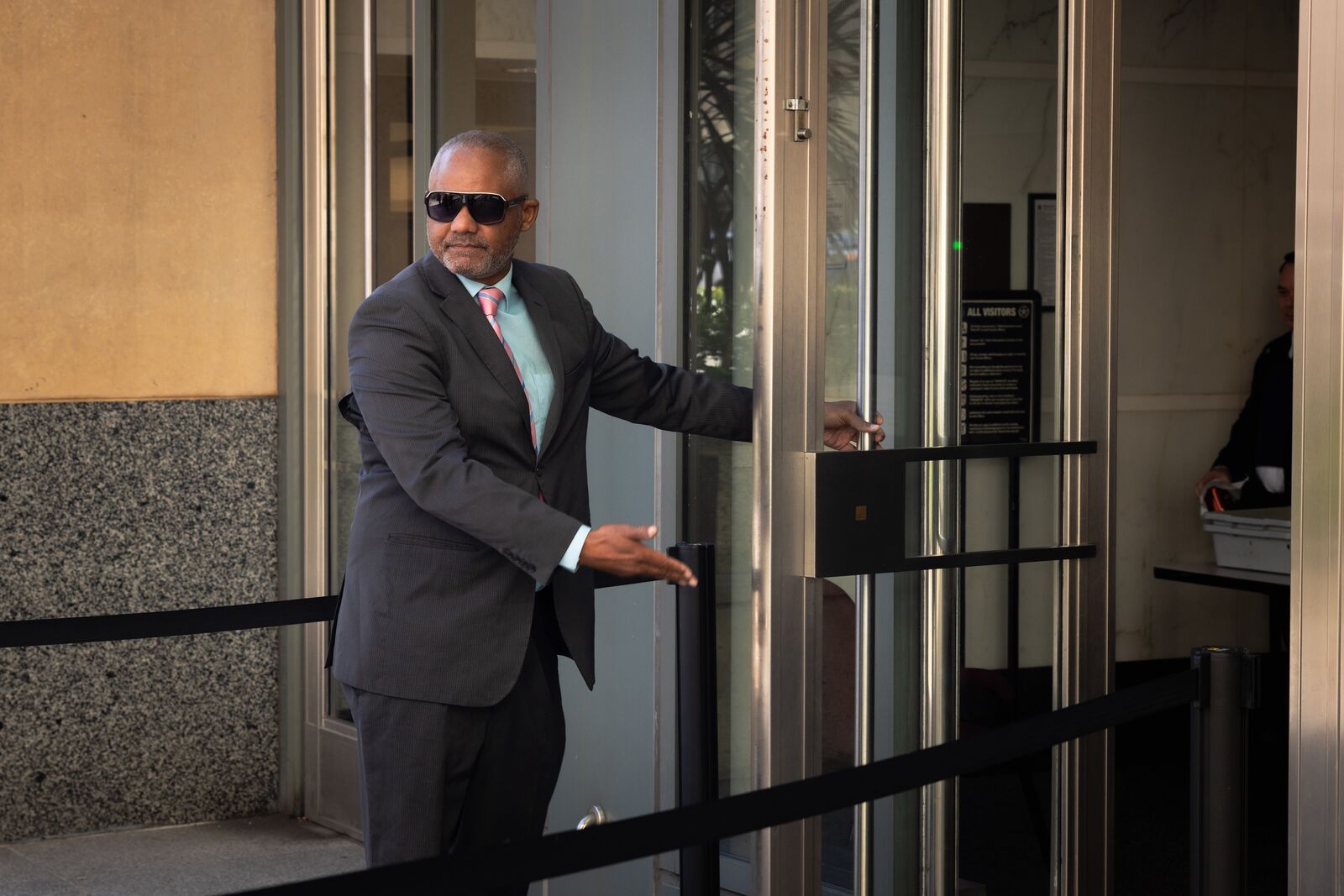 Andre Jones holds open the door to the federal courthouse in Oakland for his lawyers. Credit: Richard H. Grant for The Oaklandside.
Rogers appeared perplexed by the number of documents under seal in the case, meaning their content has been hidden from the public.
Fine, the federal prosecutor, argued Thursday that these documents should remain sealed because they refer to “investigations that are ongoing.” He added that they identify some people who haven’t been publicly named in connection with the investigation and describe law enforcement methods. On this point, the defendants agreed.
While Rogers seemed satisfied with this explanation, she was skeptical about maintaining the confidentiality of the informant.
“I don’t think there’s a basis for keeping the name of Co-conspirator 1 under seal,” Rogers said. “The government can make its objections, but their objections would be overruled.”
She told lawyers on both sides to figure out which records in the case could be unsealed, but appeared to accept the government’s argument that the search warrant affidavits should remain secret. The public has received only tidbits of information about what’s on the government’s search warrant affidavits.
The trial for all four defendants is set for October.
It’s unclear if the government’s corruption probe will ensnare more local officials and businesspeople. Last year, prosecutors announced criminal charges against San Leandro Councilmember Bryan Azevedo for allegedly receiving $2,000 in bribes for agreeing to steer a city contract to a company that appears to be Evolutionary Homes.
After initially pleading not guilty, Azevedo agreed last month to change his plea to guilty. Prosecutors indicated that Azevedo is cooperating with investigators who are looking into bribes of East Bay public officials, including Thao.
“*” indicates required fields