
A Fresno County supervisor says he’ll introduce an ordinance to halt a type of human composting he recently learned has been used near the San Joaquin River, but advocates say he’s jumping the gun unnecessarily.
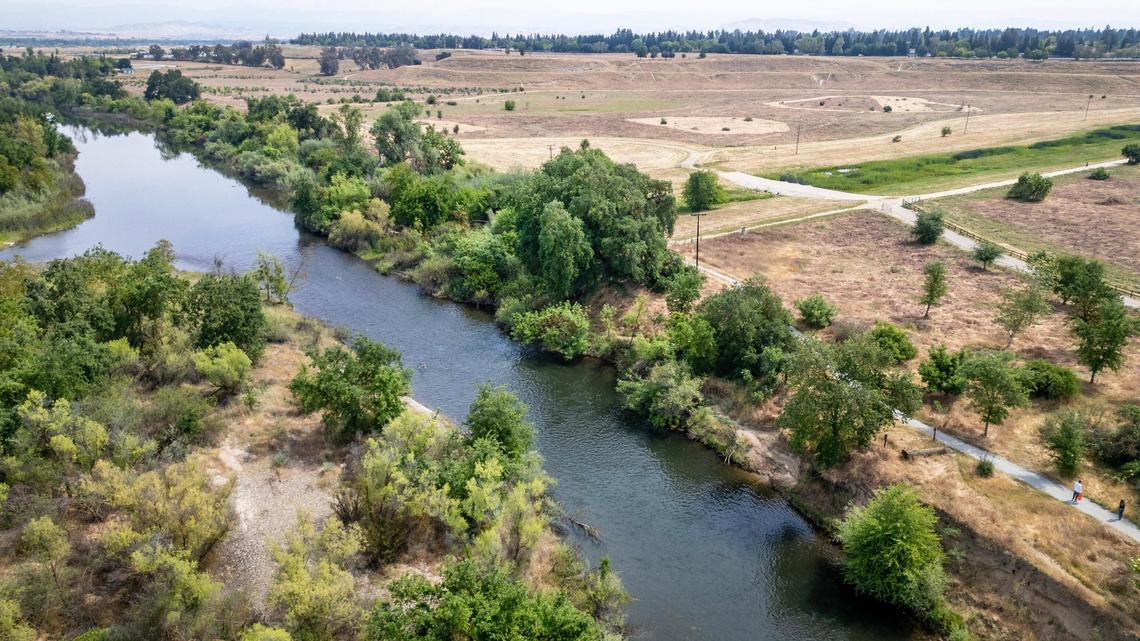
The soil made from human remains in question was placed in a field at the Sumner Peck Ranch, land on Friant Road owned by the San Joaquin River Parkway and Conservation Trust less than 3 miles south of Lost Lake.
Supervisor Garry Bredefeld said he was recently made aware of the composting, which includes a process that turns a person’s body into soil. He said he was not familiar with the process, but said using the compost on trust land was “stupid.”
Bredefeld also sits on the board for the San Joaquin River Conservancy, a state agency that is different from trust, which is a nonprofit.
“The stupidity and the lack of common sense is absolutely breathtaking. This public land is culturally significant and environmentally sensitive,” Bredefeld said at a Thursday news conference in downtown Fresno.
He said the trust should have not acted without first approaching the conservancy.
Bredefeld said he didn’t have any testing to show the compost had caused any ill effects, but said placing the compost on the land was illegal. Bredefeld said he would introduce an ordinance to restrict it.
The county drafted a cease-and-desist letter Wednesday that ordered the trust to halt receiving, storing or using the compost.
The practice in question is a burial method called “natural organic reduction,” what advocates describe as a more environmentally-friendly version of cremation. The company in Bredefeld’s crosshairs is Earth Funeral, a Washington state company that facilitates the burials.
The company has worked with the San Joaquin River Parkway and Conservation Trust, delivering its first load of compost including human remains last spring, according to Sharon Weaver, the trust’s executive director.
Reached by phone on Thursday, Weaver said the trust had received four or five deliveries of compost since last spring. She said the trust owns the land and can make decisions on its own about how to restore it, like using the compost.
“Instead of working with us collaboratively to solve something that they see as a problem, they are taking a heavy-handed approach and trying to force us to do what they want us to do, regardless of what the law says and regardless of what the science is,” she said.
Weaver said the trust gets the soil using human remains for free from Earth Funeral, which she said also provides a “donation” that pays for the work to move it.
“Our whole purpose in doing this relationship with Earth Funerals is to benefit the land and the wildlife and the habitat on the river,” she said. “That’s what we are trying to do. So it’s very disappointing that they are trying to suggest that we’re doing something harmful to the river.”
Assembly Bill 351 in 2022 legalized the human composting in California and established its regulations in the state beginning in 2027. It’s legal in 14 states and seems to be growing in popularity.
Fresno Councilmember Nick Richardson, who also sits on the board of the conservancy, said during the news conference he wanted to be transparent about what he’d learned but tempered that by saying he was not trying to “dunk” on the trust.
“I like the trust. I like the people who work for them,” he said. “I didn’t want to have a secret, or I didn’t want to have information that was relayed to me that my bosses, our constituents in the city, would want to know.”
He said he was concerned the compost was used on land where food is grown. Weaver told The Bee the compost was used in a field not used to grow food and that would be undergoing an effort to return it to a more natural state.
Composting or “natural organic reduction”
People in the U.S. have become more likely to prefer cremation to burial.
Cremation is the most popular disposition for people in the U.S. after they die with almost 64% choosing to do so after death in 2025, according to the National Funeral Directors Association. That’s up from 55.7 percent in 2021.
The human composting process starts by placing a body inside a chamber, which the industry calls “vessels.” Organic material like wood chips, alfalfa and straw are added, and the process takes 30 to 45 days before it produces from one-half to a full cubic yard of compostable soil per body.
Advocates and companies that offer the composting promote it as carbon-neutral, and a way not use up space for graveyards or put chemicals like formaldehyde into the environment.
After the news of Fresno County’s potential new ordinance came Thursday, Earth Funeral planned to temporarily suspend the efforts in the county until the dust settled.
The work in the county has been done legally and in collaboration with the trust, according to Haley Morris, the spokesperson for the company. She said the company provides people with a “safe and dignified” way to leave a legacy.
“Donating the soil of a loved one to important conservation work like the projects being led by the San Joaquin River Parkway and Conservation Trust resonates deeply with families in Fresno and beyond,” she said. “We all share the goal of protecting and restoring this special ecosystem.”
The News Tribune contributed to this report.
Related Stories from Fresno Bee
Merced Sun-Star
Reporter Thaddeus Miller has covered cities in the central San Joaquin Valley since 2010, writing about everything from breaking news to government and police accountability. A native of Fresno, he joined The Fresno Bee in 2019 after time in Merced and Los Banos.