

Twin Rivers Unified School District leaders and its teachers union have been at odds at the negotiation table for more than a year. The question at the center of this dispute: Can the district afford to significantly improve teacher compensation?
The teachers union, Twin Rivers United Educators, says that the answer is yes. It argues for spending down the district’s high reserves, and moving money from contractors and district services to classrooms.
The district argues that it is being fiscally responsible by maintaining high reserves during a time of economic uncertainty.
Amid these tense negotiations, Superintendent Steve Martinez announced last month that he would leave the district on Oct. 31.
Because they did not reach an agreement by Wednesday night, Twin Rivers teachers took to the picket lines bright and early Thursday morning, joined by students, parents and fellow school employees, waving signs reading “we can’t wait.”
Where do negotiations stand currently?
The Twin Rivers district and its union have not made any tentative agreements surrounding the key parts of the contract: raises and health care benefits.
TRUE has indicated it won’t accept anything less than fully employer-paid health benefits, like those received by Sacramento City Unified School District employees. It is also seeking a 6% raise for this school year and 4.5% for the next, plus increased compensation when class sizes exceed enrollment caps and for other extra duties like monitoring recess.
TRUE estimated that the cost to the district of a 1% salary increase for teachers is about $1.88 million, meaning that the union’s proposed raises would amount to around $10.8 million in the current year and another $8.1 million in the following year.
Based on the recommendation of a third party fact-finding report, the district has offered to pay for the cost of a Kaiser HMO plan for teachers and their dependents through June 2027, which would establish a new minimum employer contribution to benefits.
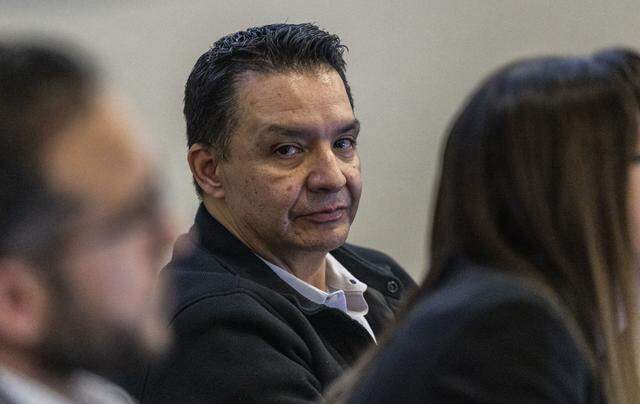 Twin Rivers Unified School District Superintendent Steve Martinez listens to public comments during a board meeting on Feb. 24. HECTOR AMEZCUA hamezcua@sacbee.com
Starting in July 2027, teachers would pay the difference between that minimum and the then-current rate of the health care plan. Teachers will continue to pay for dental and vision coverage.
TRUE estimated the additional cost to the district to fully-fund teacher health benefits to be about $5.8 million on top of the $18 million it currently spends annually.
The fact-finding report also recommended a salary increase of 2.3% and 2.4% for the current and following years, respectively. The district agreed to adopt this recommendation.
Funds diverted from classrooms?
TRUE has also accused the district of skimming funds that are supposed to be directed to classroom salaries.
Education Code 41372 requires unified school districts — pre-K through grade 12 — to devote at least 55% of their budgets to classroom teachers. Districts can seek a waiver from this requirement, with a valid reason, from the county.
Twin Rivers has received waivers from the county for the past six years in the amount of $115 million. TRUE argues that this practice is unlawful and diverts money from teachers when retention and recruitment are essential.
The district says that the funds are used to fund “critical student supports” outside the classroom, such as mental health services, behavior supports, tutoring, after-school programs and counseling. These extracurricular supports are especially important for Twin Rivers, district leaders argue, because of the district’s large population of students with high needs (foster youth, English learners and those who qualify for free or reduced-price lunch).
Sacramento County Office of Education Superintendent Dave Gordon said that there is nothing illegal about the waivers given to Twin Rivers.
“It’s the case that Twin Rivers has far and away the most needy population of any district in the county by a lot, so they have mounted many support programs and things along those lines,” he said.
The process is simple: The district provides its reasoning for seeking the exemption, and the county determines whether the reason is valid but does not audit the programs that receive the exempted funds.
District said, union said
In a message to families Wednesday, Twin Rivers turned up the heat on the union. District leaders pointed to five districts across the state where they claim union wins have resulted in layoffs, deficits and the cancellation of student programs.
Twin Rivers invoked the budget crisis at Sacramento City Unified School District, which recently initiated hundreds of layoffs to help avoid fiscal insolvency. Although the district seems poised to avoid state takeover, the district still projects a deficit of more than $200 million by the end of the 2027-28 school year.
Layoff notices in Sacramento City Unified will be finalized at a board meeting tonight, but they can still be rescinded through May 15. Although the district issued around 420 notices, officials say that the number of people who will lose their jobs this summer is likely considerably smaller.
The district also referenced financial crises at school districts in San Francisco, San Diego and Oakland following significant raises for teachers.
“That is what the union is pointing to and saying: ‘Do what they did,’” the message reads.
California Teachers Association President David Goldberg called the district’s communication a “no se puede” letter. He said that district leadership in these other districts have weaponized the layoff process and issued more pink slips to employees than they intend to lay off.
“There is very little in common that Twin Rivers has with any of these districts,” Goldberg said, citing the fact that Twin Rivers is experiencing enrollment gains and gets more money per student due to its economically disadvantaged population.
“There is no basis for Twin Rivers to deny educators and students what they deserve now,” he said.
This story was originally published March 5, 2026 at 10:32 AM.
Related Stories from Sacramento Bee

The Sacramento Bee
Jennah Pendleton is an education reporter for The Sacramento Bee. She previously covered schools and culture in the San Francisco Bay Area. She grew up in Orange County and is a graduate of the University of Oregon.