
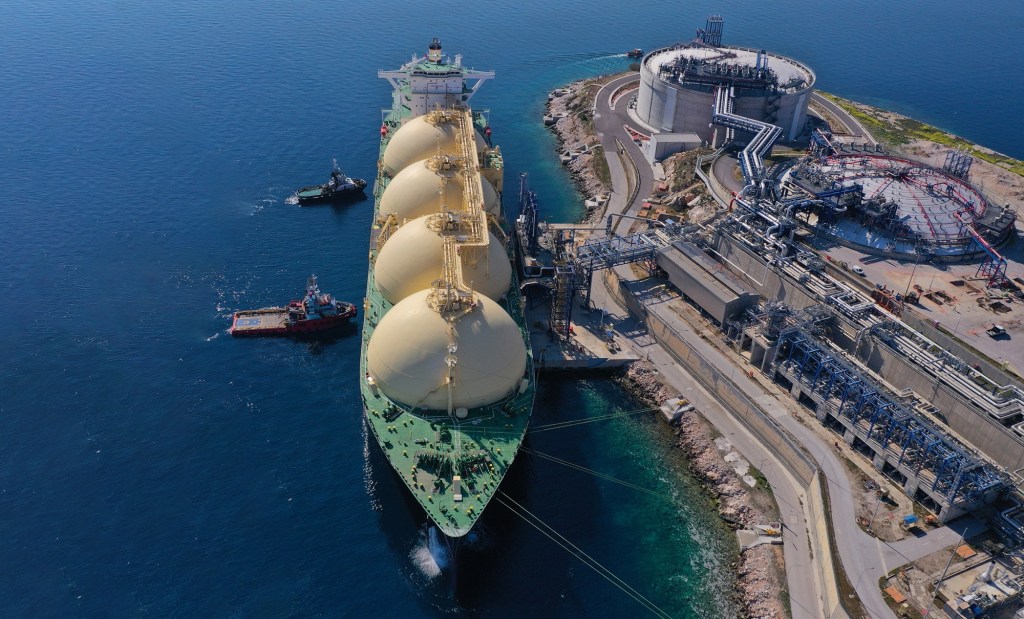
San Diego-based energy giant Sempra has pulled the plug on plans to develop a large liquefied natural gas export facility on the Gulf of California in Mexico.
Tucked inside the company’s annual 10-K that was filed last week with the U.S. Securities and Exchange Commission, the company said the Vista Pacifico LNG Project in the port city of Topolobampo has been canceled.
The proposed facility had been a joint venture between partners of Sempra Infrastructure, the parent company’s subsidiary based in Houston, and CFE, Mexico’s state-owned electric utility that is also a major natural gas stakeholder.
“The termination of the development agreement between Sempra Infrastructure and CFE was due solely to a change in both parties’ priorities,” Sempra Infrastructure spokesperson Alejandro Larenas said in an email to the Union-Tribune. He did not give more details about the decision to shelve the project.
In discussion for more than five years, the Vista Pacifico LNG project was to be located next to a large refined products terminal, with designs to export about 4 million metric tons of liquefied gas per year to markets in Asia.
The proposal drew opposition from environmentalists, worried about the impacts LNG projects could have on marine mammals and biodiversity in the Gulf of California, also known as the Sea of Cortez.
The Natural Resources Defense Council called the cancellation of Vista Pacifico “a major step forward.”
“We congratulate Sempra for hearing and respecting the overwhelming opposition of the people of Mexico, including from the community of Topolobampo, Sinaloa, whose residents, fisheries, and quality of life would inevitably have been most directly threatened by the pollution, elevated health risk, and biodiversity loss from this unwanted industrialization,” NRDC senior attorney Joel Reynolds said.
NRDC and other environmental organizations also oppose plans by other companies to build at least two other similar projects around the Sea of Cortez. Three months ago, the United Nations sent the Mexican government a letter “expressing concern” about LNG terminals and pipeline projects in Sinaloa and Sonora.
Exporting natural gas has become a major growth business across the globe.
In the LNG process, facilities take natural gas, cool it to minus 260 degrees Fahrenheit, load it onto cargo tanks on double-hulled ships, and then export the gas to international destinations where it can be used as a source of electricity.
Sempra Infrastructure still has plans to open another export facility in Mexico — Energía Costa Azul, near Ensenada in Baja California. The company expects the project to produce LNG cargoes for sale this spring and commence commercial operations in the summer.
The company is also the developer and part owner of the Cameron LNG facility in Louisiana that opened in August 2020 and the Port Arthur LNG project on the Gulf Coast of Texas, which is under construction.
In September, Sempra agreed to sell 45% of Sempra Infrastructure to affiliates of global private investment giant KKR and Canada Pension Plan Investment Board. Pending the necessary regulatory approvals, the deal is expected to close in the second or third quarter of this year.
Sempra executives said the deal was part of a larger corporate strategy to sharpen the company’s focus on its utilities in Texas and California. San Diego Gas & Electric is one of Sempra’s subsidiaries.
Under the proposed $10 billion sale, the Sempra parent company’s ownership share of Cameron LNG will be reduced from 35.1% to 12.6%.
Its share of the first phase of the Port Arthur LNG project will drop from 19.6% to 7%, and its ownership of the second phase of Port Arthur will fall from 35.1% to 12.5%.
Sempra’s share of the first phase of Energía Costa Azul will be reduced from 58.4% to 20.9%.