
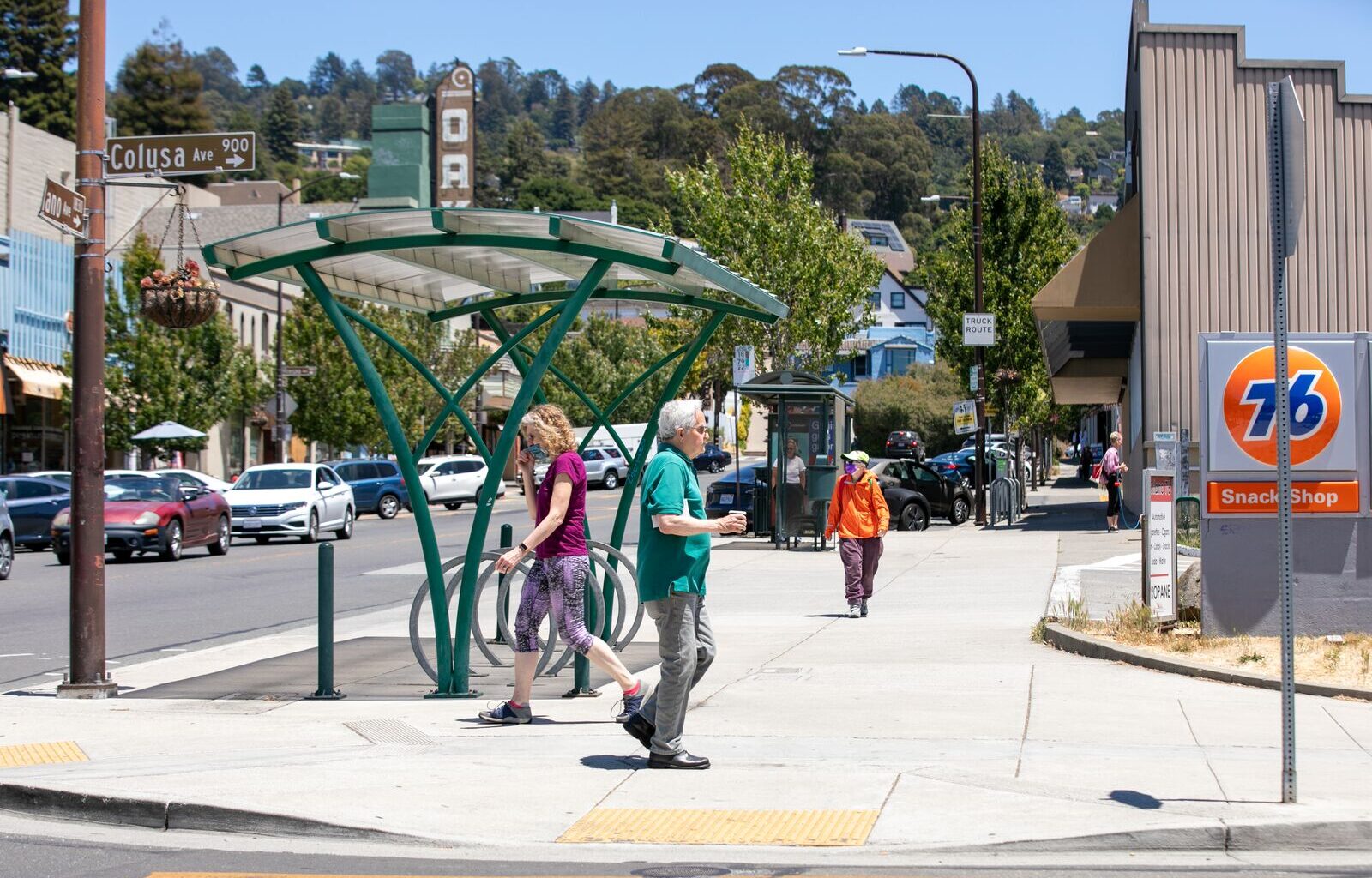
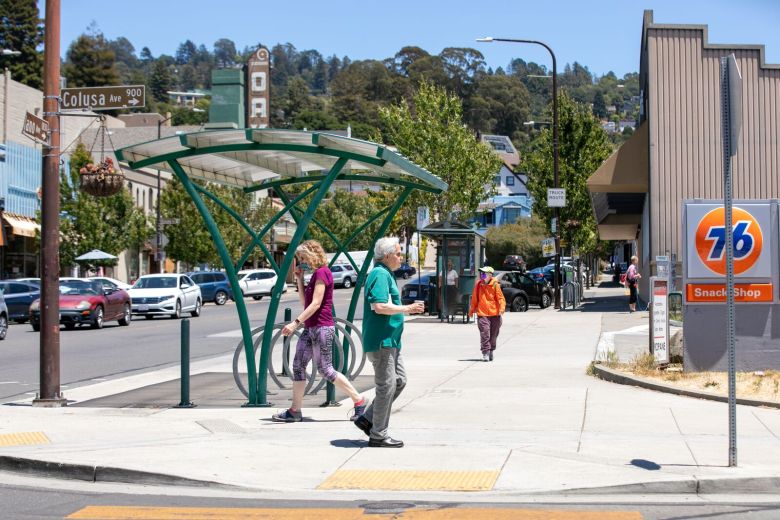
 The 76 station on Solano Avenue is one of several sites city officials say are most likely to be redeveloped if Berkeley changes height limits for Solano, College and northern Shattuck avenues. Credit: Kelly Sullivan for Berkeleyside
Members of the Planning Commission this week endorsed a more narrowly targeted version of a proposal to allow taller development in North Berkeley and the Elmwood District that has sparked an uproar from the area’s merchants and residents.
Commissioners signaled their support at a meeting Wednesday night for increasing height limits along portions of College, Solano and northern Shattuck avenues, with the goal of bringing more housing to those neighborhoods. But they called for exempting most of the corridors from the zoning changes, and raising the height caps only on specific properties that have been identified as prime sites for redevelopment.
Those sites would likely include the strip mall anchored by a 7-Eleven store at College Avenue and Russell Street in the Elmwood District, the vacant former bank branch next to the Cheese Board Pizzeria on North Shattuck, or the 76 gas station at Solano and Colusa avenues, among others.
While supporters of the rezoning contend builders are unlikely to redevelop other properties that are already occupied by successful local businesses, many residents and merchants aren’t convinced, and the fear of displacing beloved shops has driven much of the opposition to the proposal. Planning Commission members who supported the scaled-back zoning changes described them as a compromise aimed at preventing the projects opponents feared, while still bringing more housing to the wealthy and historically exclusive enclaves.
“I would like for Berkeley to walk its talk [of] progressive, welcoming values as a sanctuary city,” Commissioner Savlan Hauser said, “and house people in these high-amenity, high-opportunity neighborhoods [where] we know people want to be.”
But the change did not seem to win over opponents of the rezoning plan, who packed the often contentious meeting at the North Berkeley Senior Center.
Donald Simon, the president of the opposition group Save Berkeley Shops, said he still has a litany of concerns about the proposal, including how the city would decide which sites are subject to the new zoning, and the potential for construction on those properties to drive customers away from nearby businesses.
“It’s certainly more responsible to take a measured approach and go gradually, than to just go hog wild all at once,” said Simon, an attorney who lives in the Elmwood District. But, he added in an interview after the commission meeting, “I don’t know if this is going to be any better.”
It also remains to be seen whether the City Council — which will have the final say on the zoning changes, and where most members backed blanket height cap increases at a meeting last fall — will agree with the commission’s proposal.
City planning staff are expected to bring a draft of the zoning changes to the commission for review in May, with plans to put the proposal before the City Council for final approval in the summer.
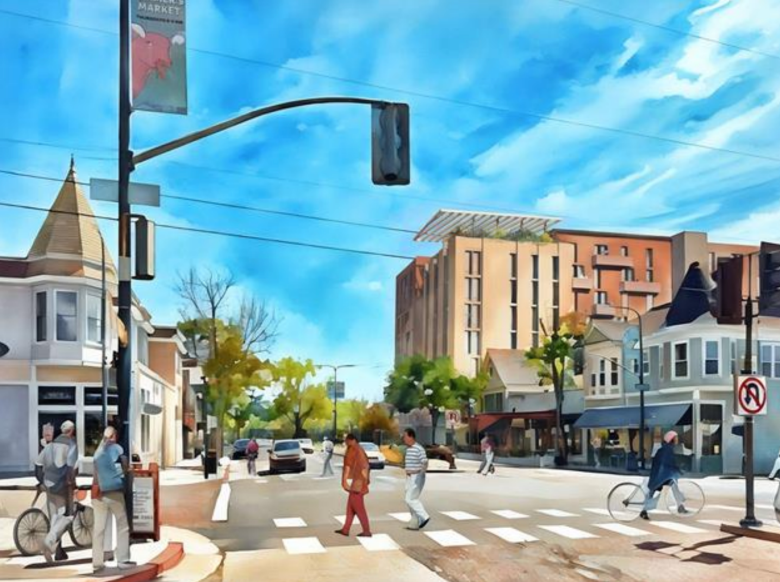 A rendering prepared for a city forum last year shows a hypothetical example of the kind of project that would be allowed under the new zoning rules. No project has been proposed for the site. Credit: City of Berkeley
Height caps could range from 4 stories on College to 7 on Shattuck
Though the commission did not vote on a recommendation, most members said they want Berkeley to set a seven-story height limit for the identified properties on the northern blocks of Shattuck Avenue, six stories for those on Solano Avenue and four for those on College Avenue in the Elmwood. Height limits on the rest of the streets would stay where they are now: two stories on Solano and College avenues, and three on north Shattuck.
Many merchants and residents have argued that corridor-wide zoning changes could lead to landlords raising rents on their commercial tenants or refusing to sign long-term leases so they could redevelop the site in the future. Developers could buy several neighboring properties and create a site big enough for a larger apartment building, they fear. And if such a project goes through, Simon contends, businesses would be forced out and neighboring merchants would have to contend with noise, blocked sidewalks and other construction impacts.
Regardless of the Planning Commission’s recommended changes, Simon’s group wants the city to delay the rezoning and instead undertake a more extensive planning effort for the three streets that includes a detailed analysis of potential impacts on their small businesses.
“You cannot make a decision in the dark without knowing what the impact is going to be,” Simon told the Planning Commission on Wednesday.
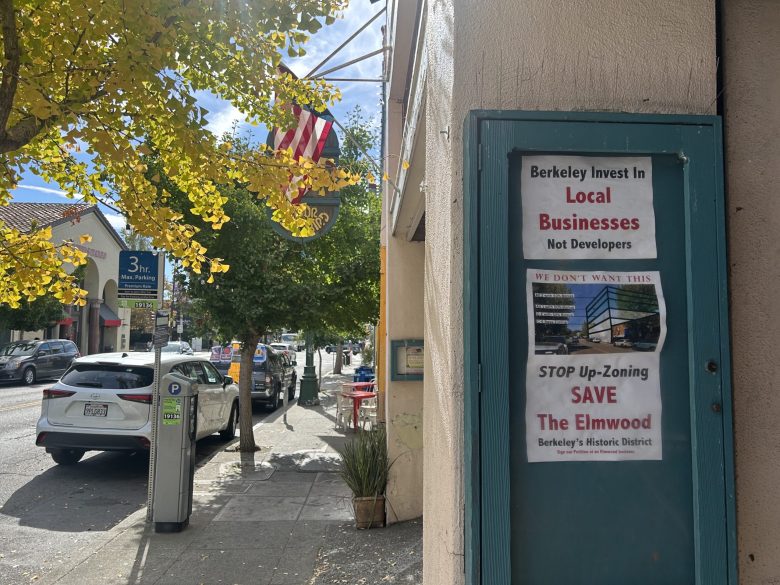 Several merchants in the Elmwood District have vocally opposed a plan to change zoning rules to allow mid-rise apartment buildings in the area. Credit: Nico Savidge/Berkeleyside
Consulting firm Strategic Economics, which Berkeley contracted to undertake a study of how the rezoning might affect the areas’ businesses, wrote in a report that the changes would likely result in gradual development rather than a wave of change, and wouldn’t lead to major rent increases. The city could mitigate disruption to business districts by offering them tax breaks or creating a support fund to help them get through construction, the firm wrote. Simon disputed the study, which he contends was based on scant research, and said the city likely wouldn’t have the money to meaningfully support businesses when it’s facing a deep budget deficit.
Darrell Owens, a Planning Commission member and housing advocate, said the move to limit the zoning changes to specific properties likely wouldn’t significantly change how much housing is ultimately built on the three streets. Planning officials previously estimated the zoning changes could allow for up to 1,000 new homes on North Shattuck, 650 on Solano and 130 on College if applied throughout the corridors. Supporters of the plan argue that development would create homes for new residents who would become loyal customers of the surrounding businesses, and bring more vitality to the areas.
Owens said he hoped exempting the properties many people don’t want to see redeveloped — while allowing new construction to replace parking lots that he argues bring little to the areas’ charm — will allay the fears that have driven much of the opposition.
In all likelihood, he said, “These small shops are not going to be redeveloped anyway.” Still, Owens acknowledged, “There’s a difference between ‘not-very-probable’ and ‘impossible.’”
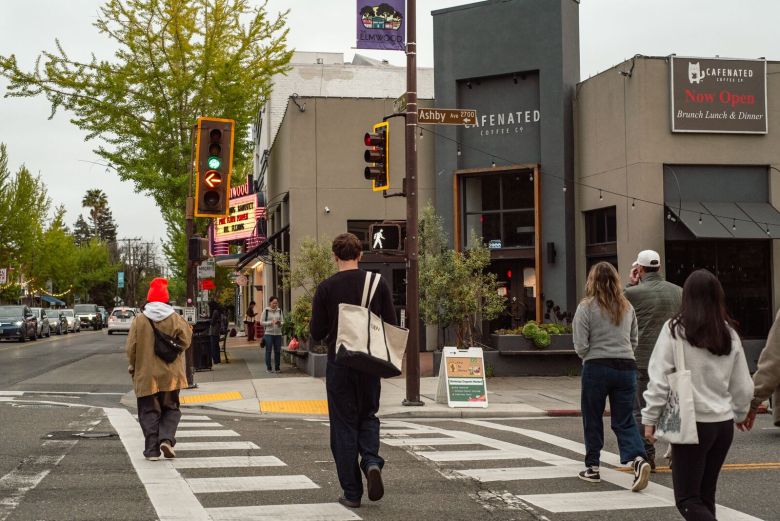 This property, like most of College Avenue in the Elmwood District, would be exempted from zoning changes if the city adopts a proposal endorsed by the Planning Commission. Credit: Ximena Natera
How tall should development go?
When the council discussed the rezoning plan last November, five of its nine members said they wanted to set a seven-story height cap across the three corridors, arguing that would be consistent with the limits Berkeley has or is considering on other major streets. Only one, Elmwood District Councilmember Mark Humbert, voiced support for limiting the zoning changes to specific properties.
The council pledged to rezone North Shattuck, Solano and College as part of the eight-year housing plan it adopted in 2023, driven in part by concerns from West Berkeley council members that the Elmwood and North Berkeley were not taking on their fair share of new homes. While thousands of apartments have been built in the Southside neighborhood near UC Berkeley, downtown and in West Berkeley in recent years, North Berkeley and the Elmwood have seen little new construction in decades.
The height caps the Planning Commission recommended were based on how wide each street is, with the limit set at three-quarters of the streets’ width. That means 95-foot-wide Shattuck Avenue would have a 71-foot cap; Solano, where the street is 90 feet wide, would have a 68-foot limit; and College, the narrowest of the three at 55 feet, would have the shortest limit at 41 feet.
Commissioners initially discussed setting the height limit at 65% of the streets’ width, which they said would create a consistent standard that could be applied throughout the city, such as on San Pablo Avenue, where the ratio would mean a six-story height limit.
“You get a scale that is appropriate and different at each one, but the ratio is the same,” Commissioner Jeff Vincent said.
They later increased the ratio to 75% for College, Solano and North Shattuck during Wednesday’s meeting, adding a story to those streets’ height caps, which members said would compensate for the move to limit changes to specific properties.
Opponents of the rezoning plan have argued that substantially raising the height limits would allow for new construction that is out of place on blocks where most buildings today are one or two stories, particularly because California’s “density bonus” law allows developers to soar past local height limits if their projects include affordable apartments.
Several speakers at Wednesday’s meeting pointed to an eight-story project recently approved at Shattuck Avenue and Virginia Street in North Berkeley — which was allowed to more than double the area’s height limit under the density bonus law because it included 18 affordable apartments — as evidence the city’s zoning rules don’t need to be changed.
Planning commission members were divided on where to set the height caps in light of the bonus. Some said a lower limit would still allow developers to build apartment complexes of seven or eight stories, but effectively force them to include affordable homes in the project if they want to reach that scale.
“If we’re just saying we’re going to allow seven stories” in the zoning code, Commissioner Christina Oatfield said, “it kind of takes away developers’ incentive to build more affordable units in their projects.”
Related stories
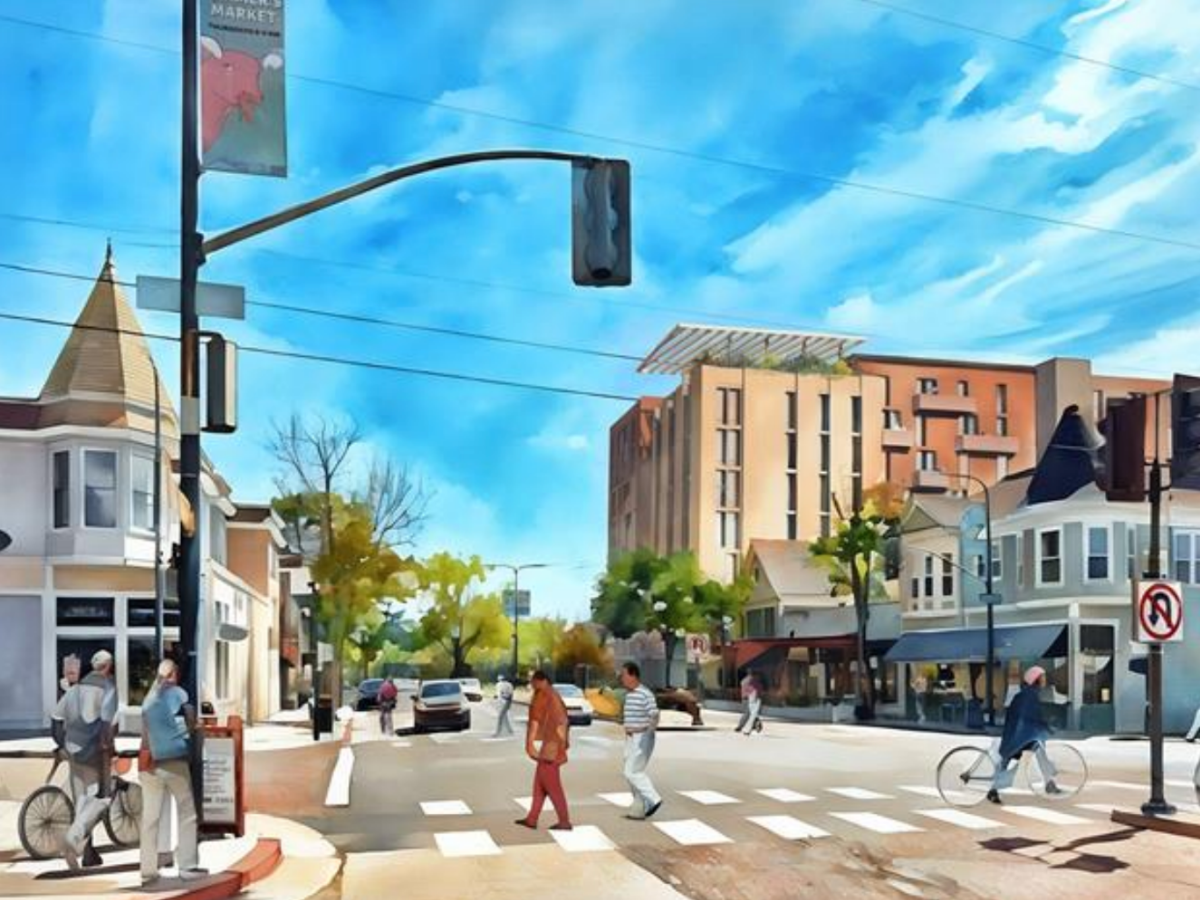
9-story housing next to Cheese Board? Berkeley could OK taller buildings on 3 popular streets
August 25, 2025Aug. 26, 2025, 9:15 a.m.
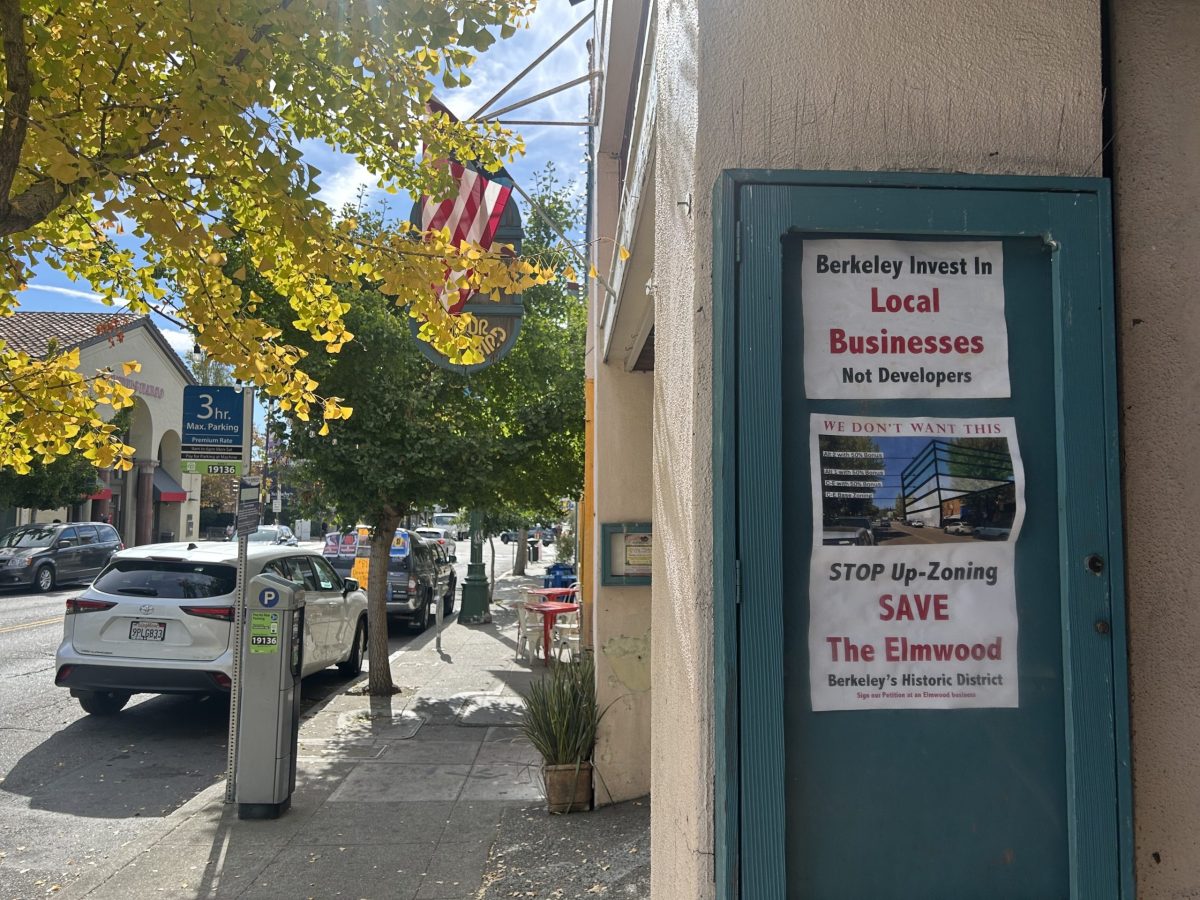
November 7, 2025Nov. 7, 2025, 8:34 p.m.
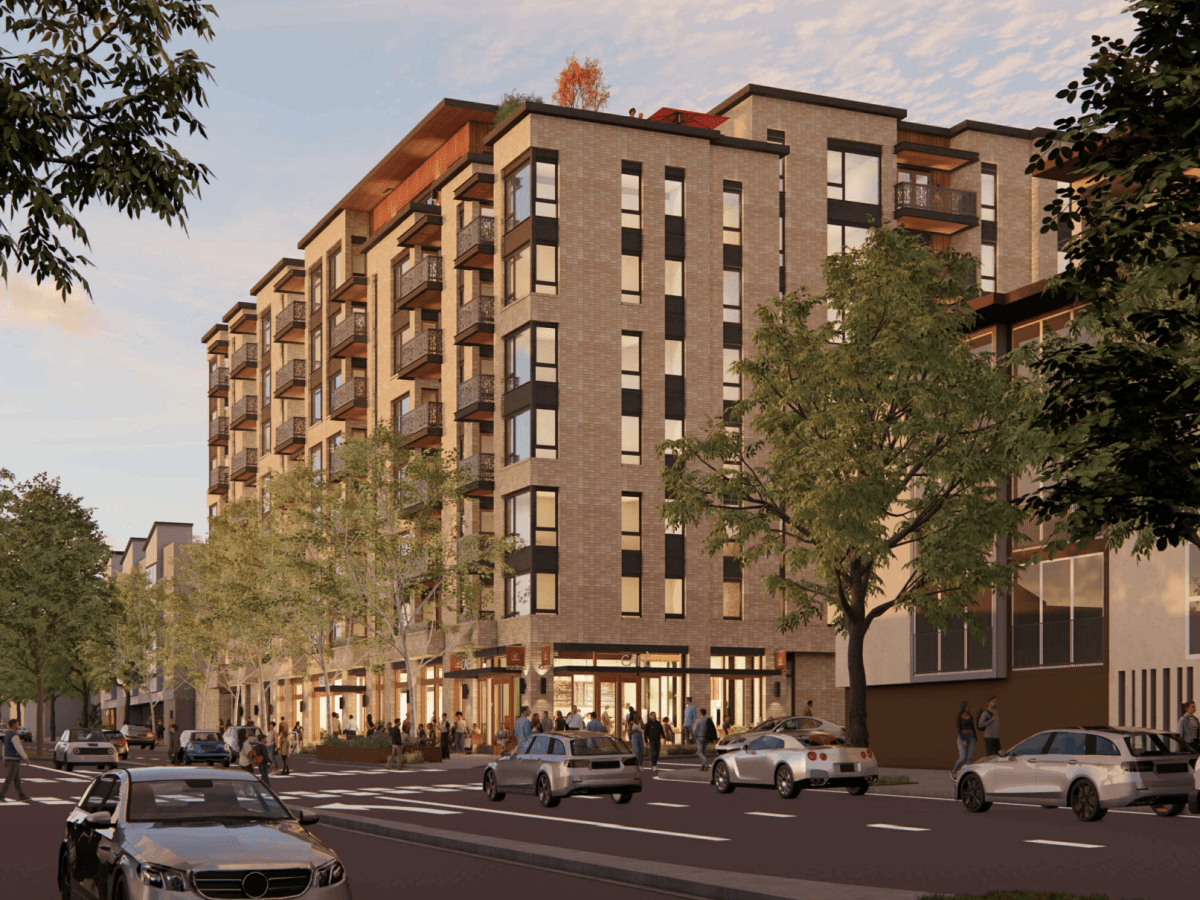
City Council approves 8-story North Shattuck housing proposal
February 12, 2026Feb. 12, 2026, 10:59 a.m.
“*” indicates required fields