
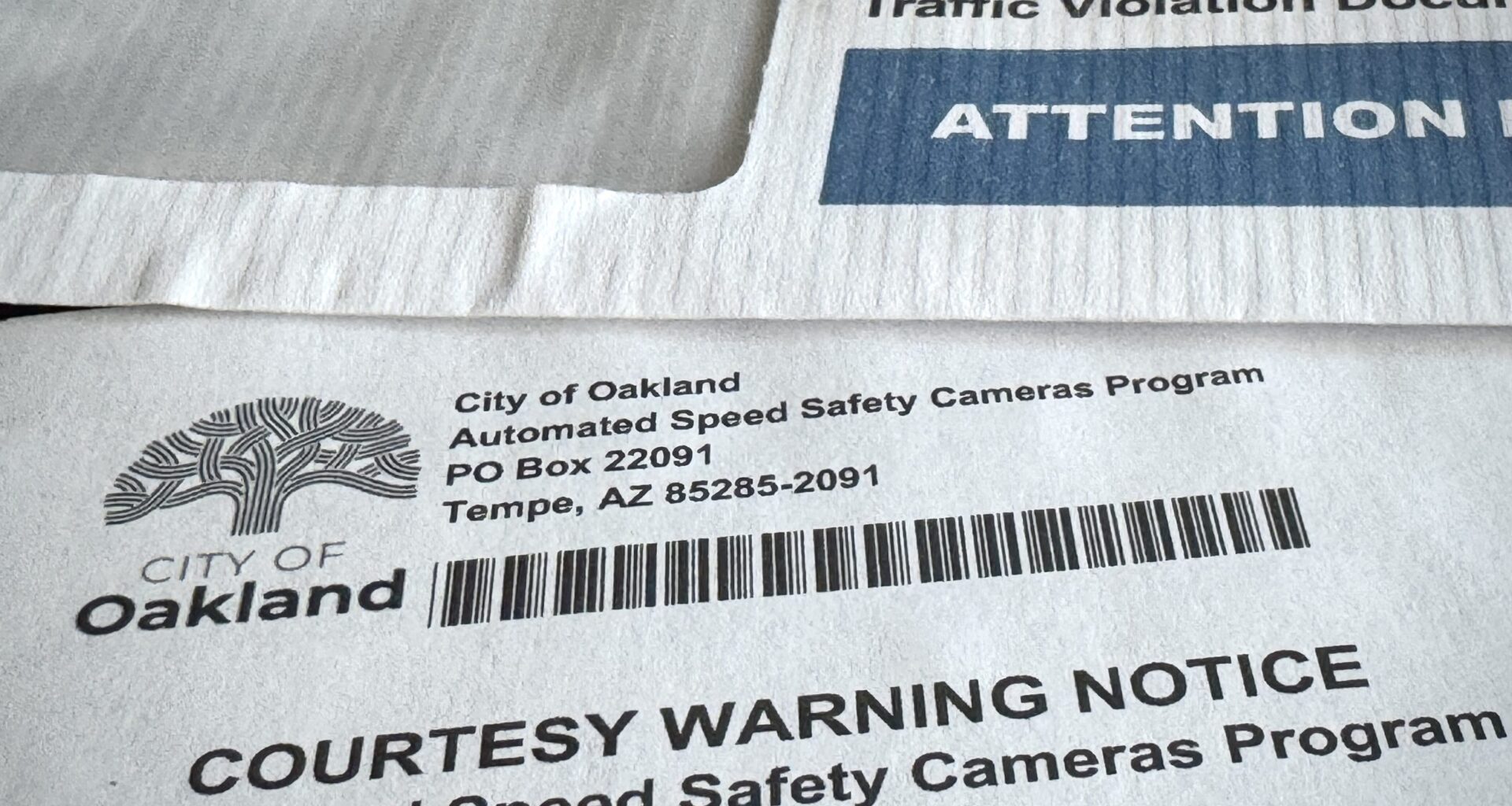
The speed cameras are working.
That’s according to an Oakland Department of Transportation staffer who briefed the Bicycle and Pedestrian Advisory Commission meeting last month, who said that 17,000 warnings were issued to vehicle owners in the first five days after they went live, from January 14 to January 19. The 18 cameras were installed near or on some of the city’s most dangerous intersections.
Over the first month of the program, 70,000 warnings were issued citywide. That constitutes, according to OakDOT, about 1% of all drivers on Oakland roads.
The speeding warnings will continue until halfway through this month, when vehicle owners will begin receiving real tickets with fines starting at $50 for infractions in which drivers are traveling over 10 miles per hour above the speed limit. The price of the tickets increases with the driver’s speed, reaching $500 for the biggest offenders. The city offers options for low-income people to pay a lower fee or on a payment plan.
The Oaklandside reached out to the transportation department seeking more granular data on the warning numbers, including which locations triggered the most warnings and what percentage of them were given to vehicle owners at each level of speeding infraction. An OakDOT spokesperson, Kent Bravo, told us the department will release that and other data in a full report in about two weeks.
Bravo said staff have been working to address a few early hiccups. For example, one camera at Claremont Avenue near College Avenue issued unnecessary warnings because it was set to 25 miles per hour instead of the posted 30 miles-per-hour speed limit. Bravo told us that this issue was fixed after the first two days of the pilot.
“With a warning period, it gives us leeway to address bugs like the aforementioned one before citations start,” he said.
According to interviews with people who have received these warnings and online threads discussing the program, some Oakland residents who have received them have been surprised by them, some think they’re unfair, and many also appear to support the program.
‘They’re going to be giving a lot of tickets’
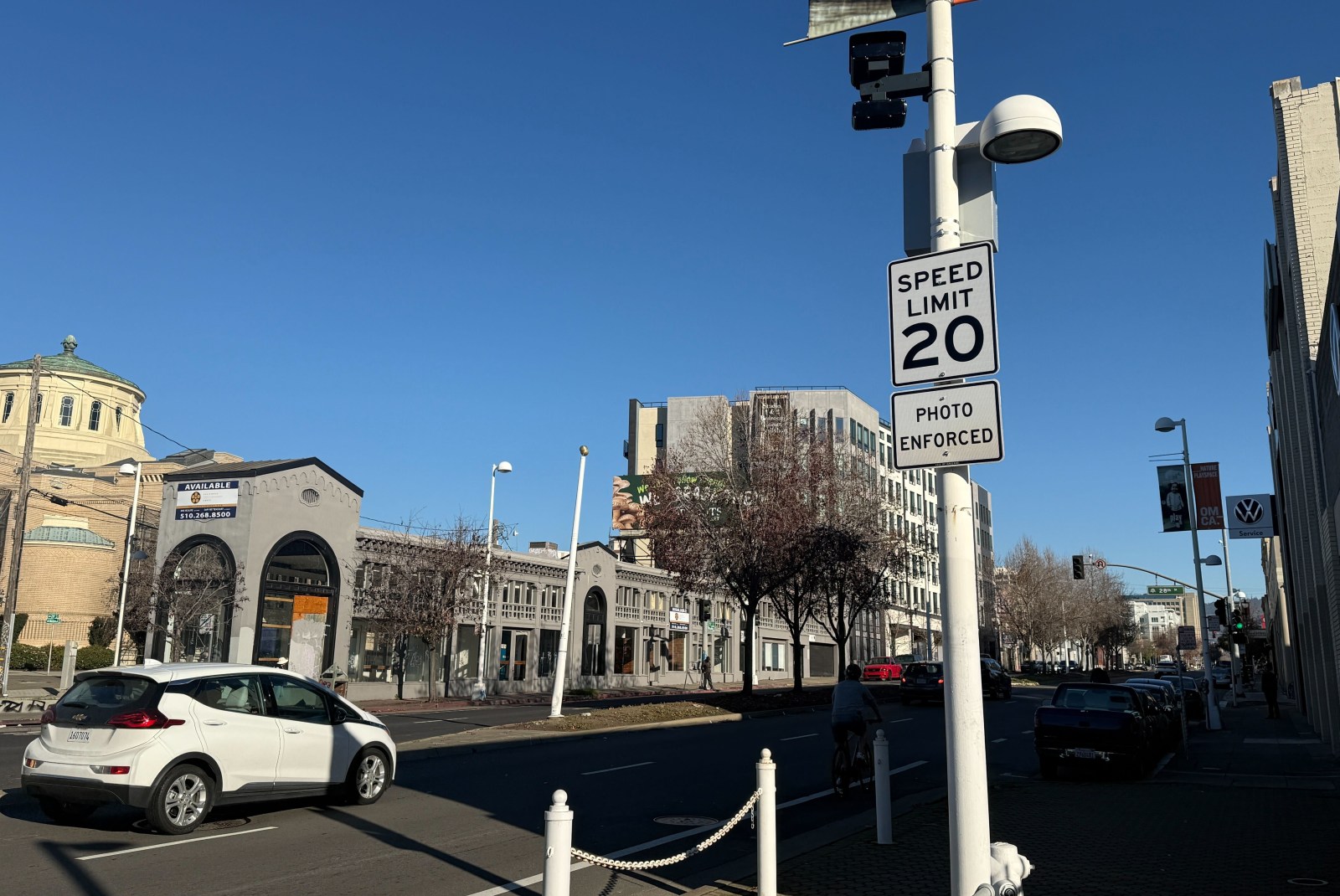 Oakland’s new speed cameras on Broadway near 27th Street. Starting later this month, drivers will receive a ticket if they are clocked going at least 11 miles an hour above the speed limit. Credit: Jose Fermoso for The Oaklandside
We emailed with one person who posted on a Reddit thread about receiving multiple warnings. That person, who did not want to provide their full name, said that one of the roads they got a warning on has a 20-mile-per-hour speed limit, which they considered slow. The two streets with 20-mile-per-hour speed limits that got speed cameras are the block of 7th Street from Broadway to Franklin Street and the block of Broadway from 26th to 27th streets, near West Grand Avenue.
“Cars were zipping past me and being reckless around me, as I was not driving past 25 miles an hour,” the source said. “It’s gonna be a trip to see how it all works out. They’re going to be giving a lot of tickets.”
The source told us that their kids sometimes take their car out, which could lead to more warnings and tickets. According to onet warning document that The Oaklandside has seen, vehicle owners are encouraged to discuss the program “with anyone who drives your vehicle.”
The addition of speed cameras was designed to make people think twice before speeding, and to reinforce the effects of new car-slowing infrastructure. OakDOT chose the camera locations based on a historical analysis of collisions, speed tables, and other data.
The 70,000 warnings over one month are more than double the number that San Francisco announced after its own one-month warning phase last year — 31,000 — triggered by more total cameras, 21 at the time. San Francisco officials found that the vast majority of vehicle owners that received warnings had committed the lowest level of speeding infraction, moving between 11 and 15 miles per hour above the speed limit. They also said that most of the warnings were given out in the early morning hours around rush hour.
Once Oakland begins generating revenue from these speed violations, the transportation department is required by state law to use the funds for traffic-slowing infrastructure development.
The other cities besides Oakland and San Francisco that are part of this five-year pilot program, signed into law by Governor Gavin Newsom in 2024, are Los Angeles, Glendale, Long Beach, and San Jose.
“*” indicates required fields