
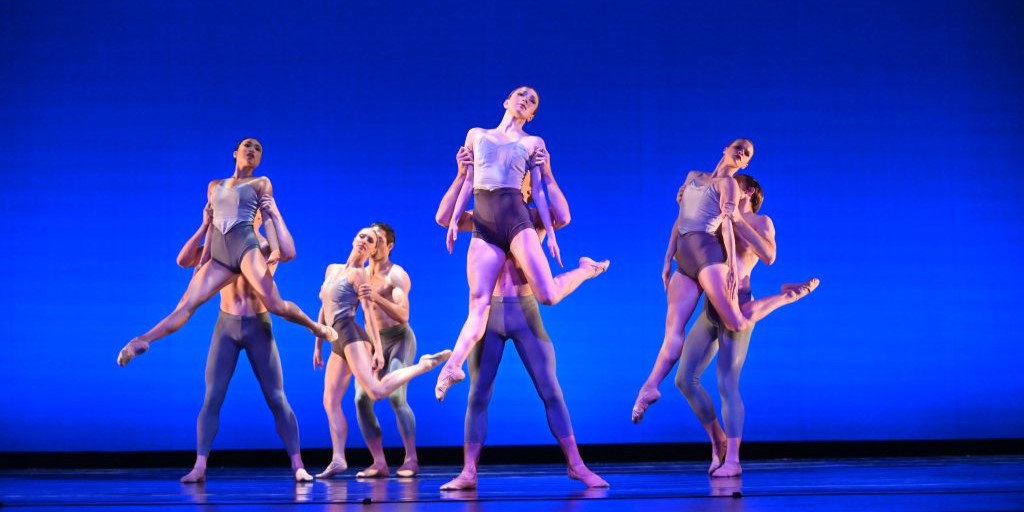
Over two decades, SoCal’s National Choreographers Initiative (NCI) gained national recognition as a mid-summer must-see for incubated contemporary ballet choreography. Under the curatorial eye of artistic director Molly Lynch, each NCI has reflected a unique alchemy brewed over three intense weeks of exploration as four choreographers create works on professional dancers. The culminating one-night only showing at the Irvine Barclay Theater consistently sells out, drawing dance fans along with ballet company directors looking to preview work from each summer’s quartet of dancemakers.
Recently, NCI named its 2026 choreographers and announced March 16, 2026 as the deadline for dancer applications. NCI also broke the news that this summer’s July 25 show will be “The Last Dance.”
Dance writer Ann Haskins spoke by phone with Molly Lynch about the decision to end NCI, her long commitment to nurturing new ballet choreography, why she selected these final four choreographers, and what she will be looking for in selecting dancers for NCI’s finale.
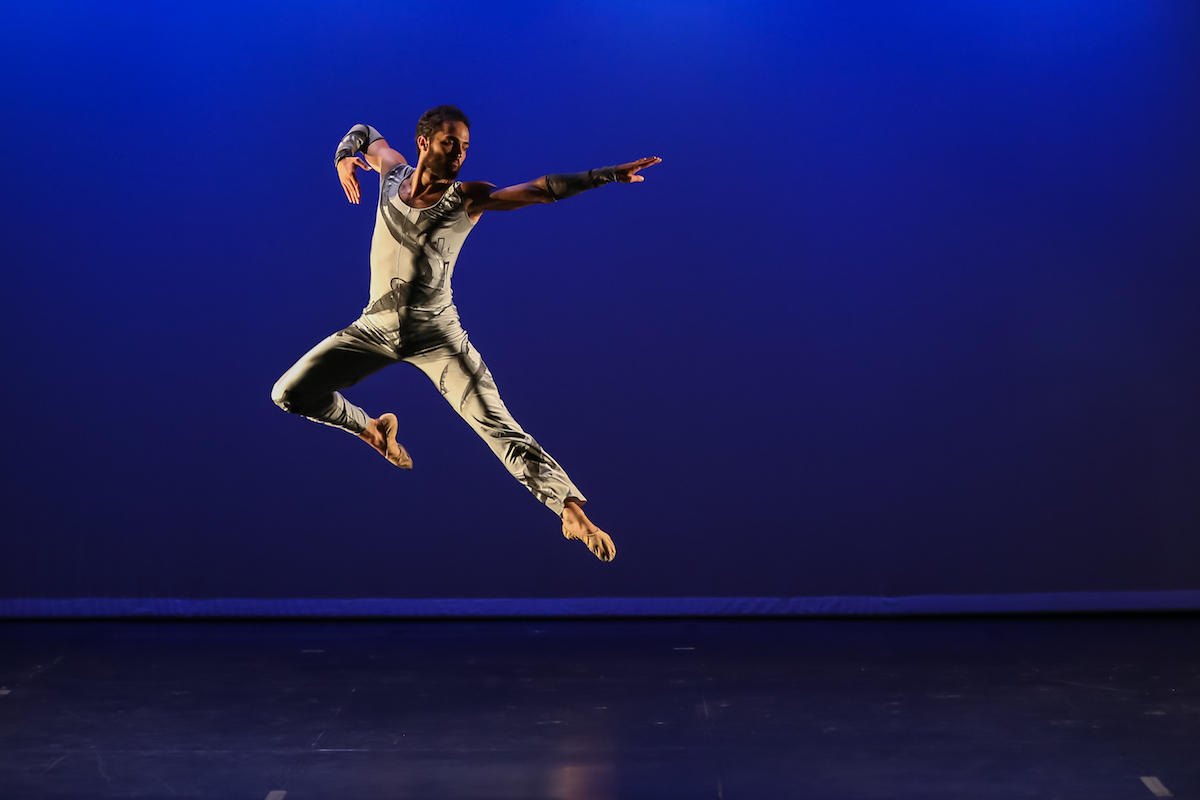
National Choreographers Initiative – Photo by Doug Gifford.
Ann: Before NCI, you already were known for developing new choreography as the founder and artistic director of Ballet Pacifica. Did NCI flow from that experience?
Molly: At Ballet Pacifica, the new choreography was called the Pacifica Choreographic Project and it started in 1991. It was a similar model of four choreographers, but slightly different, because it was focused around the company and the company dancers. It was an opportunity to give our dancers more work, support and develop relationships with choreographers, and then see about either completing their pieces or commissioning them to do another piece.
Ann: Was NCI your next step after Ballet Pacifica?
Molly: It absolutely was. I left Ballet Pacifica in the fall of 2003 and at that time, there were some people who had been involved with Ballet Pacifica who really liked the choreography project. They asked if we could do something like this independently. So with a committee of community volunteers and interested people, I put together a partnership between that committee, the Irvine Barclay Theater and UC Irvine facilities. We did our first NCI project in July of 2004 so less than a year later that we were starting up NCI.

National Choreographers Initiative – Photo by Dave Friedman.
Ann: How did NCI change from the Pacifica Choreographic Project?
Molly: For one thing, I didn’t have a company anymore, so I didn’t have any dancers, and I didn’t have a space. That’s why I went to UCI and talked to them about using their studio space during the summertime when they’re not in session. I still kept the format of four choreographers, but I needed dancers. I did an open audition and application process for dancers to apply to participate. That broadened it and in some ways, for the better, because there were dancers coming from all over the country to participate in the choreography project. It made an interesting mix of dancers from different companies coming together to collaborate. That gave it more of a national scope, not just with the choreographers, but also with the dancers as well.
Ann: With ballet companies on hiatus during the summer, you always attract a strong pool of dancers. I understand because many dancers want to return, you developed a policy limiting return to three years maximum.
Molly: I didn’t start out with that in my mind. When I started out, I didn’t even know whether we could make this fly for three years or five years. Then when we were going and dancers wanted to return, I thought it also would be good to have some new blood, some new energy coming into the mix of dancers. So my rule or policy was to have half new dancers, half returning dancers. Then I did finally say that three years should be max to keep new dancers coming in. Three years seemed a good amount of time. It was always quite wonderful to have dancers returning, because then they could help new dancers get into the routine of what this project is all about. They live in a dorm together, so new dancers were being ushered in or supported by the dancers that had been there for a year or two and then rotating out. There’s always way more dancers applying than we could possibly accommodate in a given year. In one sense, that’s a good place to be in, it’s nice to be able to put together a selection, but saying ‘no’ is never fun.
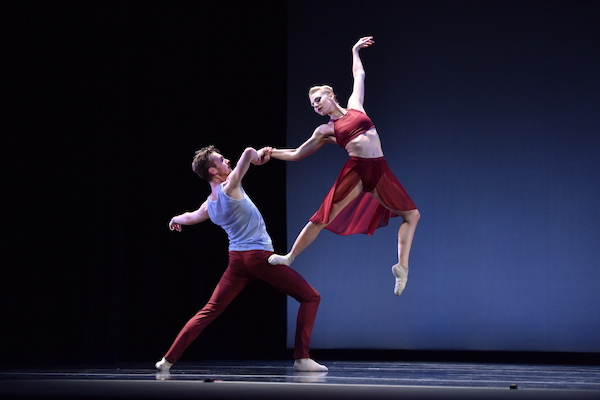
National Choreographers Initiative – Photo by Dave Friedman.
Ann: How is dancer selection going for this last NCI?
Molly: Dancer applications are due March 16th. I have about 50 applicants already, and so we’ll see what we get by that deadline. Some of them are dancers who would like to return and some are new, so we will see. I’m hoping to try to get that completed by the end of March. (Editor’s note: application information is at NCI dancer application info)
Ann: Are there particular things that you look for in the dancers that you select?
Molly: Mostly I look for dancers interested in doing new work, who I feel would have a collaborative spirit. I have to view that based off the video selections they send. I am always looking for dancers who show me a variety of work that they do from contemporary to classical. If the dancer sends me only one type of work, I’d say that’s probably not the best match for us. I look for strong ballet dancers, strong ballet training, and professional caliber background, whether they are in a professional company. Also, for how long which indicates a certain level of the work ethic. I look at the repertory that they’ve been performing with the company that they’re in, or maybe they’ve been in a couple of companies. So that all kind of comes into play to find a dancer who is very flexible, diversified in their styles, open to doing new work, and with good technical abilities. All of that comes into the mix in selecting dancers for the project.
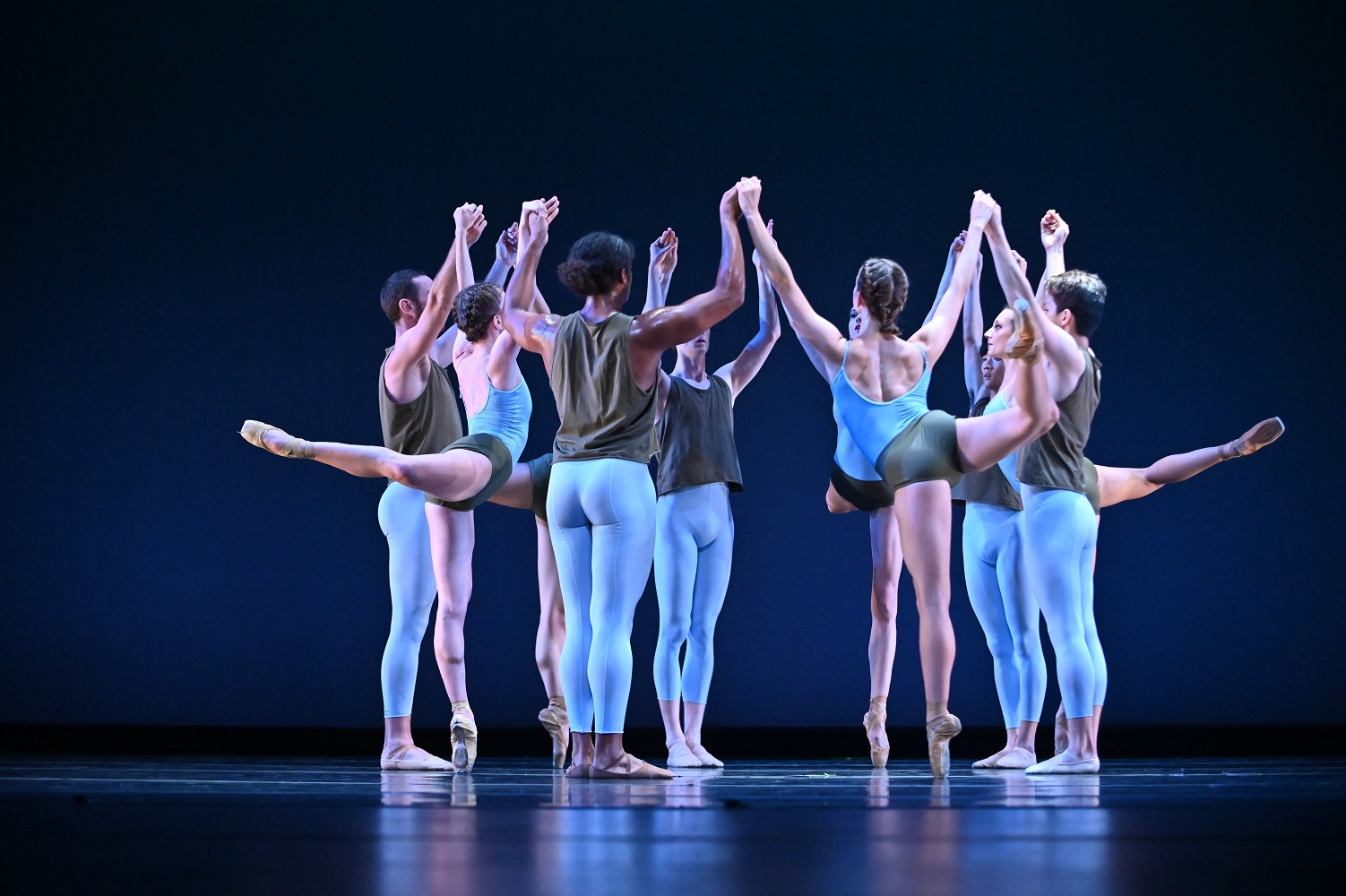
National Choreographers Initiative – Photo by Dave Friedman.
Ann: Let’s talk about your process for selecting the choreographers?
Molly: In a similar way as selecting dancers. I look at what other work they have done. Have they choreographed with different companies or are they with a particular company? Is there any kind of direction or focus? Also, what is the style of the work that they are doing? A variety of styles is interesting for the audience to view. I mostly look for ballet-based choreographers, not to say that they have to do something on pointe, but that they are interested in working with ballet trained dancers. To me, ballet is an area that has not been supported. There are more festivals and projects focused on modern and contemporary choreographers, and not so much focus on ballet. I also look at where they are in their career. I am interested in supporting choreographers that are emerging and mid-career, not necessarily Alexei Ratmansky or some superstar like him. Also, I try each year to have at least one woman choreographer, because that is also an area that I have wanted to support.
Ann: In your pre-show comments, you always explain that the works are not necessarily final products but reflect what these choreographers working with these dancers came up with in three weeks. Yet, NCI has an impressive track record of many works going on to finished products presented by companies. Also, during post-show comment sessions, many choreographers have remarked upon the freedom NCI affords.
Molly: Ballet choreographers will tell you that with a commission a company can tell you that you need to use ten dancers and that it is going to need to be a closing piece, or it needs to be an opening piece or something like that. I wanted to get away from that and try and give them more freedom. Is it a piece of music that they haven’t had a chance to do, or a certain idea that they wanted to convey? It’s really an opportunity for them to do something of their own choosing, to further their own choreographic development and their own choreographic career. I didn’t want them to feel the need to premiere a piece. I’ve always tried to make it very clear to the choreographers that they don’t have to finish. The only parameter is that in three weeks they have to show something, but it doesn’t have to be completed. And they can change their mind partway through as well. I’ve had choreographers who were thinking about using one piece of music, and then after the first couple of days, they would come and say ‘this just isn’t working for me. I don’t really want to use this music,’ and I told them ‘fine, change it.’ That’s the difference.
Ann: Is not being reviewed part of that freedom?
Molly: Yes, this is why we don’t ask writers to come to review. Sometimes writers will want to come and attend. I’m always trying to make it very clear they are welcome, but these are not completed pieces, not at the point for the choreography to be critiqued. That’s one of the freedoms, knowing their work is not going to be subjected to review or criticism.
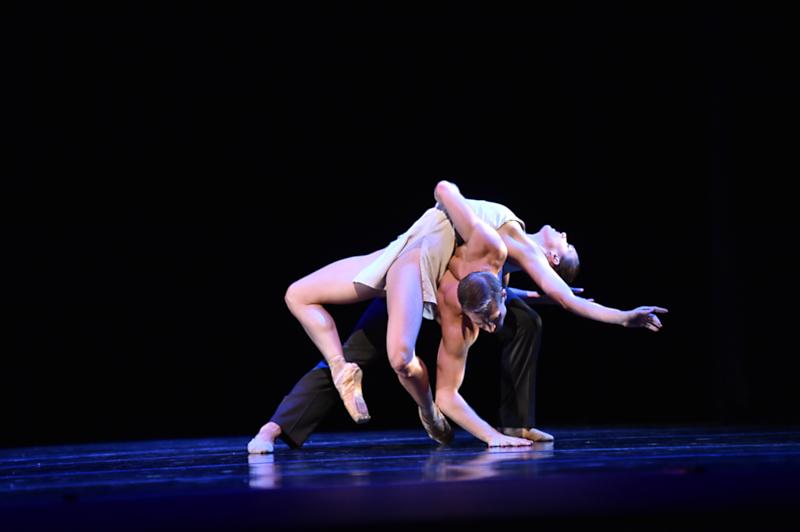
National Choreographers Initiative – Photo by Dave Friedman.
Ann: Of everything you’ve done and NCI has achieved over these years, what gives you the most satisfaction?
Molly: I would say, first of all, giving the choreographers that opportunity, and giving the dancers the opportunity to be working with different choreographers and with dancers from other companies. I think one thing that came out of it, that I didn’t necessarily expect or think about when I started doing this, was the networking and the interconnection that happened among the dancers themselves, the dancers and the choreographers, then later between the dancers and their company directors that led to commissions for the NCI choreographers. It was really fascinating and exciting to see that some of the choreographers later were being invited by some of the dancers’ company directors to come and choreograph for them or to develop pieces that they started at NCI for a company’s repertory. One of the benefits of NCI versus the PCP, is the dancers from different companies connecting with each other and making recommendations to their company directors for the choreographers to come.
Ann: Did you select the four choreographers for this summer before you made the decision that this would be the last NCI or after that decision?
Molly: Before. When we decided that this was probably going to be our last, I thought that we didn’t have to follow the guidelines as in the past. I thought that it would actually be sort of a celebration of the choreographers that we’ve worked with in the past and the work that they have done by bringing back four choreographers. So all four have done it before.
Ann: Please tell me about them.
Molly: They come from different years. Sarah Tallman, choreographed for us, I believe, in 2015. She is now with Wonderbound, a contemporary company in Colorado. Julia Feldman actually danced in NCI for three years. Later, I invited her to be a choreographer in 2019, because I knew she’d been doing quite a bit of work with Sacramento Ballet. Emily Adams is with Ballet West, and she choreographed for us in 2022. DaYoung Jung is with Oklahoma City Ballet, and she choreographed for us in 2024. So, there’s a scope over 2015, 2019, 2022, and 2024.

National Choreographers Initiative – Photo by Dave Friedman.
Ann: Why the decision to end NCI?
Molly: There were many conversations before the decision. Several things came together at once. One thing is that between Pacifica Choreographic Project and NCI, I’ve been doing this for 35 years, which is a lot of years doing a particular project supporting choreographers and dancers. I’m proud of that and happy for it. It’s also a time when costs keep going up and donations are not keeping up with the cost of doing the project. I have an advisory committee that started with NCI, and many of them have been a part of the project for anywhere from 20 years to five years. I think it just is getting harder to do and to keep the energy up. I feel it’s time for the next generation to step forward, take the stage, develop their own projects, and see what they think is important going forward.
Ann: May I ask what the budget is for NCI?
Molly: It costs us about between $130,000 and $140,000 each year. This is for three weeks housing the dancers, paying the dancers, paying the choreographers, and the lighting people, plus the costs for theater and crew for rehearsals and the show.
Ann: Given your other work, including with the UC Irvine Department of Dance, I gather you are not going to be inactive.
Molly: True. I’m a professor in the dance department. This is my 20th year at the University. I teach an arts management class for the dance majors, as well as teaching ballet, choreographing, and mentoring. The students are wonderful and inspirational, and I have no intention of leaving that. At some point I’ll retire, but not at the moment. It’s not like I’m going to sit at home and put my feet up. Not yet.
Ann: Others certainly can look at the model you’ve developed with NCI where a university has housing and a proximate theater that are underused during the summer. Most dance companies are on hiatus in summer making dancers and choreographers available. It would seem those elements could be applied in a lot of places to NCI’s type of win, win situation.
Molly: I would encourage people to take on the project. I’m willing to talk to them if they want to ask questions, if that is a direction that they would like to go. Part of doing the project in July was the fact that the studios were more available between sessions. The dancers were more available because they’re usually off contract. It was kind of squeezing it into that little window between when UCI has graduation in mid-June and when ballet companies start back up for their next season in August.

Molly Lynch – Dancer, choreographer, Chair, UC Irvine Department of Dance & Artistic Director of National Choreographers Initiative – photo courtesy of the artist
Ann: Anything else you would like people to know at this stage?
Molly: The only other thing I would say is I want this to be a celebration of NCI, all the choreographers and dancers that have participated, and the connections that have been made with it. That’s why we wanted to announce ahead of time that this is the last, so it can be a celebration of what we’ve done over the years. I feel like this is the right time to be making the change. I hope that NCI has been a spark or an inspiration for others to start their own projects, whether like this or a different kind of project.
National Choreographers Initiative (NCI) – The Last Dance at the Irvine Barclay Theater, UC Irvine, 4242 Campus Dr., Irvine; Sat., July 25, 8 pm, $28-$105.
For more information and to purchase tickets, please visit NCI The Last Dance.
Written by Ann Haskins for LA Dance Chronicle.
Featured image: