
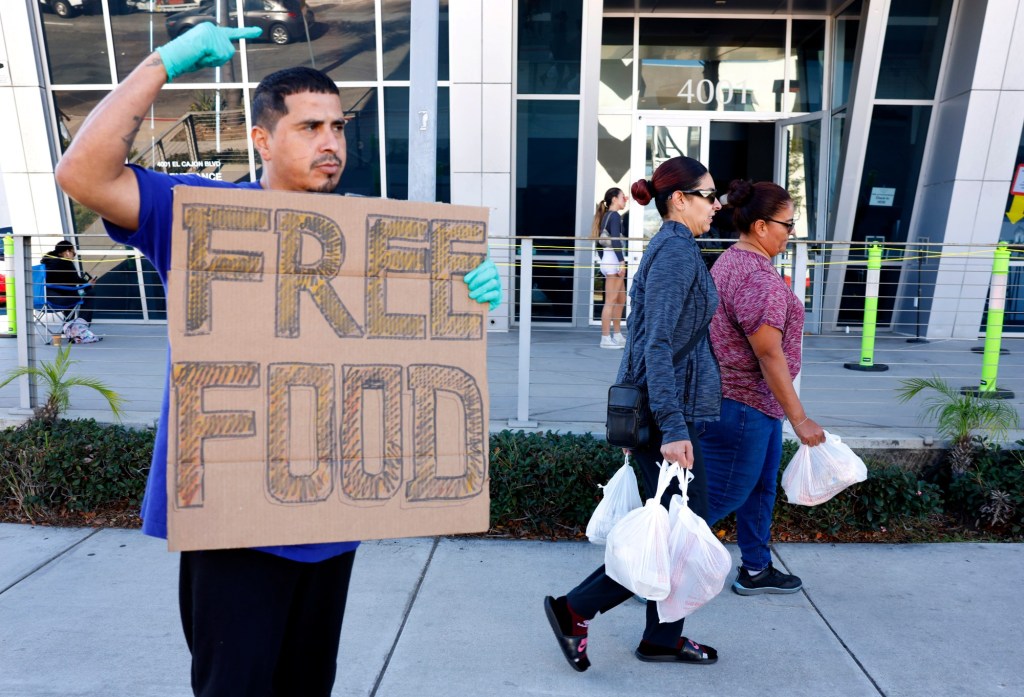
Picture a neighborhood where families are stretched thin just trying to put food on the table, but right on the corner is a welcoming market stocked with wholesome, unsold food from local grocery stores and farms. Now picture those families walking in and choosing what they need, free of charge.
This vision is already a reality. It’s happening at the Feeding San Diego Marketplace in Sorrento Valley, where an average of 1,735 households shop each month at no cost. Almost all of this food is rescued from local grocery stores, restaurants, farms, and food manufacturers and distributors across San Diego and beyond.
Food waste in the United States is staggering. According to ReFED, in 2023 the country let 31% of its 237 million tons of food supply go unsold or uneaten. Reducing this waste requires hunger-relief nonprofits and businesses to work together.
Starbucks is a leading example. In 2016, the company partnered with Feeding America to divert surplus food away from waste streams and into communities facing hunger. Feeding San Diego was chosen to pilot the Starbucks FoodShare program nearly 10 years ago, and the partnership continues to thrive today.
Since its launch, Feeding San Diego has rescued more than 4.2 million pounds of food from local Starbucks coffeehouses. Items like protein boxes, breakfast sandwiches and cake pops are regularly routed from Starbucks shelves directly to people experiencing food insecurity across the county. Starbucks manages the collection and delivery of this excess food to Feeding San Diego’s distribution center, creating an efficient model that allows both partners to focus on what they do best.
Seeing a company of Starbucks’ size prioritize food rescue shows what’s possible when corporations commit to meaningful social impact. Importantly, it was Starbucks partners (employees) who advocated for donating unsold food, eventually expanding the program across the U.S. and into Canada.
The results speak for themselves. Since its inception, FoodShare has donated more than 121 million meals (according to the USDA, 1.2 pounds is equivalent to one meal) and diverted over 144 million pounds of waste from landfills.
At a time when employees increasingly value environmental, social and governance-driven workplaces, programs like this matter. Redirecting food from corporate supply chains to food banks challenges the outdated image many people still have of hunger relief.
Some assume food banks rely primarily on canned food drives or that they purchase most of the food they distribute. At Feeding San Diego, the opposite is true. Ninety percent of the more than 36.2 million pounds of food distributed each year is rescued food.
This is possible thanks to partnerships with more than 760 food donors — local, regional and national companies, as well as farms across California — that donate food that is surplus, imperfect, discontinued or otherwise unsellable but entirely edible.
Too often, perfectly good food has its life cycle cut short. Businesses can collaborate with organizations like Feeding San Diego to redirect that food to families and individuals who need it.
California’s landmark Senate Bill 1383 has also accelerated food recovery efforts. The law aims to dramatically reduce landfill waste — especially organic waste — and requires many businesses to donate edible surplus food to organizations like Feeding San Diego. Since its implementation in 2022, food banks have seen an increase in donations, but there is still far more food that can and should be rescued.
Implementation is ongoing, and some businesses have not yet fully engaged. It’s essential that they do. This growing momentum around food rescue is especially important now. With significant cuts and structural changes to federal nutrition programs expected this year, hunger-relief organizations anticipate increased need.
Reduced federal support means both food and funds will be in shorter supply, making innovative, sustainable sourcing models more critical than ever. Food rescue helps people and the planet. It prevents edible food from entering landfills, reduces greenhouse gas emissions and strengthens community food security.
You can join the movement. Ask a business if they donate surplus food. Ask your employer if it does. Volunteer with a food recovery organization or donate to your local food bank.
Food rescue isn’t just a smart solution — it’s a necessary one. Together, we can ensure more people have access to nutritious food while reducing waste across our region.
O’Connor is the chief operations officer at Feeding San Diego and lives in San Diego.