
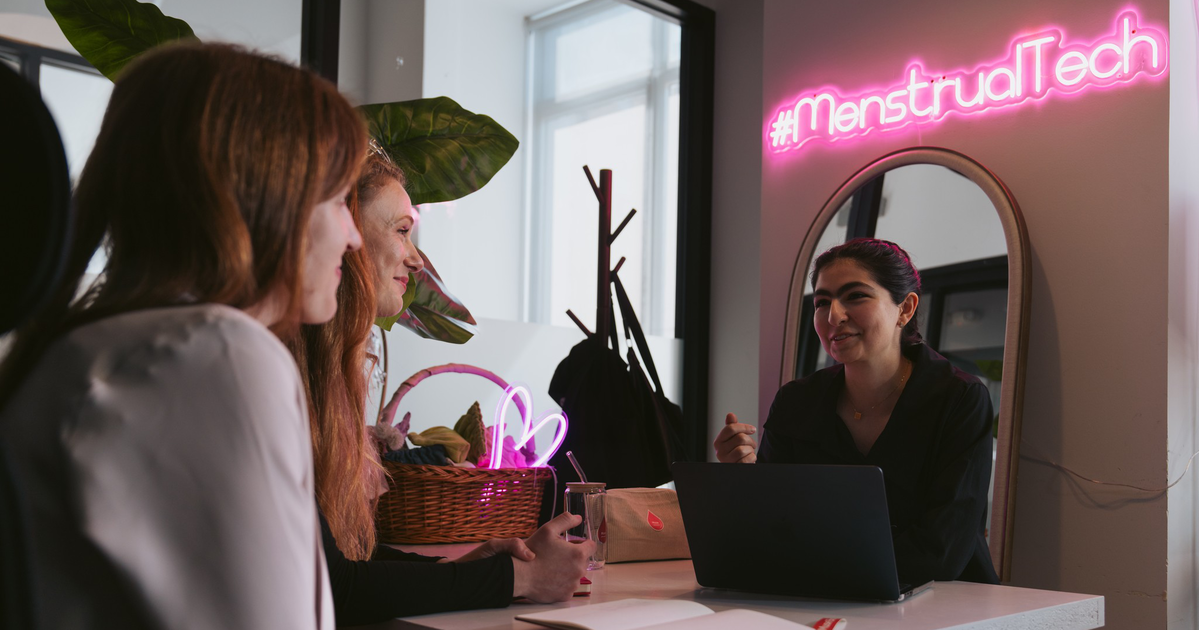
Two days after her period starts, Rosetta Wang makes the drive from Berkeley to Frontier Tower, a downtown San Francisco coworking space. Wang, 26, takes the elevator to the eighth floor, then heads to the restroom. She retrieves her menstrual cup and funnels the fluid into a test tube. The process takes around 15 minutes.
Then comes the reward: a goodie bag of chocolates, face masks, hand cream, and stickers — plus a $40 Visa card.
“People have an ick about menstrual blood … [but] it’s pretty easy,” said Wang, the CEO of Laurelate, a cacao-free chocolate startup. She spent the money on parking.
If Muse Bio (opens in new tab), the 1-year-old early stage startup collecting her blood, is right, Wang’s sample is potentially worth far more than $40.
Muse is betting on stem cells, those buzzy “regeneration” cells that can self-renew. Biotech has poured billions of dollars on stem cell technologies in recent years, for everything from wound healing to wrinkle reduction. The company hopes that menstrual fluid, which contains stem cells shed from the uterine lining, becomes a new, inexpensive source. The startup’s goal is to build a biobank from these cells, first for skin care products and later for fertility and regenerative therapies.
There is precedent for paying for biological donations. Sperm banks have paid college students for decades, with regulars earning up to $2,400 a month. Egg donation pays as much as $15,000 per cycle, but involves surgery and medications. At $40 a cycle, menstrual donation pays a lot less, but it opens a pain-free path for women to make some money from what is usually treated as waste.
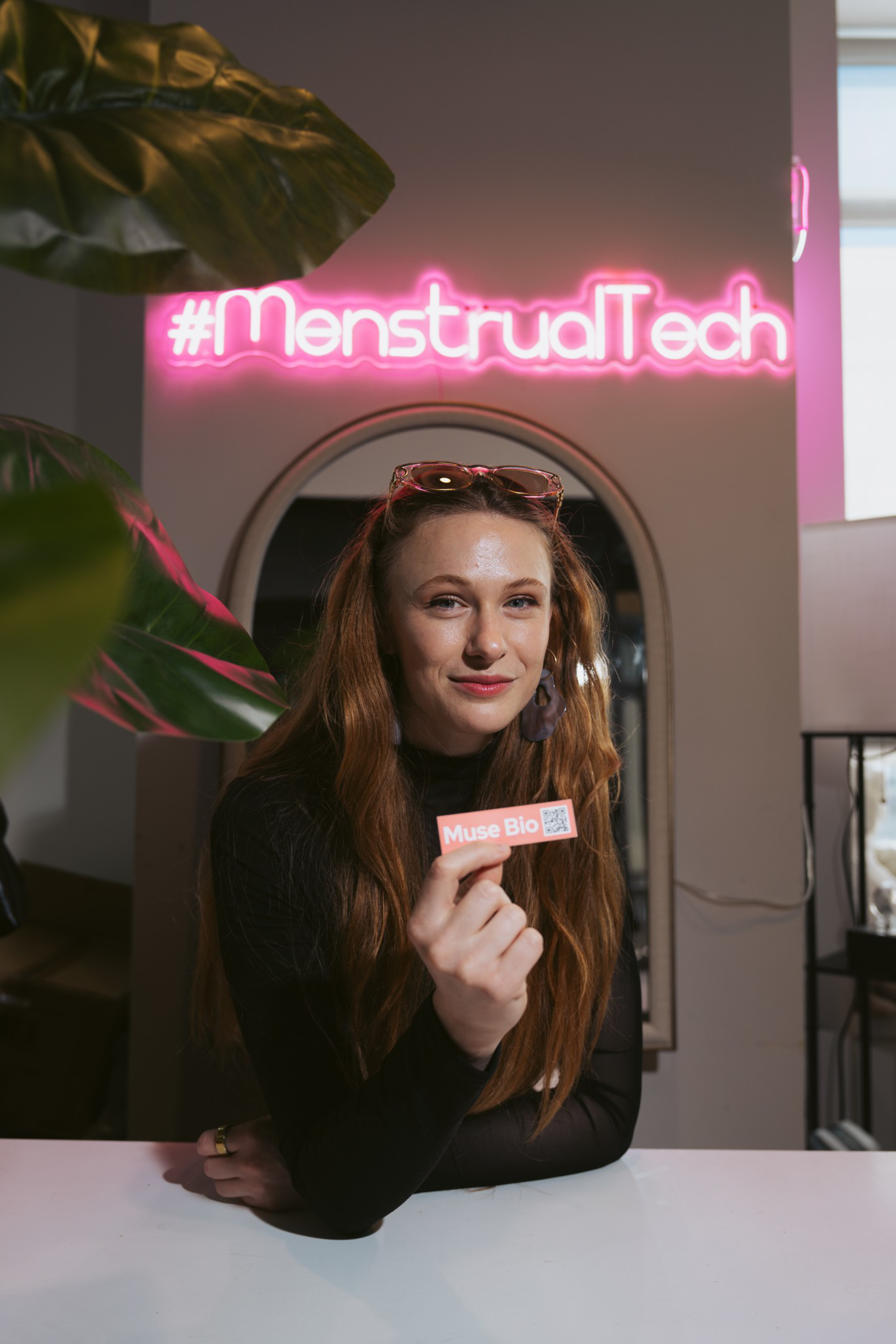 Muse CEO Juliette Humer stands for a portrait in her office on Friday, February 27, 2026. | Source: Michaela Vatcheva for The Standard
Stem cells were discovered in menstrual fluid in 2007 (opens in new tab), and research estimates the fluid holds a similar volume (opens in new tab) of stem cells as bone marrow. It’s a surprisingly rich source for multipotent mesenchymal stem cells (MenSCs), a different kind of stem cells than the pluripotent cells found in bone marrow.
But, unlike bone marrow, menstrual blood collection doesn’t require needles or surgery. Menstrual stem cell collection was sidelined for years due to cultural stigma and collection issues. But this is shifting. Last year, MIT announced a menstruation science (opens in new tab) initiative, and menstrual-derived stem cells are now being used in early-stage clinical trials for fibrosis and fertility.
“Menstrual fluid is a vitally overlooked source of biological value,” said Juliette Humer, 30, the co-founder of Muse Bio. “Stem cells have this unique healing ability.” Humer estimates that, at scale, stem cells derived from menstrual blood could be gathered for a fraction of the cost of other stem cells.
The Muse donation program, which has been going on for about six months, was cleared last August by an independent Institutional Review Board, which reviews human research for safety and consent. About 60 women — including startup founders, a bartender, and a chiropractor — contribute regularly. Donors must be between 18 and 45 years old, not pregnant or breastfeeding, and free of blood infections, endometriosis, or polycystic ovary syndrome. Donors should not have recently used steroids or antibiotics.
The promise of regenerative medicine
Humer, a microbiology major at Hampshire College who grew up in Napa, planned to be a product development scientist.
She worked as a lab technician for Full Cycle Bioplastics, a Mountain View startup converting waste into plastic alternatives, and as a research microbiologist for Bettani Foods in Berkeley, where she worked on vegan cheese.
Then, one day when she was 23, she sneezed, and her back went out. As it turned out, she has a genetic propensity for degenerative vertebrae. She spent the next year in bed.
“I was in constant pain,” she said, recalling that doctors told her the “only solution was aggressive spine surgery every five years for the rest of my life.” Instead, Humer looked for other options — which led her to the world of regenerative medicine. Stem cell therapy seemed to have potential, but clinics quoted her $250,000, which was out of her budget.
She kept digging till she found research on menstrual-blood–derived stem cells. Millions of women shed these cells each month, she thought. Why wasn’t anyone building a system to collect them?
She managed to avoid back surgery with physical therapy. And last year, she started building Muse while working four part-time jobs. She met her co-founder, Tommy Kronmark, a 28-year-old biomedical engineer at Roche, at a San Francisco hackathon in late 2024. Muse was a rebrand, she noted. The company was first named “Mensc Bio,” but she didn’t want “men” in the name. “My vision is that one day we’ll have a stem cell clinic on every corner.”
In March 2025, Humer received a grant for a two-month stay in Prospera, the libertarian startup pop-up city in Honduras, to accelerate Muse’s development. During her stay, the reality show “Meet the Drapers,” was filming nearby. Muse was selected from 1,400 applicants to pitch on the show.
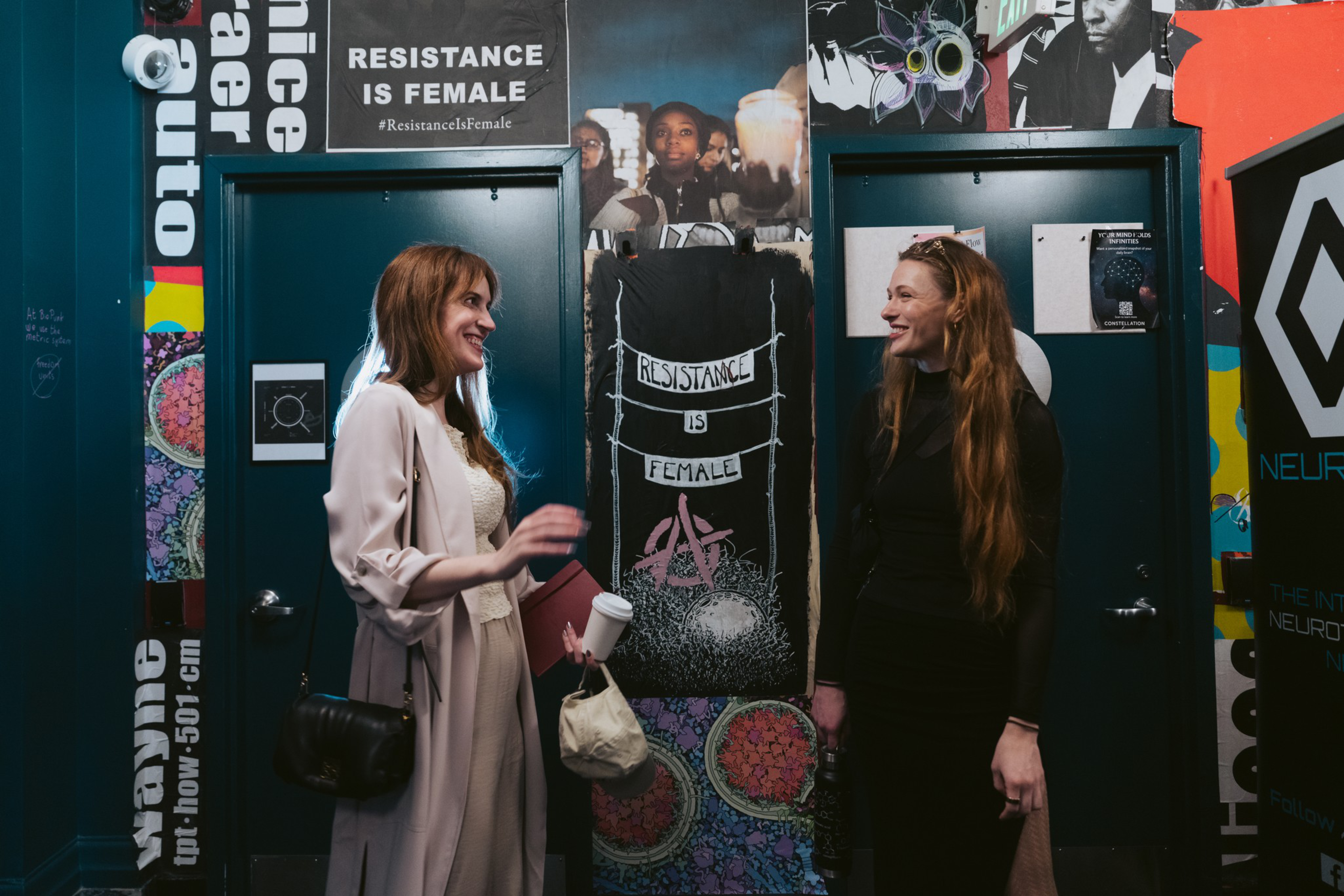 The bleeding edge of science happens at Frontier Tower coworking space. | Source: Michaela Vatcheva for The Standard
Her pitch intrigued Tim Draper, the billionaire venture capitalist behind Draper Ventures. “I’m paying attention,” he said. “Wow. Ten thousand times more stem cells coming out of menstrual blood than out of your normal blood?”
Draper has a history of investing in bleeding-edge startups. He was an early investor in Theranos and defended founder Elizabeth Holmes well after her conviction for fraud.
He suggested that Humer skip the FDA’s multi-decade approval timeline for a therapeutic. “Bio cures are going to move much faster if they go through Prospera [versus] going through the FDA and waiting 15 years, paying $2 billion,” he said. Draper and his son, Adam Draper of Boost VC, invested in Muse on the show. Muse has raised $1.1 million to date, and Humer advanced to the semifinals. She made it through and will appear on the “Meet the Drapers” final on March 24.
Know your stem cells
For decades now, stem cells have promised to open new frontiers for medicine, with treatments for everything from Parkinson’s to spinal cord injuries. The state of California first went big on stem cells in 2004, when voters committed $3 billion for research after federal funding dried up amid controversies with embryonic research.
In 2006, Shinya Yamanaka, a scientist at the Gladstone Institute and Kyoto University, discovered that mature cells could be reprogrammed into pluripotent stem cells, thus sidestepping ethical issues over embryos. He won the Nobel Prize in Medicine in 2012. As of 2026, around 115 pluripotent-stem-cell therapies are in clinical trials.
Multipotent cells are more limited than pluripotent stem cells, which can turn into nearly any cell in the body. Still, the FDA has approved a handful of multipotent stem cell treatments for blood and immune disorders.
But the idea of using multipotent cells, particularly from menstrual blood, still has doubters. Menstrual derived stem cells are “not commonly” researched, noted Vinod Reddy Lekkala, a UCSF stem cell researcher. “It contains a good source of stem cells,” he acknowledged. “But compared with other sources, I don’t see a major advantage.”
One reason is that menstrual fluid isn’t a clean sample — it includes blood, mucus, tissue, and microbes — which means more processing to isolate the cells. And Lekkala noted that multipotent cells “have limited regenerative medicine applications,” though they do sidestep the ethical concerns.
Dr. Deepak Srivastava, president of the San Francisco-based Gladstone Institutes, is also skeptical, questioning whether multipotent cells deliver any benefit at all. “They’re hypothesizing that maybe these cells secrete some things that limit inflammation, and therefore, they may have some benefit … [but] do you actually know that?” he said.
Srivastava noted that decades of mesenchymal stem-cell research suggests “these cells were not doing anything beneficial.” It may be cheaper to collect them, he acknowledged, “but I don’t know that I see the value in having something that’s less expensive that doesn’t work.”
But other startups are also putting their money on menstrual fluid science.
Olga Sazonova, a computational biologist at Xella Health (opens in new tab), a San Francisco women’s precision-telemedicine startup that extracts RNA and DNA from menstrual fluid for personalized health insights, thinks that framing misses the point. Traditional methods of collecting stem cells are significantly “more invasive than menstrual fluid and cannot be performed without a medical expert,” she said.
She views menstrual science as the new frontier in biotech. “Because it is so understudied, menstrual fluid holds the potential for great biomedical breakthroughs,” she said, noting, “The lack of scientific and medical attention … is due to the strong and cross-cultural stigma against it.”
Dr. Michele Ferguson, Muse’s chief medical officer, agrees. “This is the first menstrual stem cell biobank. It’s systematically understudied. We’ve had to go and figure out how to create it,” she said.
 The Muse team discusses next steps for their serum. | Source: Michaela Vatcheva for The StandardSupply and demand
Muse’s first commercial product is a skin serum made from growth factors produced by cultured menstrual-blood stem cells. The serum uses cells from what the company calls “superdonors” — women with extremely high stem cell counts. Consumers would apply it as a stand-alone treatment or after microneedling or lasers.
They hope to release it this year and have agreements with 700 medspas and surgical offices. Eterna Health, a global chain of longevity clinics with clients including Kim Kardashian (opens in new tab) and Kylie Jenner, has signed on to offer the serum to patients.
The serum sidesteps regulators because it’s a cosmetic product, which aren’t regulated by the FDA and do not require clinical trials for efficacy. “Our hearts are set on therapeutics,” said Humer. “But we’re starting with an aesthetic product. … This allows us to bypass some of the regulatory burden. … It drives revenue that feeds our R&D.” They plan to raise $10 million in additional funding to develop the product, she said.
If rubbing lotion derived from period blood on your face sounds weird, well, the beauty world is weird — just look at the peptide craze and vampire facials and salmon sperm injections.
Still, Humer is aware this may deter some people. “If someone [says] menstrual blood was the grossest thing to them, I don’t think they’ll be our consumer.”
 Donors Rosetta Wang and Katherine Butcher are happy to be part of frontier science. | Source: Michaela Vatcheva for The Standard
Brenda Eap is game to try it. A 31-year-old longevity policy advocate from Sonoma County, Eap has already donated to Muse twice, despite a three-hour round trip. “It just seems very low-hanging fruit — like, why haven’t we done this?” As for the source of the serum, Eap isn’t bothered. “They are my own cells, so I’m all for it,” she said. “We put a lot of things on our face these days… I’m looking forward to doing it.”
For the company to succeed, Muse will need a lot more people like Eap — both as customers and as donors.
Lily Chao, 33, a corporate worker in SoMa, began donating in November. She tracks her cycle with an Oura ring and schedules drop-offs through Muse’s Google Calendar. “I was intrigued … isn’t it an invasive process to obtain [stem cells]?” she said. When she learned it wasn’t, she signed up. “Seems like a no-brainer since I would have flushed it away anyway.”
But the $40 is a welcome incentive, she noted. “Given my busy schedule, I wouldn’t continue donating if not for compensation.” She spends her gift card on snacks and beauty products.
Wang feels differently about the money. The $40 isn’t what brings her across the Bay Bridge. It’s being part of something bigger and contributing to science. “It’s just so intuitive to take menstrual blood which is going to waste every month … and take stem cells from it.”
For the beauty serum of the future, the supply chain starts in a Market Street bathroom.