
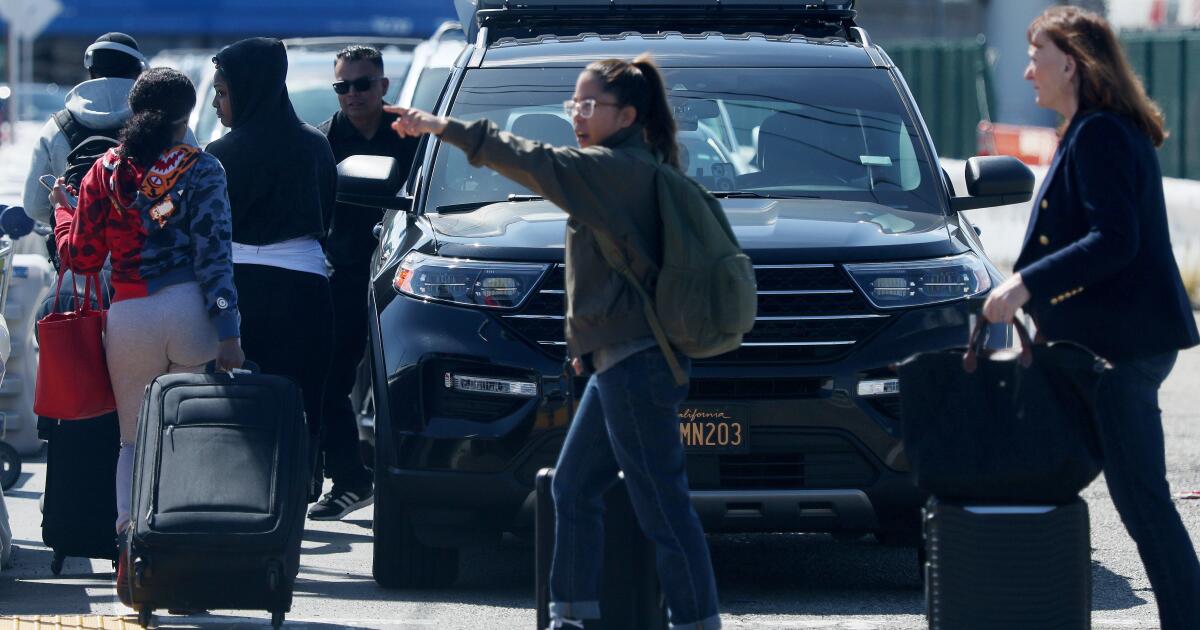
Your next trip to or from LAX might soon get more expensive if you’re grabbing a taxi or turning to a phone app for a ride.
On Tuesday, board members for the Los Angeles World Airports approved a fee hike for private transportation companies that pick up and drop off passengers at Los Angeles International Airport. The access fee increase affects companies such as Uber and Lyft, as well as taxi and limousine companies that operate at the airport.
The fee increase is not set to go into effect until the airport’s long-awaited automated people mover, known as Skylink, opens in the summer. Airport officials said the rate increase, as well as Skylink, are part of a plan to ease congestion inside LAX as passengers try to access terminals and to encourage alternatives such as Skylink.
But some drivers, passengers and ride-hailing companies are already fretting the prospect of pricier rides.
“L.A. residents shouldn’t have to pay a premium to visit their own airport,” said Brandon Bailey, a resident who spoke against the rate hike at Tuesday morning’s meeting. “It’s a tax on workers trying to get home.”
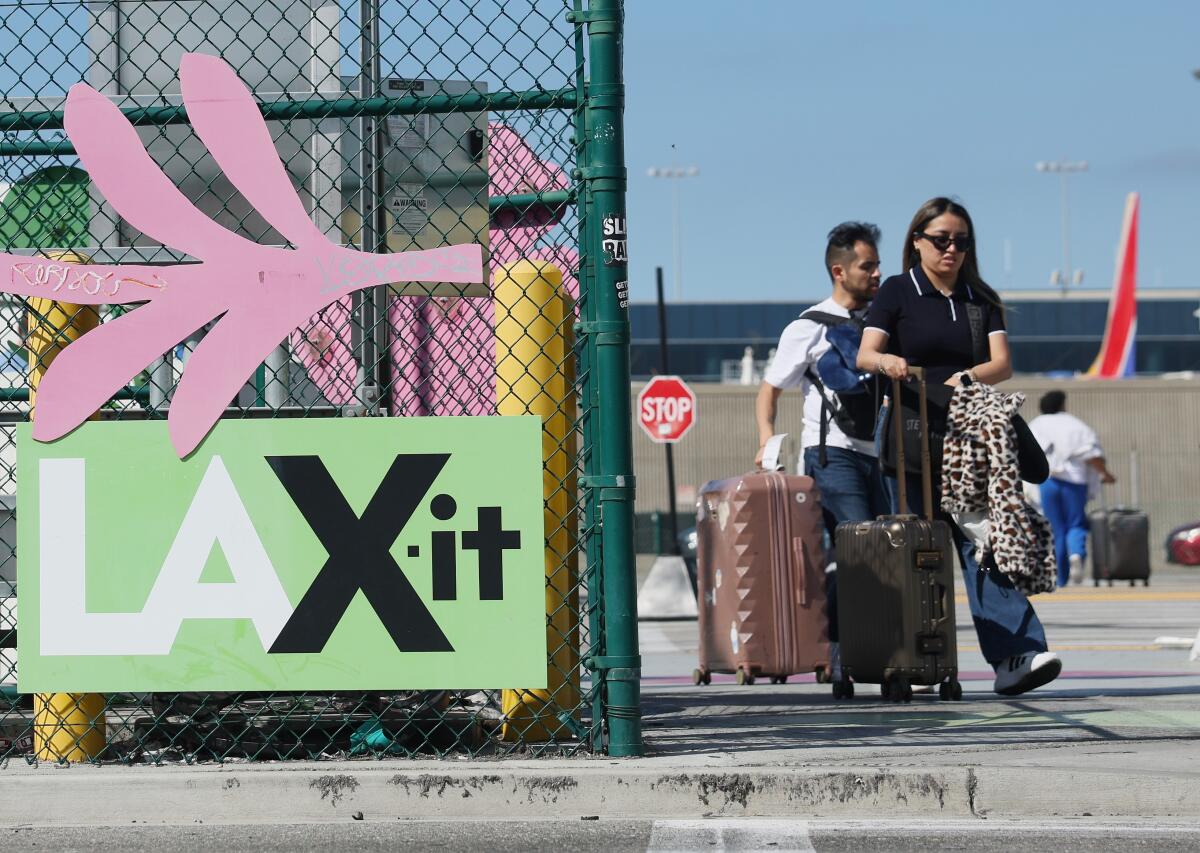
Travelers navigate LAX-it, the ride-hailing passenger pickup location at Los Angeles International Airport on March 9.
(Ronaldo Bolanos/Los Angeles Times)
The popular ride-hailing companies Uber and Lyft opposed the rate hike, and a spokesperson for Uber said passengers would see the effects of the rate hike in the cost of their rides.
“Today’s vote significantly increases the cost of getting to and from LAX,” said Danielle Lam, head of local California policy for Uber. “A 140% fee hike will directly impact riders and reduce demand for drivers who rely on airport trips. We support investments that improve the airport experience, but they must be transparent and balanced.”
A spokesperson for Lyft said the company had worked directly with LAWA on a proposed rate hike, but criticized the increase approved by the board Tuesday.
“Even at this rate, LAX will become the nation’s most expensive airport for rideshare travelers,” a spokesperson said in a statement.
The spokesperson did not answer questions over whether it would pass on the price increase to its drivers or passengers.
But airport officials emphasized access fees are assessed to the companies, not customers or drivers, and pointed out that LAX hadn’t increased its fees since Uber and Lyft began operating there in 2015.
“This is not a tax,” Commissioner Vanessa Aramayo said. “This is not something that the airport is putting on passengers or travelers.”
Drivers and passengers, however, said they expected to absorb the costs in the end, either through higher prices or lower pay per ride.
“Usually we take the hit,” said Terrence Harden, a ride-hailing driver who spoke during Tuesday’s meeting. “It’s already tough enough in this airport every day.”
The decision on who pays the increased fees is ultimately up to the companies, LAWA Chief Executive John Ackerman said.
“We can’t control what a private company does to punish consumers, punish drivers,” he said.
At LAX and other major airports around the world, private transportation companies such as Uber and Lyft, as well as taxis and limousines, are required to get permits and operating agreements and pay a fee to access the airport property and pick up and drop off customers.
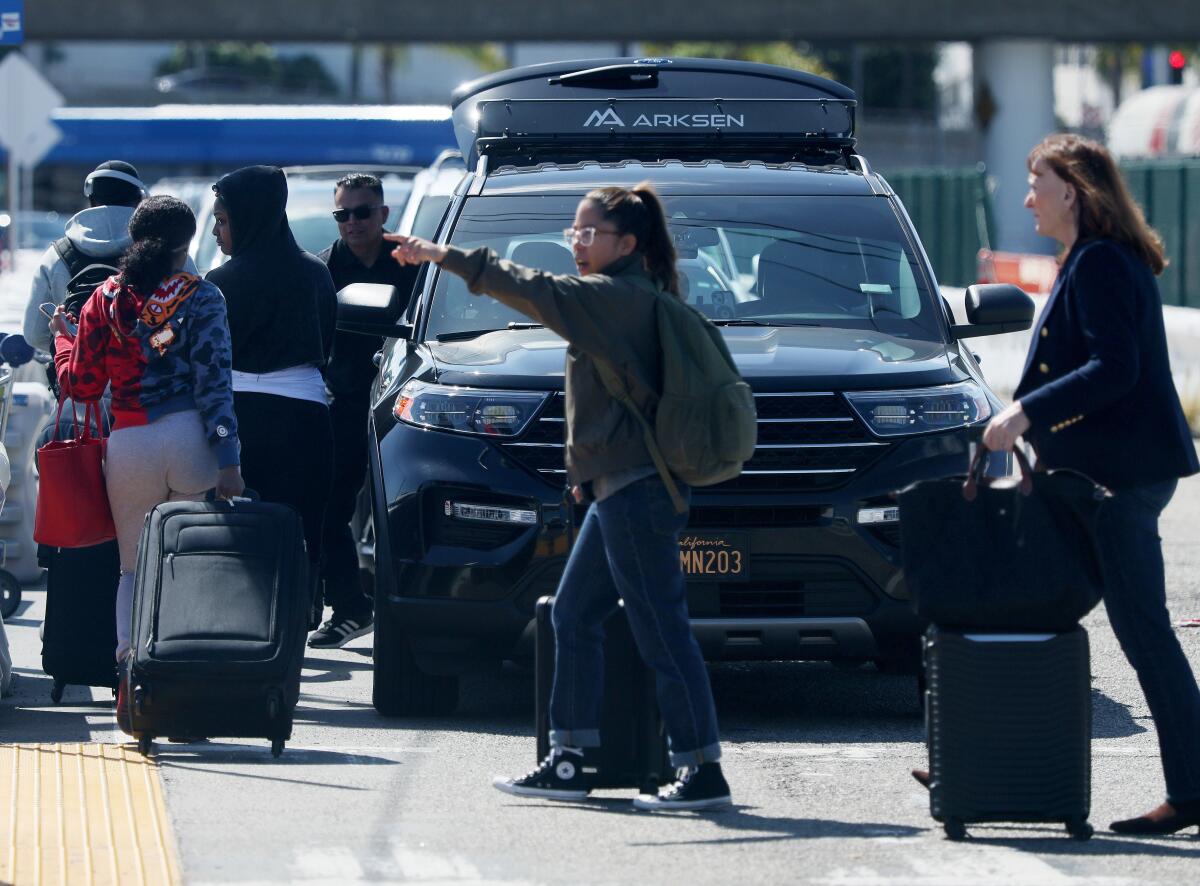
Travelers look for their ride at the LAX-it pickup location at Los Angeles International Airport.
(Ronaldo Bolanos/Los Angeles Times)
Uber and Lyft currently pay $4 to pick up passengers at the airport and nothing to drop them off.
The proposed access fees for all private transportation, including hailed rides, would increase to $12 for the terminal area and $6 for the Skylink area.
In a staff report to the six-member commission, LAWA staff wrote that the fees “no longer reflect the value of the airport market, especially given the multi-billion dollar investments in LAX landed access, terminals, and other facilities and and amenities.”
The higher fees come as the board looks to modernize LAX ahead of a several high-profile events including the World Cup this summer, the 2027 Super Bowl and 2028 Olympics.
With up to 100,000 cars going through LAX a day, David Reich, deputy executive director for mobility strategy for Los Angeles World Airports, said the airport needed to find alternatives.
“It’s no longer sustainable and it hasn’t been for a long time,” Reich said Tuesday. “We’re going to remove a lot of vehicles.”
Reich said the new Skylink could help ride-hailing drivers by reducing the time they spend in traffic, and possibly increase the number of airport passengers they can ferry.
Lyft, in a statement, also suggested airport officials moved the rate hike quickly through the process, cutting out input from drivers and riders. Commissioners during the meeting disputed the argument, saying they had been in communication with public transportation companies about the rate hike and had been public about the coming changes to the airport’s terminals.
Aramayo also asked staff to conduct a report six months after the increase to determine whether the fees had been passed on to drivers and passengers.
The fees would not go into effect until Skylink opens to the public. No official date has been given.
Skylink, which was originally set to open in 2023, faced a series of delays, many caused by clashes between the airport and the contractor hired to build it, LAX Integrated Express Solutions.
The train is expected to provide an alternative way for travelers to access the airport, offering a drop-off location away from the main terminal area and a ride across airport terminals that would take, at most, nine minutes.
The train is set to open early this summer and expected to operate around the clock. LAWA officials estimate the train would move about 85 million passengers a year, and stress that the continuous increase of vehicle traffic into the airport is not an option.
The fees are expected to bring in as much as $100 million to the airport in the first year after Skylink is opened.