
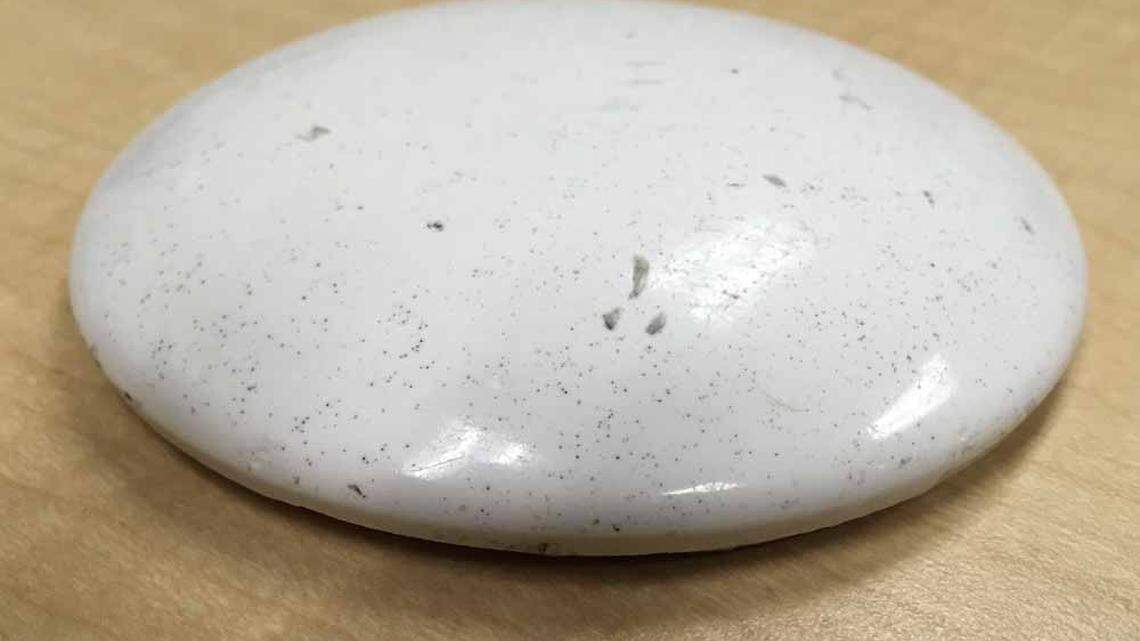
If you’ve ever driven on a California highway, Elbert Dysart Botts probably saved your life at some point — even if you’ve never heard of him.
Botts, a California Department of Transportation engineer, invented a reflective marker to separate highway lanes.
Dubbed Botts Dots, the markers, which help keep drivers in their lanes, are now found in the millions all over the United States, Transport Topics said.
Their testing began in Sacramento in spring 1955 on the eastern half of the Capital City Freeway — then known as the Elvas Freeway, according to documents provided by Caltrans.
Along with helping drivers see the lane markers, the raised glass-and-ceramic dots make a distinctive sound when drivers drift towards another lane.
Here’s what to know:
Who was Elbert Dysart Botts?
Botts, born in Missouri in 1893, was a chemist who specialized in paints, a publication of the state Department of Public Works division of highways said.
After serving in the U.S. Army during World War I, Botts became the chief chemist for a Bay Area paint company before becoming a professor at California State University, San Jose, from 1928 to 1944. He then worked for the federal government for several years.
In 1950, Botts joined Caltrans as a senior chemical testing engineer, a post he held until his retirement in 1960. He worked at a Sacramento lab and lived in the city.
Botts died in 1962 at age 69, according to Find A Grave.
How were Botts Dots invented?
Botts worked on a project to develop a new reflective paint for lane markers to withstand the wear and tear of the road, Transport Topics said.
Facing the problem of rain diminishing the visibility of the paint, Botts developed ceramic markers that would rise above rain-slick pavement and still be visible.
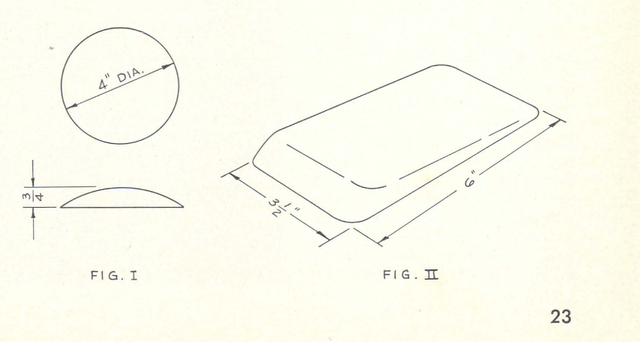 The button-type Botts dot was tested on the eastern portion of what is now the Capital City Freeway. California Highways and Public Works, May-June 1955 issue
The raised markers had another advantage.
“The rumble effect of the markers was soon observed to be an aid in keeping the motorist in his lane, and resulted in the painted traffic stripe lasting longer where markers were installed,” a 1968 report on Botts dots to Caltrans said.
Botts and his fellow scientists also had to develop a special epoxy to affix the markers, soon dubbed Botts Dots, securely to the pavement.
The markers were tested on what was then known as the Elvas Freeway, now part of the Capital City Freeway, Caltrans said.
The agency began deploying the Botts Dots to highways in the state in 1965 — three years after the death of their eponymous creator.
Are Botts Dots still in use?
In 2017, Caltrans announced plans to retire the Botts Dot, citing the advent of other options for lane markers and the need for uniformity for driverless vehicles, The Sacramento Bee reported.
Newer options for marking lanes also are easier for aging Baby Boomer drivers to see, the agency said.
Botts Dots gained international appeal. They’re used in Australia and New Zealand, according to Society for All British and Irish Road Enthusiasts.
But with more than 20 million of the markers on state and federal highways in California alone, it’s going to take some time to replace them all.
Loading…
Related Stories from Sacramento Bee
The Sacramento Bee
Don Sweeney has been a newspaper reporter and editor in California for more than 35 years. He is a service reporter based at The Sacramento Bee.